
Sex & fertility
Your sex drive before, during, and after menopause
by Marcy Holmes, Women’s Health NP,
& Dixie Mills, MD
Asking a woman about her sex drive and sexual satisfaction is all part of our unique
intake questionnaire at Women to Women. Some feel awkward about giving their answers,
but most welcome this chance to talk about what’s happening in their bodies,
their vitality and their interest in sex. After all, sex is a physical function
that’s key to overall wellness. Plus it can make you feel more vital and alive.
During life’s biggest physical and emotional changes — perimenopause,
postpartum phases, and menopause — our reproductive hormones can become imbalanced.
This is when lots of women first experience
low sex drive, fatigue,
insomnia,
hot flashes, mood swings,
weight gain, and even
digestive issues, all common symptoms of fluctuating hormones. These sensations
can make you feel like a stranger in your own body — which affects your sexual
self too, because when you don’t feel well, your interest in sex may dwindle.
That’s why, for many women, feeling better physically is the first step to
improving libido.
Women often note other aspects of their lives changing during these transitions
as well. Maybe you’re finding the confidence to express yourself more freely
and openly, or you’re reflecting on your life, thinking about taking the plunge
into new activities. But you may also discover that just as you find your true voice,
you’re under greater stress, with rambunctious teenagers in the house, or
aging, and even “challenging,” parents to care for. You may be dealing
with financial pressures or greater demands at work.
“Dixie’s Favorite Five”
Hints for a glowing libido
- Take an outing to an upscale sex shop with a group of friends, or go by yourself
— if Carrie from Sex in the City can do it, so can you! At the very least,
the products will amuse you, but you may be pleasantly surprised by, and interested
in, the offerings there.
- Check out the latest books about sex. If you’re too embarrassed to browse
the shelves at your local bookstore, check out some online bookshops.
- Entertain some new techniques with your partner, or on your own — maybe something
outside your comfort zone but still safe.
- Watch an erotic movie with your partner or by yourself, and notice what turns you
on. Or watch a movie with one of your favorite actors — whoever you classify
as “eye candy”!
- Check out the website, books, and courses offered by Mama Gena’s School of Womanly Arts.
Perimenopause, menopause, and the postnatal months are common times for women to
encounter relationship problems, which may or may not encompass sexual issues. Your
idea of sex — both what it means and how important it is — may also
be in transition.
Changing and evolving, and going with the flow — sexual identity in menopause
We’ve seen “up close and personal” how women’s sexuality
evolves throughout their lives. The notion of holding onto youth is an increasingly
outdated and limits a woman’s sexual potential, especially as she
gets older. Instead, we see sexual identity evolving along a continuum — like
a flowing ribbon — and that’s the beauty of it. Once we realize how
much easier it is to be who we really are at every age, we’re presented with
all sorts of opportunities for fulfillment, fun, and pleasure.
We encourage you to welcome the changes that enrich your sexuality as you transition
physically and emotionally during perimenopause and menopause. Understanding the
physical changes that are occurring helps you make practical choices, so you can
create a sex life that suits you now — one that can be — believe it
or not — better than ever.
Some perimenopausal and menopausal women say they are enjoying the “best sex
of their lives.” With menopause we’re free of the fear of pregnancy,
though women should use some
form of birth control until they’ve gone a full year without periods,
and practicing safe sex
is a necessity. With this new sense of freedom, good sex, even great sex, is a real
possibility for all women at midlife and beyond.
Sexual desire: subject to change
A woman’s level of sexual desire is affected by a range of interdependent
physical and emotional factors. We delve into the complex emotional aspects of rekindling desire
and rebuilding libido in a separate article.
“At this age, it’s unusual for somebody to do a love scene, to be making
love... (But) we still are alive... it’s authentic. The whole idea that you
have to look a certain way and be a certain way to earn love is ridiculous.”
— Actress Meryl Streep, about her on-screen sex scene at age 60, as quoted
in The Times (London) (12/21/2009).
Meanwhile, it makes practical sense to consider the physical aspects, because often
they are surprisingly straightforward to address and improve.
When we look at the physical causes of low libido, it’s apparent that most
fall under the umbrella of hormonal imbalance. Low libido is commonly accompanied
by other symptoms of hormonal imbalance — insomnia, fatigue, night sweats,
vaginal dryness, fuzzy thinking. These symptoms can make daily life miserable and
can also affect how you perceive yourself. Some women say their symptoms make them
feel “old and used up,” as if they’re losing their womanhood.
In other words: not very sexy.
But when women get their hormones back in balance, they find relief from unpleasant
physical symptoms, and that can significantly increase their sexual desire. (This
symptom relief is the focus of our
Personal Program for Menopause.)
Physical changes in the vagina that affect libido
At some point in their lives, approximately 50% of women experience thinning, tightening,
dryness, and atrophy (a decrease in muscle mass) in the vulva and vagina. These
changes can cause irritation, soreness, itching, and severe pain during sex, as
well as embarrassing urinary frequency and
urgency.
“Genitourinary” changes like these, most common as estrogen levels diminish,
can interfere with every aspect of a woman’s life: exercising, sleeping, socializing,
and body image, as well as intimate relations with your partner. Women may be so
discouraged and frustrated by urogenital aging that they won’t talk about
it at all. It even makes some women rule out sex completely.
We advise women to speak to their practitioners at the very first sign of vaginal
discomfort. For most women, the situation is not permanent, but you should take
action right away in order to help keep your tissues in good shape.
Sometimes these changes are not obvious until a woman undergoes a pelvic examination
or attempts to have sex, and unfortunately, the pain can be extreme. But there are
effective treatments for vaginal
dryness, so don’t hesitate to ask for help.
Low libido solutions — do hormones or drugs work?
You CAN improve your sex drive by...
- Restoring balance between the three major sex hormones.
- Practicing sound nutrition to support physical and emotional health, and taking
steps to get regular, restorative sleep.
- Exercising, to build energy and stamina, both elements of libido. Exercise can also
directly reduce menopausal symptoms.*
- Healing old emotional wounds, and being aware that stress takes both an emotional
and physical toll on your libido.
- Understanding that your self-image and sexual identity evolve throughout your life.
It’s a gift to allow yourself to be (and look like) the woman you really are.
Reference
At the clinic, we treat both the symptoms and the underlying causes of
vaginal dryness,
vaginal thinning, and associated conditions. If symptoms are relatively
new or mild, we suggest using vitamin E vaginal suppositories twice weekly. Another
option is to add dietary
soy,
which contains phytoestrogens that promote “plumping” of the tissues
and vaginal lubrication. All-natural, over-the-counter vaginal lubricants can greatly
reduce friction during intercourse. And to keep the mucous membranes moist, it’s
essential to drink plenty of water every day.
For lasting improvement, it’s important to address the root causes of vaginal
dryness and associated changes. Even with ovarian estrogen production declining,
the body is designed to produce adequate estrogen from secondary sites, such as
subcutaneous fat and the adrenal glands, as long as you provide the raw materials
and support. Dietary adjustments, nutritional supplements, and targeted endocrine
support are key parts of a combination approach to help relieve vaginal dryness
and other symptoms that impair a woman’s libido.
Some women simply have less estrogen on board than others, and if symptoms persist,
there are many topical estrogen products available for localized application (see
our chart
on estrogen products for vaginal dryness for options). But you will need to get
a prescription from your practitioner whether you choose a brand name or an individualized,
compounded product such as low-dose estriol vaginal cream. And if one does not work
well, don’t be shy about asking for a different one. Generally, these topically-applied
products do not appear to carry the same health risks of oral menopausal hormone
therapy.
In the vast majority of cases, urogenital health can be improved. Once the causes
are addressed, and the symptoms relieved, regular use of the vaginal muscles during
sexual activity will help keep them healthy and toned.
Testosterone and libido: not just for men
Sometimes referred to as “the life-force hormone,” testosterone is fundamental
to our sex drive because it influences the entire “circle of sex”: interest,
arousal, sexual response, lubrication, and orgasm. Normally, estrogen levels fall
relatively quickly in women after menopause, while testosterone levels taper off
more slowly. This leaves us comparatively “testosterone dominant” after
our change of life, while men trend in the opposite general direction.
But for many possible reasons, some women don’t have “normal”
circulating testosterone levels. One of the biggest obstacles to optimal sex hormone
production is chronic stress. That’s because when we’re under stress,
progesterone, the precursor molecule to testosterone, is converted into stress hormones
instead of sex hormones. And over time, this switchover results in lower testosterone
levels and reduced libido, among many other possible health problems.
Testosterone production in women is a multi-step process that takes place in both
the ovaries and adrenal glands. When ovary-produced hormones decline in perimenopause
and menopause, the adrenals can and will take on greater sex-hormone production
— if adrenal reserves remain strong. But if a woman has experienced
undue stress over the years, her adrenal reserves can be tapped out.
Some women maintain good testosterone production throughout perimenopause and menopause,
and with few complaints. They may have better adrenal function and healthier metabolism
due to good nutrition and a less stressful lifestyle.
In other women, such as the many thousands who undergo
hysterectomy each year, levels of testosterone can be very low or barely
detectable. Even women who retain their ovaries may experience this outcome post-hysterectomy,
from compromised ovarian circulation. Nearly one in four women enters menopause
as a result of surgery or medical treatment that causes her ovaries to lose normal
function. This abrupt transition causes sexual issues for millions of women of all
ages.
Should you take a prescription to improve your sex drive?
Some women go on prescription testosterone in hopes of experiencing rapid improvement
in sex drive and sexual response. But based on experience with over 100,000 patients
in the past 25 years, testosterone should only be prescribed after careful, thorough
evaluation and testing, to verify the need.
“Fewer mirrors — more laughter!”
It is entirely possible for sex at midlife to be better than ever! And here’s
why:
- You’re more practiced and confident about your sexual abilities.
- You can take the lead, showing and telling partner what you want.
- Your sense of humor, about sex and life, is well-developed.
- Sex is invigorating and makes you feel more attractive.
For women, there does not seem to be a simple pharmaceutical fix for sex drive.
For years, drug companies have been trying to concoct a Viagra-like medication for
“female sexual dysfunction.” But our libidos are more complex physically
and emotionally than men’s (a good thing!), and there is no “magic pill”
that provides consistent results for all women.
Anyway, in most cases, lack of testosterone isn’t the core issue but just
an associated symptom. For many women, emotional or relationship issues are connected
to low libido, so no prescription hormone is going to resolve the dilemma. Along
with establishing (or reestablishing) fundamental emotional connections with your
partner, we advise taking the most natural, least-invasive approach to restoring
hormonal balance. For most, improved libido is the natural result!
The recommendations we offer as part of our
Personal Program for Menopause are effective because they help
restore hormonal balance through a combination of techniques: nutritional supplementation,
endocrine support, and dietary and lifestyle adjustments. This multi-pronged method
helps relieve many other symptoms, which improves your overall outlook on sex as
well.
Endocrine support helps provide the building blocks that your body converts into
hormones as needed, whether it’s progesterone, cortisol, estrogens, or testosterone.
Some women notice immediate improvement, while others need a little more time, but
relief will be long-lasting.
If your symptoms don’t respond to these techniques, your practitioner can
have your hormone levels tested. When hormone tests of our clinic’s patients
are normal, it indicates to us that other factors are at play.
We have all heard stories from women who are patted on the head and told there are
no options for them, that the sexual part of life is over! But I wouldn’t
particularly want, or trust, a 30-something practitioner advising me about my sexual
needs at age 60, either. As with other health issues, it is essential to find a
healthcare provider who listens to you, treats you like an adult, and knows her
stuff, or is at least willing to explore alternatives with you.
More about the effects of stress on sex drive
Most of us know that chronic stress isn’t healthy, but we may not realize
the toll it takes on libido. The body interprets ongoing stress as life threatening,
so naturally, survival is prioritized ahead of pleasure. Stress over-burdens the
adrenal glands, “stealing” the substances normally used to make estrogens
and testosterone, both vital to desire and sexual response.
Many women we talk to at the clinic and in our Personal Programs tell us they feel
overwhelmed by stress. This puts them at significant risk for
adrenal imbalance. If you are under constant stress, you’re not going
to feel much like having sex. So in the interest of your health, and your sex life,
it may be time to reassess the conditions that are creating stress in your life.
Is stress derailing your sex life?
Stress can lurk in many corners of our lives: the workplace, home life, relationships,
unresolved emotional problems, medical problems, and more. Many women simply get
used to it, but taking the time to identify individual sources of stress can be
the first step in resolving them.
Simple changes can help relieve stress almost overnight, but bigger adjustments
may be needed for permanent relief. Some considerations:
- Are you taking on other people’s stress in addition to your own? “Minding
your own business” can be good for your health.
- Can you find new ways to nurture your emotional and spiritual self? It may be time
to fill your reservoir.
- Change up your routine for a fresh take on life.
- Investigate a new form of creative self-expression. (Sex itself is an expression
of creativity.)
- Get help from your partner — a new perspective from someone who loves you
can be invaluable.
There’s also a connection between nutrition and libido, because nutrient deficiencies
stress your internal systems and set the stage for hormonal imbalance. Many women
diet continually to improve their appearance, unaware that ongoing nutrient deprivation
can have a drastic impact on physical health, energy levels, and self-image. All
of these effects make you feel awful and drain your sex drive. Note that low-fat
diets are especially problematic, because your body needs lipids and cholesterol
to make hormones, including the testosterone needed for sexual response.
Your sexual needs go beyond the physical
It’s been said that the brain is the most important sexual organ, and it follows
that your beliefs about sex and what sort of behavior is “age-appropriate,”
can alter your sex drive. We believe that desire and satisfaction depend as much
on emotional and psychological factors as on the purely physical — sometimes
more so.
A woman’s sexuality evolves in perimenopause and menopause. For many of us,
early sexual identity was rooted in our sense of attractiveness to others, which
was typically based on having a youthful body. As our bodies change, we might compare
our appearance to how we looked in the past, or to other women, and forget to update
our self-image to include the richness of our life experience. If you feel undesirable
or even ugly, it’s less likely you’ll be interested in sex. But remember
the old saying “Love is blind,” and check out the couples holding hands
— they come in all sizes and shapes.
Biologists say we’re the only species in which females are sexually aroused
by their own pheromones (naturally-occurring, sex-signaling chemicals) — and
“feeling sexy” is an important component to sexual desire. But over
the years, some women drift away from their sexuality, find themselves without partners,
or feel that sex just isn’t important anymore.
Still others believe that sexual desire is shameful or even inappropriate, especially
as they get older. Women who’ve been unassertive about their sexuality in
the past may be prepared to sacrifice their sex lives rather than speak up now about
their sexual needs. And single women may be daunted by the prospect of “dating”
again and just close themselves off from the whole idea of sex. But you don’t
need a partner to enjoy the
health benefits of self-cultivation. I think this is an ideal time of life
for women to rediscover and “fall in love” with themselves. They can
have fun, trying things they’ve always wanted to experience and, who knows
what — or whom — they will find in their futures?
Bringing out the best in your partner
If you have a partner, it’s impossible to talk about improving sex drive without
looking at your relationship with that person. For many women, this opens a vortex
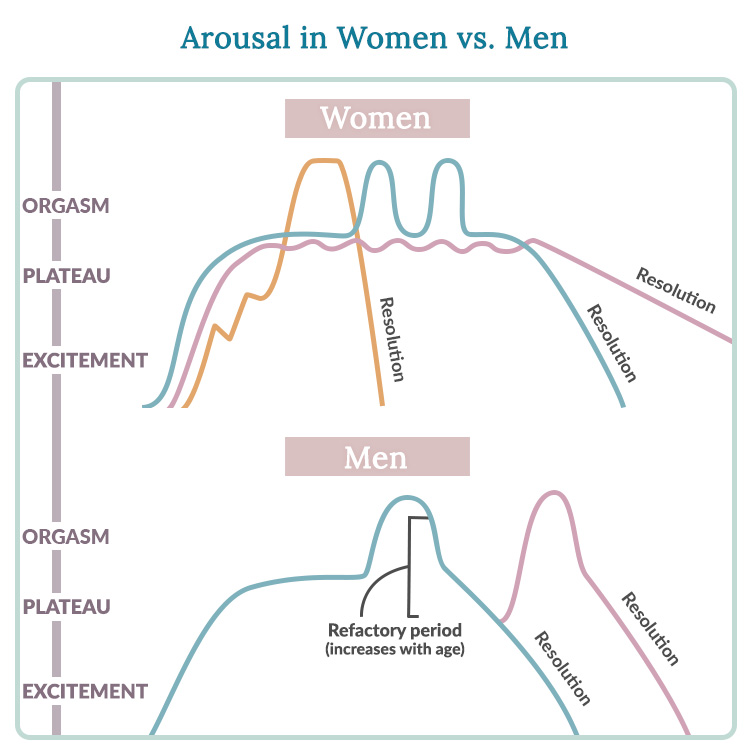
of issues. First off, men and women are as different as night and day when it comes
to libido. For men, arousal is mostly a physical experience, but for many women,
the relationship itself is equally, or even more, important. No matter who your
partner is, it’s absolutely essential to foster good communication between
the two of you.
“I work 9-10 hours a day… I’m running around the whole time I’m
working… it’s like ‘Oh, I’ve got to do this, this and this — and
we need to have sex too?’”
— Anaïs, Program
Member
Some questions to ask:
- Are your needs being met in the relationship?
- Do the two of you deal with problems openly and constructively?
- Do you treat each other with respect and fairness?
- Is your partner self-absorbed, or even self-destructive?
Your answers to these questions will help measure the amount of intimacy and trust
— elements that keep sexual desire alive — you have with your partner.
Women ask us why they react so strongly now to behaviors their partners have exhibited
for years. In perimenopause and menopause, women often shift their attention to
finding and using their own voices to express what may be long-denied wants and
needs.
If we don’t learn how to make our feelings known, our health will be affected.
So even if an issue has been brewing for years, the midlife transition may prioritize
finding a solution — your patience, humor, and compassion will help your partner
welcome this “new you.”
Remember — change is good!
Your sexuality is naturally meant to evolve in perimenopause and menopause, and
your life experience will help you chart a new course. Your sexual desire may diminish
or even disappear temporarily, but it can and will come back. We see it happen all
the time! That’s why reducing physical symptoms by
restoring hormonal balance and supporting your emotional health are so important.
We encourage you to make the most of this invitation to rediscover your body. Make
a date with your partner, and begin to imagine fresh ways to explore your sexuality.
While no one has to know what you do or think to feel sexy, showing or telling that
certain someone what you need can jumpstart the process.
A little mystery, openness to new ideas, and a whole lot of laughter will guide
you through this new stage, learning as you go. Our best advice is to trust your
intuition to reveal what’s best for you. Your sexuality is an expression of
your creative life force, with great influence on your health and well-being. And
you get to choose what you want at this turning point in your life.
Our Personal Program is a great place to start
The Personal Program promotes natural hormonal balance with nutritional supplements,
our exclusive endocrine support formula, dietary and lifestyle guidance, and optional
phone consultations with our Nurse–Educators. It is a convenient, at-home
version of what we recommend to all our patients at the clinic.
If you have questions, don't hesitate to call us toll-free at
1-800-798-7902. We're here to listen and help.
Related to this article:
References & further reading
on low sex drive
Last Modified Date: 04/19/2011
Principal Authors: Marcy Holmes, NP, Certified Menopause Clinician
& Dixie Mills, MD, FACS