


Reviewed by Dr. Sarika Arora, MD
Craving sugar is an irresistible urge. If you love sugar, you already know it’s a highly addictive substance — it affects your brain the way drugs do, with plenty of unpleasant aftereffects.

Eating too much sugar can lead to weight gain along with serious health consequences, like hormonal imbalance, Alzheimer’s, skin and dental issues, osteoporosis, diabetes, heart disease, and even some forms of cancer. You can stop your urgent sugar cravings but you have to know what’s causing them first.
If you’re ready to stop riding the sugar roller coaster, we can help.
What’s causing your sugar cravings?
Sugar is certainly tantalizing on its own, but there are real, physical causes behind your sugar cravings. Top causes for sugar cravings include:
- Fluctuations and disruptions in major hormones like insulin, estrogen and progesterone
- Intestinal yeast, which thrives on sugar
- Chronic stress that drives excess cortisol production
Understanding sugar’s effects can help you stop your cravings, lose weight and transform your health.
Sugar, hormones and weight
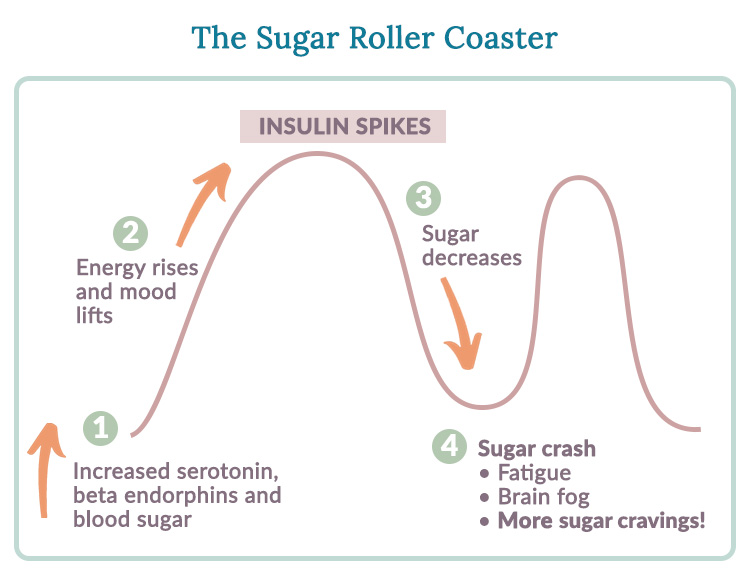
When you eat your regular 3 o’clock cookie, the sugar rush activates feel-good chemicals and reward centers in your brain, like serotonin, dopamine and beta endorphins. It spikes your blood sugar and eventually leads to insulin surges that drive insulin resistance.
The sugar roller coaster causes physiologic changes in your body:
- weight gain, especially around the belly
- fatigue
- brain fog
- hormonal imbalance
- more cravings
- depression and anxiety
Sugar’s effects can seep into your whole system. Sugar and carbohydrates are mostly stored in the liver as glycogen until it gets full. Then your body has to make fat from the excess sugar and carbohydrates. That fat gets added to existing fat deposits around your body and you gain weight.
Sugar can also fuel hormonal imbalance by turning off a key gene that controls your sex hormones. Without this gene (sex hormone-binding globulin or SHBG), both testosterone and estrogen can become unregulated. This imbalance causes fatigue, anxiety, irritability and other symptoms.
Sugar causes a world of trouble in your body but you can free yourself from your sugar habit. Try any one of the following to get started.
7 sweet steps to stop sugar cravings
Step 1: Mix pleasure with protein.
When you have a little protein with your sugary treats, it helps balance your blood sugar. Add a handful of nuts when you eat sweets or mix high-quality protein powder into a sweet smoothie. Having protein at the same time counteracts the “spiky” sugar surge to the brain that makes you crash afterwards.
Step 2: Rebalance your hormones.
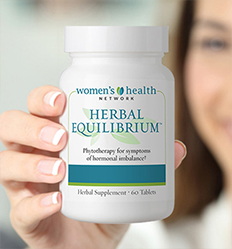
Just before your period when estrogen is low and progesterone is on its way down, levels of feel-good beta-endorphins in your brain bottom out. This hormonal imbalance can cause intense sugar cravings for women in perimenopause or with PMS as your body attempts to boost serotonin and endorphins. Hormone balancing options like Herbal Equilibrium can help kill cravings and other symptoms by restoring natural balance to reproductive hormones.

Step 3: Go no-sugar for 3-5 days in a row.
Toughing it out and avoiding sugar for just three days can make a huge difference in reducing your cravings. (But you don’t need to cut out fruit — nature’s sweetest treat!) Though it may take longer for cravings to completely go away, eliminating sugar’s cyclical bursts of serotonin and beta-endorphin can normalize your sugar receptors and neurotransmitters. Then your brain isn’t constantly sending the message that it needs more sugar.
Step 4: Plug in targeted nutrients to calm cravings.
Specific micronutrients like zinc, Vitamin C and B vitamins quiet sugar cravings by influencing serotonin production. Omega-3s are crucial for regulating mood and inflammation, which are associated with cravings. Eat foods with these ingredients or try a good women’s multivitamin and a pure omega-3 supplement.
Step 5: Balance your belly bugs.
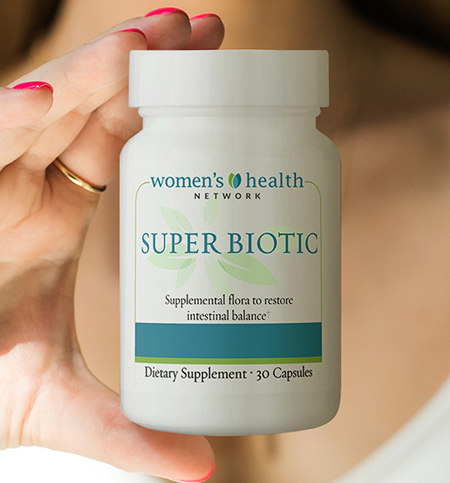
If intestinal and vaginal bacteria are out of balance, yeasts like Candida can flourish. An overgrowth of yeast in the intestine (or systemwide) can cause strong sugar cravings, fatigue, fuzzy thinking and digestive issues. Taking a probiotic and/or eating yeast-free temporarily helps reclaim healthy bacterial balance and eliminates the sugar-hungry bacteria that need sugar/refined carbohydrates to survive.

Step 6: Watch out for acid-forming foods.
Highly processed carbohydrates increase acidity and inflammation, which cause cravings for sweet foods. Choose anti-inflammatory foods with lots of omega-3 fatty acids, along with plenty of alkalizing fruits and vegetables.
Step 7: Investigate food sensitivities.
Common food sensitivities can make you so foggy-headed and fatigued that you use sugar for a pick-me-up. When you remove a food you’re sensitive to, your sugar cravings may go away. The most common food sensitivities are to gluten, dairy, corn, eggs, soy, peanuts and citrus. You can try an elimination diet and see if it helps.
Can you make your life sweeter?
If sugar feels like a reward to you, try replacing it with a different treat that makes you happy. A walk with someone you love, a trip to the movies, an excellent new book or a bouquet of flowers for your bedside can lift your spirits and make you smile.
And don’t rule out the bump in serotonin and beta-endorphins you get from exercise, a well-balanced meal, work that makes a difference, even a sunny day. When you experience joy and fun, they spell happiness to your body so you don’t need to fill yourself up with sugar.
Letting go of sugar is stressful but the benefits you feel will keep you moving forward. Go for progress not perfection!
https://health.usnews.com/wellness/food/articles/2017-05-12/everything-you-need-to-know-about-sugar-cravings
https://www.cookinglight.com/news/sugar-craving-gene-keeps-body-fat-low
1 Rouch, C., et al. 2003. Extracellular hypothalamic serotonin and plasma amino acids in response to sequential carbohydrate and protein meals. Nutr. Neurosci., 6 (2), 117-124. URL (abstract): https://www.ncbi.nlm.nih.gov/pubmed/12722987 (accessed 10.03.2008).
Wurtman, R., & Wurtman, J. 1995. Brain serotonin, carbohydrate-craving, obesity and depression. Obes. Res., 3 (Suppl. 4), 477S-480S. URL (abstract): https://www.ncbi.nlm.nih.gov/pubmed/8697046 (accessed 10.03.2008).
2 DesMaisons, K. 2008.Potatoes Not Prozac: Solutions for Sugar Sensitivity [Revised edition.] NY: Simon & Schuster.
3 DesMaisons, K. 2008. p. 145.
4 DesMaisons, K. 2008. p. 75.
5 DesMaisons, K. 2008. p. 145.
6 DesMaisons, K. 2008. p. 185.
Amazines. 2007. Sugar withdrawal symptoms: don’t let them stop you from kicking your sugar habits. URL: https://www.amazines.com/article_detail.cfm?articleid=207328 (accessed 10.14.2008).
7 DesMaisons, K. 2008. p 84.
8 Lipski, Elizabeth. 2004. Digestive Wellness, 3rd ed., p 92. NY: McGraw Hill.
9 Lamb, R., & Goldstein, B. 2008. Modulating an oxidative-inflammatory cascade: Potential new treatment strategy for improving glucose metabolism, insulin resistance, and vascular function. Int. J. Clin. Pract., 62 (7), 1087–1095. URL (abstract): https://www.pubmedcentral.nih.gov/articlerender.fcgi?artid=2440526 (accessed 10.17.2008).
10 DesMaisons, K. 2008. pp. 145-147.