


Reviewed by Dr. Amber Hayden, DO
From the moment we come into the world, we learn that the act of eating is associated with love and comfort. Nursing as newborns is our first act of bonding and obtaining a sense of comfort and love along with food. As we get older, food is often used as a reward for being “good.”
We carry that behavior into adulthood, comforting and rewarding ourselves with food on particularly difficult or stressful days. Beneath our deep emotional connections to food, there are often underlying physiologic imbalances that can lead to cravings and overeating, which can complicate matters further. When something feels wrong inside our bodies, that message can be transformed into a sense of hunger or emptiness. Subsequently, we tend to eat to overcome this discomfort and fill the void.
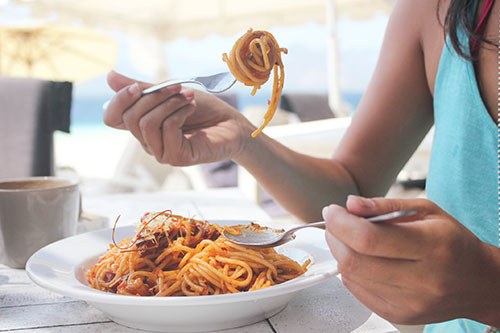
So it’s no wonder we turn to food when we feel “off,” either physically or emotionally. And it’s no surprise that when women are told to stop eating if they’re not really hungry, they often can’t. It’s simply not that easy to shut off a lifelong pattern.
While it’s common to comfort yourself with food when you’re feeling stressed, sad, nervous, angry, tired or even bored, it helps to have the right tools and techniques to figure out the true cause of your “hunger.” Finding real-life solutions for emotional eating starts with developing the awareness to recognize what your body is really asking for so that ultimately, eating becomes only a means of fueling your body. If you have deeper issues with food or overeating, we highly recommend seeing a counselor or therapist to help you sort through and resolve core emotional issues.
Our approach to resolving emotional eating has three steps:
1. Gain awareness.
2. Explore possible root causes.
3. Make a plan.
Gain awareness: Are emotions guiding your food decisions?
Why and when we eat, and how much we consume are not black and white questions — there are many shades of gray. At some point in our lives, all of us are emotional eaters. It’s not something to feel guilt or shame about. But there are some questions to consider once you’ve become an adult:
- Do you turn to food when you’re upset or stressed?
- Do you feel guilty or unhappy about what you eat?
- Do you deprive yourself of meals or snacks when something has gone wrong in your life?
- Do you find yourself eating when you’re not hungry because it makes you feel better?
- Do you think about food all the time?
If you answered yes to any or all of these questions, think about how often the scenario happens and how you feel after you’ve eaten. If your emotions are routinely dictating what and how much you eat, the first step to changing that pattern is to become aware of it. Instead of getting to the bottom of a bag of chips and realizing, I’m eating these because I’m stressed, I’m angry, I’m sad, etc., it’s better to stop and recognize what you’re doing before you’ve gone too far — or even before you take your first bite. Ultimately, you want to give yourself the space to decide whether you’re truly hungry or instead trying to smother an emotion, or satisfy a feeling or desire with food.
Explore root causes: food cravings aren’t about self-control
Women tell us, I have no self-control when it comes to eating. Any time I’m upset, nervous, anxious or even happy, I turn to food. It’s always good if you can identify the potential root physiological causes of your hunger. These can be much easier to fix than deeper, more mysterious emotional issues.

So many women berate themselves for giving in to cravings for sugar, carbohydrates, chocolate, salt or caffeine. In many cases, cravings have nothing to do with self-control or emotional state. Instead, cravings can stem from genuine physiological imbalances in the body. The most common imbalances that can cause cravings are:
- Adrenal imbalance — often caused by chronic stress that leads to high cortisol, our body’s “stress” hormone.
- Hormonal imbalances — often caused by the shifting hormone levels that accompany perimenopause, menopause and premenstrual syndrome.
- Thyroid imbalance — often caused by chronic stress and/or menopause changes, leading to low levels of thyroid hormone, which is in charge of metabolism.
- Food sensitivities — caused by certain foods or ingredients like gluten, dairy, yeast, eggs, soy and citrus that trigger chronic activation of the immune system.
- Yeast overgrowth — often occurring in the gut due to lack of healthy bacteria or chronically high blood sugar levels.
- Blood sugar imbalances — often caused by diets high in simple or empty carbs but low in fiber, accompanied by rapid spikes and drops in energy levels.
- Nutritional deficiencies — most commonly B vitamins, zinc, Vitamin D and magnesium.
- Leptin resistance — typically occurring when our bodies fail to respond effectively to messages from this hormone that sends the “I’m full” signal.
Systemic imbalances can confuse your body’s signals about food and weight, leading to overeating that may look like emotional eating on the surface. If you’re interested in working past systemic imbalances and losing weight, our Weight Loss Resistance Program is an effective way to get past your personal physiologic barriers so your body can begin the process of letting go of excess weight.
Make a plan: tips for satisfying eating
We often don’t take the time to explore our emotional connection to food and can’t, or don’t, always think before we act. This is why it helps to make a firm plan that you can use as a guide as you make changes. Below are practical tips to consider as you create a comprehensive plan for dealing with, and ultimately moving away from, emotional eating. You don’t have to do all of these! See which ones resonate the most for you.
1. Pay attention to your hunger signs. Rate your hunger on a scale of one to ten. One is not hungry at all and ten is starving. Try to eat when you are at about seven. You should feel your stomach start to growl, but should not be feeling light-headed yet. Getting too hungry may lead to overeating, and isn’t good for your metabolism.
2. Make a list of foods you enjoy eating — ones that make you feel good. Go to this list when you feel confused about what to eat. If you are craving foods that tend to make you feel good, rather than full, it’s likely you’re confusing hunger for something else.
3. Cut sugar from your diet. Sugar causes rapid spikes in your energy level, followed by even faster drops so you get hungry more often. That’s why sugar can be as addicting as some illegal drugs. And it can certainly lead to overeating by sending craving signals masquerading as hunger signals even when you’re full. Foods high in both fiber and protein are digested more slowly, which gradually increases energy levels and sustains them for longer periods.
4. Drink plenty of filtered water. Dehydration can make you feel like you’re hungry when you aren’t, so keep the water flowing all day. Additionally, drinking water with meals can slow down the rate at which you eat so you can feel those “full” sensations sooner.
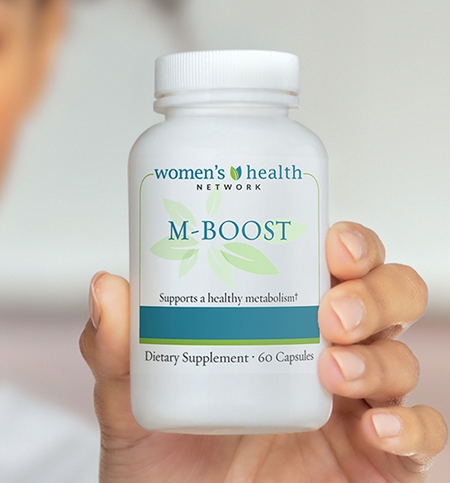
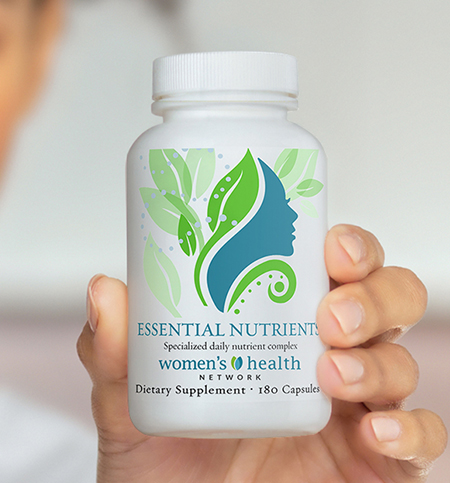
5. Find the right multivitamin. We seem to crave foods rich in the nutrients our bodies are lacking, so cover your bases with a high quality comprehensive daily vitamin.
6. Portion out healthy snacks in small to-go bags and keep them on-hand in the fridge and pantry. Try cut carrots, handfuls of nuts, a few slices of cheese or a hard-boiled egg. Planning ahead makes it quick and easy to choose healthy snacks instead of pre-packaged options that aren’t as good for you. This technique is good to put into play if you travel a lot.
7. If you’re going to a party or special event, create a winning food-and-drink strategy ahead of time. For example, I’m going to have one alcoholic drink and two desserts tonight. Next time I can do something different, if I choose to. Then, stick to the plan.
8. Make all the food you eat for a week from scratch. While this takes time, it allows you to plan and be more mindful of ingredients and portion size. Many women find success controlling their meals when they rotate between three favorite (but different) breakfasts, three lunches and three dinners. An added bonus is the cost of making foods yourself is significantly less than eating out.

Simply reducing the amount of food you eat without understanding your patterns of eating can set you up for a diet that is too restrictive and uncomfortable, and therefore unsustainable. The key to developing a healthier relationship with food is to gain a sensation of feeling good that you’re providing what your body needs. It helps you replace feeling guilty or wrong about what you’re eating with the satisfaction that comes from taking good care of yourself.
Feeling good and eating well
If you think you might be an emotional eater — lots of us are — know that you can do something about it. Gain awareness, explore emotional and physical causes, and make a plan. These three steps can lead you to make lasting changes in your life while still enjoying the act of eating — and we’re here to support you along the way.
11 Kjaerbye–Thygesen, A., et al. 2004. Why do slim women consider themselves too heavy? A characterization of adult women considering their body weight as too heavy. Int. J. Eat. Disord., 35 (3), 275–285. URL (abstract): https://www.ncbi.nlm.nih.gov/pubmed/15048943 (accessed 04.03.2009).
2 de Lauzon–Guillan, B., et al. 2009. Cognitive restraint, uncontrolled eating and emotional eating: Correlations between parent and adolescent. Matern. Chil Nutr., 5 (2), 171–178. URL (abstract): https://www.ncbi.nlm.nih.gov/pubmed/19292751 (accessed 03.27.2009).
3 Rørtveit, K., et al. 2009. The feeling of being trapped in and ashamed of one’s own body: A qualitative study of women who suffer from eating difficulties. Int. J. Ment. Health Nurs., 18 (2), 91-99. URL (abstract): https://www.ncbi.nlm.nih.gov/pubmed/19290972 (accessed 03.27.2009).
4 Bulik, C., & Taylor, N. 2004. Runaway Eating: The 8-Point Plan to Conquer Adult Food and Weight Obsessions. Emmaus, PA: Rodale.
5 Meyer, C., et al. 2009. Emotion and eating psychopathology: Links with attitudes toward emotional expression among young women. Int. J. Eat. Disord. [Epub ahead of print.] URL: https://www.ncbi.nlm.nih.gov/pubmed/19274718 (accessed 03.27.2009).
6 Fox, J., & Harrison, A. 2008. The relation of anger to disgust: The potential role of coupled emotions with eating pathology. Clin. Psychol. Psycholther., 15 (2), 86–95. URL (abstract): https://www.ncbi.nlm.nih.gov/pubmed/19115431 (accessed 03.27.2009).
7 Joos, A., et al. 2008. Emotional perception in eating disorders. Int. J. Eat. Disord. [Epub ahead of print.] URL (abstract): https://www.ncbi.nlm.nih.gov/pubmed/19115372 (accessed 03.27.2009).
8 Rørtveit, K., et al. 2009.
9 Bohon, C., et al. 2008. Female emotional eaters show abnormalities in consummatory and anticipatory food reward: A functional magnetic resonance imaging study. Int. J. Eat. Disord., 42 (3), 210–221. URL (abstract): https://www.ncbi.nlm.nih.gov/pubmed/19040270 (accessed 03.27.2009).