


Reviewed by Dr. Amber Hayden, DO
In this article
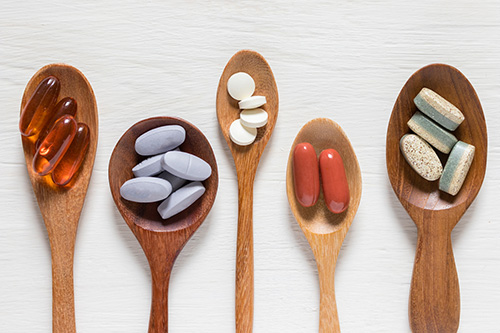
Dawn arrived at Whole Foods with her children at nearly five o’clock to purchase a multivitamin. The kids were hungry, and disappointed because a race-car grocery cart wasn’t available for them. By the time she arrived at the vitamins, she picked up two different brands, checking for vitamin D quantities (because she’d read it was important), then reached for another one to compare it to the others.
Before she knew it, her daughter was running with a glass bottle from the shelf. After chasing her around the store and putting her vitamin selections down somewhere near the eggs, Dawn gave up, bought a rotisserie chicken, and went home.
The next day Dawn was relieved that she hadn’t purchased a multivitamin because her doctor told her they were a waste of money and that her body wouldn’t absorb them!
When we heard this story, we thought, Wow, we’ve got work to do. We’re sure you’ve heard people say that multivitamins and nutritional supplements are just a waste of money, a scam, or even dangerous. But if that’s true, why are so many people taking them?
If you’ve been confused or discouraged like Dawn, this article is for you. Let’s take a closer look at the most common misperceptions about multivitamins, so you can make your own educated decision.
Myth #1: All multivitamins are created equally
In these difficult economic times, many of us are shopping at discount markets. But here’s a word of caution about buying your vitamin supplements from these places, as their makers may not adhere to good manufacturing practices. Often these multivitamins are poor quality, low on nutrients, and full of unnecessary additives.
What to look for in a multivitamin
Be sure the multivitamin you choose has some or all of the following characteristics.
- Pharmaceutical grade
- Contains the most bioavailable forms, including chelated minerals
- Contains naturally-sourced nutrients
- No preservatives, sugar, or artificial flavoring, filler, dyes, or coloring
We offer a professionally-formulated multivitamin-mineral complex in our Health Packages that does it all. Why? Because in our experience women cannot resolve the imbalances and symptoms we see most often without filling the gaps in their nutritional foundation.
(For further guidance see our article on choosing a multivitamin.)
Many inexpensive multivitamins contain forms of nutrients that are difficult for the body to break down and utilize, whereas professionally formulated brands combine naturally-sourced nutrients and chelated minerals so your body can digest and use them more readily. Some multivitamins contain preservatives, sweeteners, fillers, and artificial colors or flavoring, while others leave these additives out.
We sometimes liken multivitamins to salads. Most of us would agree that salads are good for us. But a salad of lettuce from a bag, sprayed with chemicals and topped with dressing made with high-fructose corn-syrup is far different from one made with organic spinach, topped with olive oil, lemon juice and walnuts. The bottom line is that salads are made with different quality ingredients, and so are multivitamins.
Myth #2: If you eat a healthy diet, you don’t need a multivitamin
That is one tall order! In a recent Huffington Post blog, functional medicine pioneer Mark Hyman, MD agreed that you don’t need to take a multivitamin — but…
“…ONLY if you eat wild, fresh, whole, organic, local, non-genetically modified food grown in virgin mineral and nutrient soils, and not transported across vast distances and stored for months before eaten… work and live outside, breathe only fresh unpolluted air, drink only pure, clean water, sleep nine hours a night, move your body every day, and are free from chronic stressors and exposures to environmental toxins.”
Electronics and multivitamins?
Did you know that exposure to even extremely low-frequency electromagnetic forces (EMF) through our abundant cell phone use, wireless technology, televisions, computers, and other electronics, is associated with oxidative stress, lowered immune defense, and DNA damage in our bodies?
We may not always be able to modify our environment, but we can help offset this everyday oxidative damage by taking a multivitamin enriched with antioxidant nutrients — putting a little more in our cellular health savings account!
Whether by choice or happenstance, we’re inevitably exposed to any number of factors that can make it difficult to get all of our body’s nutritional needs met — even with a healthy diet. Studies show that in today’s world, most of us are simply not getting the basic nutrition we need to prevent disease, let alone achieve optimal health.
Of course, vitamins are no substitute for a healthy diet! But there is also evidence that some scarcer key nutrients are more reliably obtained from supplements. Research suggests that vitamin K, for example, is better absorbed from tablets than from food. Iodine is another crucial micronutrient that many women lack. Vitamin D and omega–3’s, are simply not ample enough in the food chain to fully protect us from degenerative diseases. A good multivitamin–mineral complex will cover these gaps, particularly when you are under a lot of stress, on a special diet, or have food sensitivities.
Myth #3: Multivitamins are a waste of money
Think of multivitamins like a little extra money in your health bank account. A quality multivitamin–mineral complex can help preserve healthy brain and nervous system function, spark the body’s energy production, support tissue repair, protect immune function, regulate a healthy sleep-wake cycle, balance hormonal pathways, and so much more. A good one is never a waste of money, whether you’re a teen or a nonagenarian!
We don’t stand alone on this idea, either. Research by the Lewin Group — a health services consulting firm The Wall Street Journal calls “the gold standard of health policy analysis” — has applied accounting methods to determine that key essential nutrients are well worth the pennies per day they cost because they reduce sickness and chronic disease in women and dramatically decrease total healthcare expenditures on services like physician visits and hospitalizations.
Myth #4: Multivitamins are dangerous
Yes, if we take certain vitamins in extremely high doses or in the wrong forms, some can be dangerous to the body. But let’s be realistic: even drinking water in extreme amounts can be harmful! Vitamins and minerals work in harmony in the body, so looking at large doses of a single isolated vitamin or a multivitamin without minerals is not compatible with what is found in nature and is not the same as taking a well-balanced multivitamin. This is another reason why choosing a professionally formulated multivitamin is a good idea.
If you look closely at what’s behind this myth, you’ll see that studies reporting negatively on multivitamins generally target population groups with serious health issues to start — like cancer or heart disease, or lifestyle habits linked with higher risk, like cigarette smoking or taking synthetic HRT. Other studies are poorly designed and do not control for what type of multivitamin its participants are taking, how often they’re taking it, or their lifestyle factors.
The concern about interaction between multivitamins and certain prescription drugs, such as anti–clotting medications, is a very real one. But many nutritional factors can influence the way prescription drugs work in the body, even eating broccoli — at least, in theory! If you’re receiving appropriate monitoring, taking a quality multivitamin–mineral complex, including omega-3’s, should not be a problem for you. We always encourage partnering with your healthcare professional to decide what works best for you.
Myth #5: Your body can’t absorb multivitamins
If this were true, why would there be well-known precautions about their interactions with certain drugs? Or why would people having surgery be asked to stop taking them (if they contain vitamin E) two weeks prior to surgery to minimize bleeding? Your body absolutely absorbs multivitamins — but there is a difference in how well you absorb and use multivitamins depending on the quality of the formulation.
Brilliant yellow pee — what’s that about?
When you take a “rich” multivitamin and notice your urine fairly glows in the dark, have you ever wondered if maybe those vitamins just simply went right through you?
Women often ask us about this phenomenon, and we’re happy to explain. What makes your pee yellow is a fluorescent component of riboflavin (vitamin B2) called the flavin ring. As it passes along the body’s metabolic pathways riboflavin plays many important roles and undergoes biochemical changes. Several of riboflavin’s molecular metabolites retain the fluorescent flavin ring which, when excreted, gives your urine that special glow!
The ease with which nutrient forms are digested, absorbed, and metabolized by the body is sometimes referred to as bioavailability. Pharmaceutical–grade vitamin and nutrient tablets are regularly run through tests that measure precisely how long they take to dissolve in the stomach and intestines. The optimal nutrient forms are those that better absorbed and metabolized than others. Calcium supplements made from ground–up seashells, for instance, aren’t absorbed and used as well as alkalizing mineral–salt forms such as calcium citrate and calcium ascorbate.
Women’s Health Network vitamins contain natural–complex forms and fractions of vitamins A, B–complex, C, D, E and K, and well as chelated minerals to ensure stability and absorbability. We chose these forms to make sure our customers absorb them well and get the most benefit out of their vitamins — and it’s an important reason why many women find that there’s a big difference between how they feel on standard, over–the–counter nutritional supplement formulas and our formula.
So much to choose from
Like Dawn, the overwhelmed mother of two, many women we talk to feel confused about whether taking a multivitamin is helpful or not, and which one to consider taking. The multivitamin question has certainly been raised in the media and among nutritional researchers, but let’s be honest: our modern way of life, external environment, food sources, and stress levels are far from ideal. Taking a high-quality multivitamin-mineral complex that is absorbed easily and free of additives and fillers, like the one we offer, is one option that provides a measure of protection and support every single day. So weigh the case, and do what seems right for your short and long–term health.
1 Aschwanden, C. 2010. Vitamin truths and lies. Reader’s Digest, 86–91. URL: https://www.rd.com/living-healthy/5-vitamin-truths-and-lies/article175625.html (accessed 05.12.2010).
2 Hyman, M. 2009. How to optimize your nutrition for vibrant health. URL: https://www.huffingtonpost.com/dr-mark-hyman/how-to-optimize-your-nutr_b_221541.html?view=print (accessed 11.17.2010).
3 American Association for Cancer Research. 2010. Vitamin and calcium supplements may reduce breast cancer risk. URL: https://www.aacr.org/home/public–media/aacr-press-releases/?d=1981 (accessed 05.12.2010).
Krebs–Smith, S., et al. 2010. Americans do not meet federal dietary recommendations. J Nutr., 140 (10), 1832–1838. URL: https://jn.nutrition.org/content/140/10/1832.abstract (abstract accessed 11.17.2010).
McCann J., & Ames, B. 2009. Vitamin K, an example of triage theory: Is micronutrient inadequacy linked to diseases of aging? Am. J. Clin. Nutr., 90 (4), 889–907. URL: https://www.ajcn.org/content/90/4/889.long (accessed 02.09.2010).
Killilea, D., & Ames, B. 2008. Magnesium deficiency accelerates cellular senescence in cultured human fibroblasts. Proc. Natl. Acad. Sci. USA, 105 (15), 5768–5773. URL: https://www.pnas.org/content/105/15/5768.long (accessed 02.09.2010).
McCann, J., & Ames, B. 2008. Is there convincing biological or behavioral evidence linking vitamin D deficiency to brain dysfunction? FASEB J., 22 (4), 982–1001. URL: https://www.fasebj.org/cgi/content/full/22/4/982 (accessed 02.09.2010).
Ames, B., et al. 2007. Evidence-based decision making on micronutrients and chronic disease: Long-term randomized controlled trials are not enough. Am. J. Clin. Nutr., 86 (2), 522–523; author reply 523–524. URL: https://www.ajcn.org/content/86/2/522.1.full (accessed 11.22.2010).
Ames, B. 2006. Low micronutrient intake may accelerate the degenerative diseases of aging through allocation of scarce micronutrients by triage. Proc. Natl. Acad. Sci. USA, 103 (47), 17589–17594. URL: https://www.pnas.org/content/103/47/17589.long (accessed 02.09.2010).
4 Garber A., et al. 1999. Comparison of phylloquinone bioavailability from food sources or a supplement in human subjects. J. Nutr., 129 (6), 1201–1203. URL: https://jn.nutrition.org/cgi/reprint/129/6/1201 (accessed 10.08.2010).
5 The Lewin Group. 2006. An evidence-based study of the role of dietary supplements in helping seniors maintain their independence. Prepared for: The Dietary Supplement Education Alliance. URL (PDF): https://www.lewin.com/content/publications/3393.pdf (accessed 07.19.2010).
6 Miller, E., et al. 2005. Meta-analysis: High-dosage vitamin E supplementation may increase all-cause mortality. Ann. Int. Med., 142 (1), 37–46. URL: https://www.annals.org/content/142/1/37.full (accessed 01.26.2010).
7 Neuhouser, M., et al. 2009. Multivitamin use and risk of cancer and cardiovascular disease in the Women’s Health Initiative. Arch. Int. Med., 169 (3), 294–304. URL: https://archinte.ama-assn.org/cgi/content/full/169/3/294 (accessed 11.23.2010).
8 American Herbal Products Association. 2010. Herbal supplements may pose risk for people on clotting drugs. Business Week. URL: https://www.businessweek.com/news/2010-11-15/herbal-supplements-may-pose-risk-for-people-on-clotting-drugs.html (accessed 11.15.2010).
Wittkowsky, A. 2008. Dietary supplements, herbs and oral anticoagulants: The nature of the evidence. J. Thromb. Thrombolysis, 25 (1), 72–77. URL (abstract): https://www.ncbi.nlm.nih.gov/pubmed/17906915 (accessed 11.23.2010).
Greenblatt, D., & von Moltke, L. 2005. Interaction of warfarin with drugs, natural substances, and foods. J. Clin. Pharmacol., 45(2), 127–132. URL (abstract): https://www.ncbi.nlm.nih.gov/pubmed/15647404 (accessed 11.23.2010).
9 Mirkin, G. 1994. Coumadin, broccoli and other green vegetables. URL: https://www.drmirkin.com/archive/6393.html (accessed 11.23.2010).
10 Buckley, M., et al. 2004. Fish oil interaction with warfarin. Ann. Pharmacother., 38 (1), 50–52. URL: https://www.ncbi.nlm.nih.gov/pubmed/14742793 (accessed 11.23.2010).
References on EMF and oxidative stress
a Emre, M., et al. 2010. Oxidative stress and apoptosis in relation to exposure to magnetic field. Cell. Biochem. Biophys. [Epub ahead of print.] URL (abstract): https://www.ncbi.nlm.nih.gov/pubmed/20824388 (accessed 12.06.2010).
Zaporozhan, V., & Ponomarenko, A. 2010. Mechanisms of geomagnetic field influence on gene expression using influenza as a model system: Basics of physical epidemiology. Int. J. Environ. Res. Public Health, 7 (3), 938–965. URL: https://www.ncbi.nlm.nih.gov/pmc/articles/PMC2872305/?tool=pubmed (accessed 12.06.2010).
“The majority of mechanisms proposed thus far to explain bioregulatory function of extremely weak magnetic fields can be assigned to one of three groups:
- Mechanisms following the ‘plasma membrane hypothesis’, which proposes that the cell membrane is a primary biological receiver of magnetic signals, in that it responds to magnetic field influences by changes of its potential, and modulates the distribution and activity of integral membrane proteins and ion channels (e.g., Ca2+ channels). However, the primary molecular interaction remains unclear.
- Free radical mechanisms. The basis of these mechanisms is the phenomenon that magnetic fields can increase the lifetime of free radicals, i.e., stabilize them for longer. This results in an increase in free radical concentration in cell compartments, and hence biological changes including activation of signaling cascades (reviewed in [33]).
- The ion resonance model, which implicates the combined action of the ELF MF and a weak static magnetic field (for example – geomagnetic field) [37,38]
Simkó, M. 2007. Cell type specific redox status is responsible for diverse electromagnetic field effects. Curr. Med. Chem., 14 (10), 1141–1152. URL (abstract): https://www.ncbi.nlm.nih.gov/pubmed/17456027 (accessed 12.07.2010).
“Metabolic processes which generate oxidants and antioxidants can be influenced by environmental factors, such as ELF-EMF. Increased ELF-EMF exposure can modify the activity of the organism by reactive oxygen species leading to oxidative stress. It is well established that free radicals can interact with DNA resulting in single strand breaks. DNA damage could become a site of mutation, a key step to carcinogenesis. Furthermore, different cell types react differently to the same stimulus, because of their cell type specific redox status. The modulation of cellular redox balance by the enhancement of oxidative intermediates, or the inhibition or reduction of antioxidants, is discussed in this review. An additional aspect of free radicals is their function to influence other illnesses such as Parkinson’s and Alzheimer’s diseases. On the other hand, modulation of antioxidants by ELF-EMF can lower the intracellular defense activity promoting the development of DNA damage. It has also been demonstrated that low levels of reactive oxygen species trigger intracellular signals that involve the transcription of genes and leading to responses including cell proliferation and apoptosis. In this review, a general overview is given about oxidative stress, as well as experimental studies are reviewed as they are related to changes in oxidant and antioxidant content after ELF-EMF exposure inducing different biological effects. Finally, we conclude from our review that modulations on the oxidant and antioxidant level through ELF-EMF exposure can play a causal role in cancer development.”