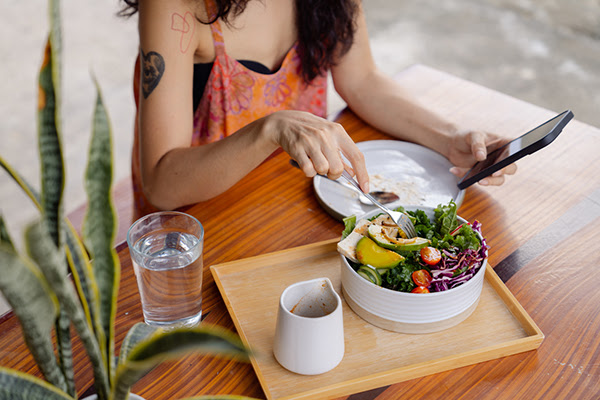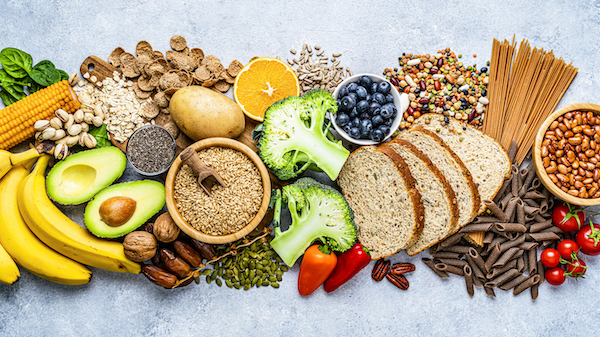



It’s hard to miss the food headlines these days — E. coli on our spinach and now salmonella in tomatoes and jalapeños. With press like this it’s no wonder women are frustrated trying to eat more vegetables! We read a quote the other day from a former FDA official who said that “produce is produced in a very complicated system… making it very, very difficult to trace a given tomato back to its source.”
Since when did growing and selling vegetables become so complicated? Not to mention the antibiotics and hormones in our eggs, beef and chicken, or the mercury in our fish. It can be overwhelming to decide what to eat. It’s sometimes enough to throw your hands up in defeat. But please don’t give up — there are ways to navigate through these complicated everyday food choices. And many times the answers come by simply following your instincts.
With simple choices you can lessen the burden of contaminated food on your system or avoid it altogether. And it doesn’t have to cost you a fortune in organic groceries. Let’s take a look at six easy choices that can enhance the quality of your food and get you back to nourishing your body without worry.
Pesticide residues in common fruits and vegetables
Pesticide amounts vary from one vegetable to the next. Here’s an alphabetical list of items that are consistently highest and lowest.
High pesticide produce:
|
Low pesticide produce:
|
*Adapted from data gathered by the Environmental Working Group.
1. Know where your food is coming from — the closer to home, the better.
In a perfect world, we could all grow our own vegetables and raise our own animals in the best of conditions. But the reality for many women is that life is too complicated to start and tend a garden, let alone raise our own cattle or chickens!
So if you can’t get food in your own back yard, the next best thing is your local farmers market. Vegetables grown locally do not have to sit on trucks for days on end or change as many hands. Nor do they endure the factory-like growing conditions now standard on industrial farms. Local farms are often smaller and can tend to their crops in a way that is impossible on large industrial farms. Not to mention the fact that local veggies are also fresher and may be more inexpensive because they don’t have to travel very far. Just remember to ask if their crops have been treated with herbicides or pesticides.
The same goes for your meat. Buying from a nearby farm or getting to know your butcher at the grocery store to ask where your meat is coming from will give you the chance to ask about the health of your chicken, beef, or other meat before you buy it. In fact, women who ask questions about the history of their food tend to make healthier choices. In this case, knowledge is not only power, but it’s also healthy!
2. Learn which vegetables are high and low in pesticides.
Anyone who’s ever planted a garden or just grown a few sprigs of basil on the kitchen windowsill knows that bugs like our veggies as much as we do, and it takes careful tending to keep them away. So it’s not surprising that pesticides are so commonly used on larger farms. It’s much easier for large industrial farms to spray than to strategically plant marigolds, or purchase ladybugs to keep critters away.
Thankfully, there are some crops that don’t need as much protection from pests, and these are the ones you might consider buying conventionally grown rather than organic — especially if your budget is tight (see the list at right). And for those vegetables that are highest in pesticides, choosing organic or locally grown options will lessen the chemical burden on your system.
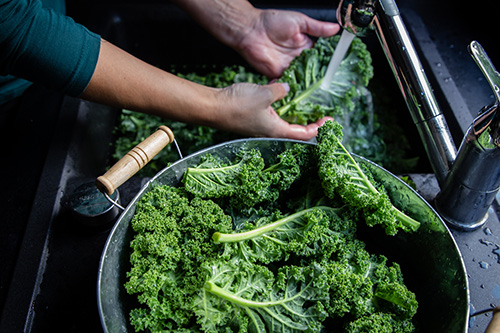
Produce washes or soaks are also helpful in removing excess pesticides, bacteria or residue from their fruits and vegetables.
Veggie spray:
- 1 tablespoon of fresh lemon juice
- 1 tablespoon of baking soda
- 1 cup of water
Put all the ingredients into a spray bottle and shake gently to mix. Be careful because the mix may foam up. Spray on veggies and fruit and allow it to sit for 2-5 minutes, then rinse produce under cold water. Keep the spray refrigerated when not using it. It will stay fresh for about a week.
Veggie soak:
Fill a clean sink or bowl with water. Add ½–1 cup of white vinegar and 1 tablespoon of salt. Swish the mixture around with your hands. Allow your produce to soak for 20 minutes, then rinse well when finished.
3. Choose fish low on the food chain.
Your seafood choices make a difference
Here is some seafood shown to have relatively low mercury and/or PCB levels, along with some seafood that is usually best to avoid. Keep in mind that information on mercury contamination in seafood can change depending on the agency collecting the research. And this is by no means an exhaustive list! For more healthy seafood options and recipes, visit the Environmental Defense Fund’s page on eco-best fish.*
Good seafood choices
|
Seafood to avoid
|
* Adapted from data collected by the Environmental Defense Fund.
Most women know that fish is low in saturated fats, high in omega-3 fatty acids, and generally a great choice when it comes to healthy protein. The down side to seafood is mercury and PCBs — as well as the general sustainability of our fisheries industry! Because of industrial and municipal discharge, stormwater runoff, and modern farming practices, contaminants like mercury and PCB’s are entering our oceans, lakes and rivers, and in a process called biomagnification, building up in fish.
Mercury (specifically, methylmercury) binds to protein, so it can be found throughout fish tissue, while PCB’s tend to build up largely in fatty tissue. Nowadays, most fish has some mercury in it. But the good news is that you can limit the amount in your system by eating fish low on the food chain and by limiting how much fish you eat per month. Smaller species, with their shorter life cycles, and those that feed off of the “bottom” of the ocean don’t accumulate as much mercury in the short amount of time that larger predatory fish can. So it’s wise to eat fish like sardines and catfish rather than swordfish and sea bass, for example. Take a look at the chart above for healthy seafood options.
Depending on where it comes from, shrimp can be a really good choice or a seafood choice to avoid. The best choices for shrimp are US farmed shrimp, spot prawns from Canada and Oregon pink shrimp (small cocktail shrimp). The problem is, 90% of the shrimp eaten in this country is imported from Southeast Asia and Latin America, where environmental regulations aren’t as stringent. And this imported shrimp can be high in contaminants. Middle-of-the-road choices include northern shrimp from the US and Canada, spot prawn from the US, and wild shrimp from the US. As for scallops, good options are farmed bay scallops or sea scallops from New England and Canada. Avoid sea scallops from the Mid-Atlantic. Also be sure to check with your fish market to make sure the scallops you’re buying are indeed scallops and not skate. To maximize profits and avoid the rubbery texture, some markets are selling skate in place of scallops.
There are better choices than others when it comes to canned tuna as well. Since albacore (or white tuna) is much larger in size than chunk light tuna (consisting of the smaller skipjack), it accumulates mercury faster. Albacore tuna eat other large fish, which have consumed smaller fish as well, so the contaminants can add up quickly. If you’re making a decision in the grocery store, choose the chunk light instead of albacore. It’s lower in mercury — and less expensive.
4. Enhance your gut flora with healthy bacteria.
Another way to prevent contaminated food from making you sick is by working with your body’s innate defenses. From our earliest days following birth, we each acquire a complement of organisms that quietly cohabit nearly every crack and crevice of our bodies, especially our digestive systems. These tiny guests pay us back by helping our bodies with digestion, metabolism, detoxification, and our immune response. We can in turn boost their function by taking probiotic supplements — and having a good source of probiotics on board is always a good idea when concerned about contaminated food or enhancing your nutrition.
A high-quality probiotic blend like the one we offer in the Digestive Health Package may be helpful. Research shows probiotics are a great way to support a healthy gut and a strong immune system. You might also consider adding more naturally fermented foods to your diet, like yogurt, kefir, homemade pickles or “natural” sauerkraut, kimchee or even natto. These foods are recognized in other cultures as essential to strong digestion — and longevity.
We recently read about a related controversy surrounding this topic in a fascinating article in Harper’s on raw milk. This details the question as to whether pasteurizing milk, that is, heating it to 161°F to kill its bacterial content — is a health measure that is doing us more harm than good. Some scientists are hypothesizing that we may even have become so “sanitary” about our food that we lack the biological immune defenses that milk’s natural bacterial content afforded us in the past. Obviously, this is a highly controversial subject, and raw milk is illegal in many states. Yet many believe it can be a wonderful health food when obtained from a farm where cows are well cared for, allowed to eat grass instead of grain, and graze naturally.
Thankfully, there are many simple ways for us to accumulate healthy bacteria, and in the end they can protect you from more harmful bacteria and toxins that may enter your system.
5. Be generous with antioxidants.
You’ve probably heard that antioxidants prevent aging and cellular damage, but many women don’t realize that they can also help get rid of toxins and boost immune function. Antioxidants protect us from the molecules called free radicals becoming overzealous, where they can do damage to cells and lead to disease. Free radicals appear in the body whenever there is an oxidation going on, which includes many natural, everyday body processes like breaking down foods, but also when we’re exposed to environmental toxins.
Sulfides, or thiols, are a group of antioxidants that may enhance our ability to detoxify harmful compounds in the body , lessening the burden from potential pesticides or mercury in food. Foods rich in sulfides include garlic, onions, scallions, broccoli, cabbage, bok choy and collards. Try a stir-fry or a simple nourishing soup made with kale, onions, and chicken broth. Sliced thin and cooked down in chicken broth, kale loses its bitter flavor and makes a great antioxidant-rich meal. You can also add soy milk, cream or butter, and put it in the blender to make a creamier texture.
Simply adding antioxidants to your diet will not only help rid your body of the harmful heavy metals or chemicals we can consume in our food, but it will also help preserve the body’s ability to fight off bacteria like E. coli or salmonella if we are exposed to a bad tomato every now and again.
6. Finally — savor your meals!
This may be the most important choice on the list. And it’s one we often forget to do with our busy schedules and overwhelming responsibilities. In many countries around the world, people sit down together to eat. They enjoy their food with family and friends in a comfortable space, without talking on their cell phones, trying to drive, or eating next to their computers at work. In the rush of day-to-day activities, we often forget that eating is a pleasure, a time to sit and relax, to indulge our senses and feed our bodies.
Relaxing while eating might not prevent you from getting salmonella poisoning or inactivate the pesticides that may have been sprayed on your lettuce, but it will lower your stress and allow your immune system to better serve and protect you in the long run.
The purpose of this list is not for you to take every word and follow it exactly every day — you’ll drive yourself crazy! — but we hope you’ll stay aware of what you’re eating, and to make small but smart choices wherever you can that can make all the difference to your health.
1 Stark, L., et al. 2008. ABC News: How do tainted tomatoes get to your plate? The trouble with tracing fruits and veggies. ABC News. June 12, 2008. URL: https://abcnews.go.com/Health/story?id=5056681&page=1 (accessed 07.05.2008).
2 Environmental Defense Fund. 2008. Contaminants in fish and shellfish. URL: https://www.edf.org/page.cfm?tagID=16283(accessed 07.07.2008).
3 Environmental Defense Fund. 2008. Shrimp/prawns. URL: https://www.edf.org/page.cfm?tagID=16302(accessed 07.18.2008).
4 Environmental Defense Fund. 2008. Scallop recommendations. URL: https://m.edf.org/page.cfm?tagID=16299 (accessed 07.18.2008).
5 Fitzgerald, T. 2008. Mercury in canned tuna — seafood selector — Environmental Defense Fund. URL: https://www.edf.org/article.cfm?contentID=7682(accessed 07.08.2008).
6 Johnson, N. 2009. The revolution will not be pasteurized: Inside the raw-milk underground. Harpers, April, 71–77. URL (paid access): https://www.harpers.org/archive/2008/04/0081992 (accessed 07.10.2008).
7 National Institutes of Health. Medline Plus: Antioxidants. URL: https://www.nlm.nih.gov/medlineplus/antioxidants.html (accessed 07.09.2008).
8 International Food Information Council. 2006. Functional foods fact sheet: Antioxidants. URL: https://www.ific.org/publications/factsheets/antioxidantfs.cfm (accessed 07.09.2008).