


Reviewed by Dr. Sarika Arora, MD
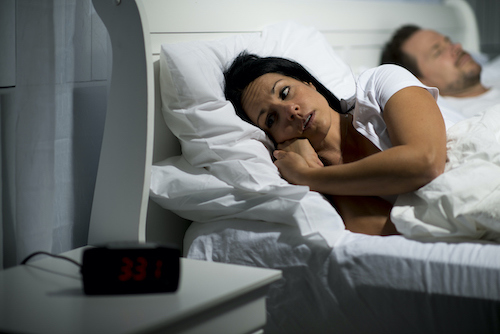
Restless legs syndrome is a sleep/movement disorder that keeps you awake with an irresistible urge to move the legs. It’s incredibly frustrating because, night after night, your body keeps you awake — for no obvious reason! Restless legs syndrome affects up to 10% of Americans and is more common in women. It tends to be most severe in people at mid-life or older, although it can occur at any age, even in young children.
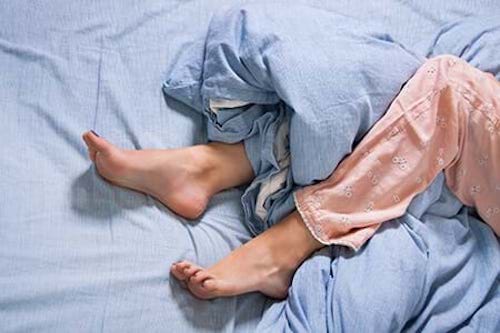
Here’s how to know if restless legs syndrome — also known as RLS or Willis-Ekbom disease — could be causing your lack of sleep.
What is restless legs syndrome (RLS)?
Restless legs syndrome is a disorder related to the brain’s use of the neurotransmitter dopamine, which regulates sleep, mood, behavior, cognition and movement. The sleep interruptions that coincide with RLS are why it’s classified as a sleep disorder, and most people are formally diagnosed with RLS through a sleep study.
To see if you might be suffering from RLS, take a look at the five diagnostic criteria that help distinguish it from many other conditions that produce similar effects:
1. You experience an unpleasant sensation of tingling, itching, or pins-and-needles — often described as “creepy crawly” or “electric” — accompanied by a strong urge to move. You most often feel this sensation in your legs (or just one leg), but it can also occur in your arms or other parts of the body. Just having the pins-and-needles sensation isn’t enough. The urgent need to move your legs is the key factor.
2. The tingling sensation and urge to move your legs either starts or worsens when you’re at rest, whether sitting or lying down.
3. You feel almost immediate relief from the tingling sensation upon moving your legs or affected body parts — but the relief doesn’t last after you stop moving, and you may find yourself having to move every 30-60 seconds just to find relief.
4. Your symptoms are nearly always worst in the evening and at night, and they may interrupt or prevent your sleep. If you do get to sleep, it’s common to wake up feeling fatigued because you’ve been moving all night, even though you didn’t wake up — but you won’t necessarily feel sleepy during the day. (Lack of “profound daytime sleepiness” is a hallmark of RLS and a number of other “hyperarousal” syndromes.)
5. No other condition, either medical or behavioral, can account for any of the above considerations (meaning, your condition will be diagnosed as RLS only if you have no other conditions, such as leg cramps, arthritis, obsessive-compulsive disorder, or fibromyalgia, that might be mimicking RLS).
A first-degree relative with RLS is a significant risk factor, so there’s a strong genetic component — but other factors, including iron deficiency, pregnancy, kidney disease, ADHD and even frequent blood donation have also been linked to RLS.
Why can’t I sleep?
Restless legs syndrome happens due to the disruption in your circadian rhythm and dopamine release, which is why you experience it mostly at night. The circadian rhythms of daylight and darkness produce important responses in your brain. As it gets darker, the hormone norepinephrine triggers release of the “sleep hormone” melatonin to ready you for sleep. One of dopamine’s functions is to block norepinephrine so that melatonin levels fall — making it a “wake-you-up” hormone that is usually released at daybreak.
But your circadian rhythm can be disrupted by a lot of factors — stress, poor nutrition, ill health or even staying up too late working or studying (especially if you’re looking at a screen!) — and that can throw off the proper timing of dopamine release. And if you already have some of the underlying factors mentioned earlier, it can initiate (or worsen) RLS symptoms.
For some people, RLS disrupts sleep intermittently — maybe twice a week or less. For others, it’s a chronic problem that interferes with your ability to function and affects your mood. Long-term sleeplessness has also been tied to chronic health problems, so it’s not a problem you should try to just “live with.”
What can I do?
Neurologists specializing in sleep disorders are starting to recognize that using sleep medications is not always the answer for RLS. There are two reasons for that: first, most such medications leave you drowsy during the day (which is actually worse than what you’d experience without them) and second, they don’t address the underlying neurotransmitter dysfunction — so you’d need to use them night after night (and some of them can be habit-forming).
There’s also a trend away from using medications that increase dopamine levels in the brain — medications like pramipexole (Mirapex) or ropinirole (Requip) — as a first option, in part because they can have side effects that include nausea, vomiting, constipation, drowsiness, and mood disorders. For this reason, current guidelines encourage people with RLS — particularly if your symptoms are intermittent — to start with a set of nutritional and lifestyle approaches to try to improve your symptoms before considering medical therapies.
5 ways to improve your restless legs symptoms
1. Start with good sleep hygiene. One of the first steps in addressing any sleep disorder is to make sure you’re setting the stage for sleep even before you lie down. Going to bed at a regular time, turning off electronic devices at least 1 hour before you head for bed, reducing alcohol and caffeine intake, and creating a comfortable, quiet atmosphere in your bedroom are steps that may help anyone with insomnia or sleep disturbances, and RLS is no exception.
2. Exercise daily. Research shows that being sedentary is a significant risk factor for RLS. One study showed that 3 days of aerobic and resistance exercise per week was enough to significantly decrease RLS symptoms, possibly for two reasons: increased blood flow to the lower extremities and exercise-related endorphins that support dopamine release.
3. Get enough iron, folate and magnesium. Iron deficiency has long been known to be associated with RLS, and determining your iron status is one of the first steps recommended. It’s important that you work with a healthcare practitioner to find out what your iron status is, rather than just assuming it’s low. Folate plays a role in dopamine metabolism and sometimes can improve RLS symptoms, and magnesium, which supports nerve impulse conduction and muscle contraction, has been found in some studies to relieve RLS. The B vitamins, particularly B12, support nerve health, and vitamin E may improve peripheral blood circulation — all of which may help RLS symptoms.
4. Try mind-body therapies. While there aren’t many studies to support the effectiveness of natural RLS treatments involving massage, acupuncture, music, and meditation, it’s worth noting that one meta-analysis found that RLS responds particularly well to “the placebo effect” — almost 30% of RLS patients given placebo treatments experienced a positive improvement in symptoms. Our take on this finding is that it shows the power of the mind to achieve healing — so if there’s a mind-body therapy that you enjoy, chances are good that it can be used to quiet your restless legs.
5. Consider adding medication into the mix. For some, especially those with severe symptoms occurring nightly, these options may not be enough, and medications offered by a qualified healthcare provider may be the next step. The typical options used for treatment of RLS include low-dose dopamine agonists such as carbidopa or levodopa, α-2-δ calcium channel ligands such as gabapentin (Neurontin), or nonergot dopamine agonists such as pramipexole or ropinirole. All of these medications have side effects and should be discussed thoroughly with your healthcare provider before deciding on a medication strategy.
However, keep in mind that whatever treatment you decide upon will work best when you take a comprehensive, holistic approach to health. Many of the non-drug approaches may help medication therapy work better, so don’t give up on them!
1 Garcia-Borreguero D, Cano-Pumarega I. New concepts in the management of restless legs syndrome. BMJ. 2017 Feb 27;356:j104. https://www.bmj.com/content/356/bmj.j104
2 Allen RP, Picchietti DL, Garcia-Borreguero D, et al. Restless legs syndrome/Willis–Ekbom disease diagnostic criteria: updated International Restless Legs Syndrome Study Group (IRLSSG) consensus criteria – history, rationale, description, and significance. Sleep Medicine 2014;15(8):860–873.
3 Allen RP, Picchietti DL, Garcia-Borreguero D, et al. Restless legs syndrome/Willis–Ekbom disease diagnostic criteria: updated International Restless Legs Syndrome Study Group (IRLSSG) consensus criteria – history, rationale, description, and significance. Sleep Medicine 2014;15(8):860–873.
4 Allen RP, Picchietti DL, Garcia-Borreguero D, et al. Restless legs syndrome/Willis–Ekbom disease diagnostic criteria: updated International Restless Legs Syndrome Study Group (IRLSSG) consensus criteria – history, rationale, description, and significance. Sleep Medicine 2014;15(8):860–873.
5 Rattue G., Dopamine levels. Medical News Today, June 20, 2012. https://www.medicalnewstoday.com/articles/246849.php; González S, Moreno-Delgado D, Moreno E, et al. Circadian-Related Heteromerization of Adrenergic and Dopamine D4 Receptors Modulates Melatonin Synthesis and Release in the Pineal Gland. PLoS Biology, June 2012, doi: 10.1371/journal.pbio.1001347
6 Mitchell UH. Nondrug-related aspect of treating Ekbom disease, formerly known as restless legs syndrome. Neuropsychiatr Dis Treat. 2011;7:251-7. doi: 10.2147/NDT.S19177. Epub 2011 May 6.
7 Mitchell UH. Nondrug-related aspect of treating Ekbom disease, formerly known as restless legs syndrome. Neuropsychiatr Dis Treat. 2011;7:251-7. doi: 10.2147/NDT.S19177. Epub 2011 May 6.
8 Patrick LR. Restless legs syndrome: pathophysiology and the role of iron and folate. Altern Med Rev. 2007 Jun;12(2):101-12.
9 Mitchell UH. Nondrug-related aspect of treating Ekbom disease, formerly known as restless legs syndrome. Neuropsychiatr Dis Treat. 2011;7:251-7. doi: 10.2147/NDT.S19177. Epub 2011 May 6.
10 Fulda S, Wetter T. Where dopamine meets opioids: a meta-analysis of the placebo effect in RLS treatment studies. Brain. 2008;131:902–917.