
Fatigue & insomnia
“Am I losing my mind?” —
What you can do about fuzzy thinking
by Marcelle Pick, OB/GYN NP
Where are my glasses? It’s on the tip of my tongue! Did I turn off the iron?
Am I losing my mind?
How often do thoughts and questions like these race through your mind? All of us
experience forgetful, fuzzy moments, particularly during periods of high stress,
and increasingly so as we grow older. I see many women at my practice who are alarmed
at lapses of attention or memory, and they are frequently embarrassed to admit how
bad it can get — particularly when the results compromise safety.
Many of these women are caring for aging parents with Alzheimer’s disease
or other forms of dementia, and they fear that the fuzziness they’re experiencing
is just the tip of some terrible iceberg for them as well. Others have children
with an ADHD diagnosis and wonder if they may have it, too. Most of them are concerned
that their mental lapses will only get worse. I hear versions of If I’m this
forgetful now, what’s it going to be like in ten years? all the time.
In my experience, women (and men!) fear the mental symptoms of aging as much or
more than the physiological changes.
But for the large majority of women under 70, there’s simply no reason to.
Episodes of difficulty with word retrieval, an inability to focus, or feeling overwhelmed
by a rush of thoughts and ideas are common signals that your body is overburdened
and not getting the support it needs — and this includes how well you are
coping with stress. Fuzzy thinking is one of several symptoms that may develop during
perimenopause and menopause due to changing hormones, but problems with memory and
attention can also be related to other physiological imbalances that respond well
to simple changes in nutrition and lifestyle. So don’t let fear or shame of
your wandering mind keep you from taking stock of what’s really going on —
and then doing something about it.
Let’s discuss how.
When is fuzzy thinking serious?
Less often than you might think. Current medical thinking brackets lapses in cognitive
function within two extremes. On the minor side, you have a temporary state of mental
deterioration that is a direct result of a traceable behavioral pattern or situation
— sleep deprivation, low blood sugar, illness, falling in love, childbirth,
poor eating habits, and acute stress are a few examples. In this scenario, clarity
returns when the “crisis” is over. On the more severe side, you have
mental lapses that do not get better with time and self-care and that may indicate
onset of an underlying serious mental or physical condition, including but not limited
to clinical depression, bipolar disorders, schizophrenia, ADHD
(also known as ADD), dementia, Alzheimer’s disease,
post-traumatic stress disorder, or brain trauma or disease. Obviously the more serious
neuropsychiatric conditions are topics of scientific research and get more press,
so we hear more about this end of the spectrum.
As a result it’s easy to veer into catastrophic thinking when it comes to
your own cognitive symptoms — but let me reassure you that developing a spontaneous
degenerative mental condition at mid-life is usually the exception, not the norm.
And in the case of ADHD, there’s technically no such thing as adult onset
ADHD (although it’s possible that your symptoms were overlooked during childhood).
Of course, if you have a family or personal history of a clinical disorder, or recently
have experienced significant trauma, it makes sense to call your health care practitioner
and discuss your concerns. If your friends and loved ones are worried for you and
mentioning their suspicions, it can’t hurt to listen and get more information.
There are many tests available that can put everyone’s minds at ease.
What is far more likely is that you fall on the minor side of the scale. And while
your symptoms may be causing you a great deal of anxiety, it is more beneficial
to think of them as signals asking you to pay more attention to your whole health
picture. Rather than drown those calls out with drugs or shame, take them as a sign
to sit up and take notice. At our practice, we assess fuzzy thinking in the context
of many other biochemical and emotional issues — a great deal goes into maintaining
an agile mind! — beginning with the simplest possible explanation first.
Stress and overscheduling — the brain foggers
Women are fantastic multitaskers. We are hardwired to spin many plates in the air
at once — and make dinner while we’re at it. And while this is a most
admirable trait and quite possibly a good reason our species continues to thrive,
it can come at a cost — particularly in today’s fast-paced, information-dense
and stress-saturated culture.
If you think of your brain as a filing cabinet and information as folders downloaded,
filtered and filed by your short and long-term memory systems, we are living in
a time when the cabinet is just plain stuffed — and the older you are the
more jammed your filing cabinet becomes, especially if you have not been taking
care of yourself. This doesn’t mean you can’t learn new things (in fact,
learning new skills is a proven way to stretch your file cabinet capacity). It just
means that it’s easier for the newer files to slip through your short-term
memory filter and get discarded than it is to pack them into storage.
Distraction and overscheduling are also key players. If you are constantly thinking
of ten things at once, rushing hither, tither and yon and barely
remembering to breathe, your brain may choose to take a holiday whether
you want it to or not. Spacing out and shutting down are very real coping mechanisms
for chronic stress.
Chronic unremitting fatigue and mental lethargy can also
be the result of overburdening your adrenal glands.
Our adrenal glands evolved to function in short but limited bursts, switching the
central nervous system (including our brains) into full-alert mode to pump out cortisol
in response to sudden threats, then returning to resting phase. In this situation
(and when you are insulin-resistant, which I discuss below), the brain calls upon
cortisol for instant energy rather than the slower, but more sustaining glucose.
When a woman’s adrenal glands are overtaxed with no prolonged periods of quiescence,
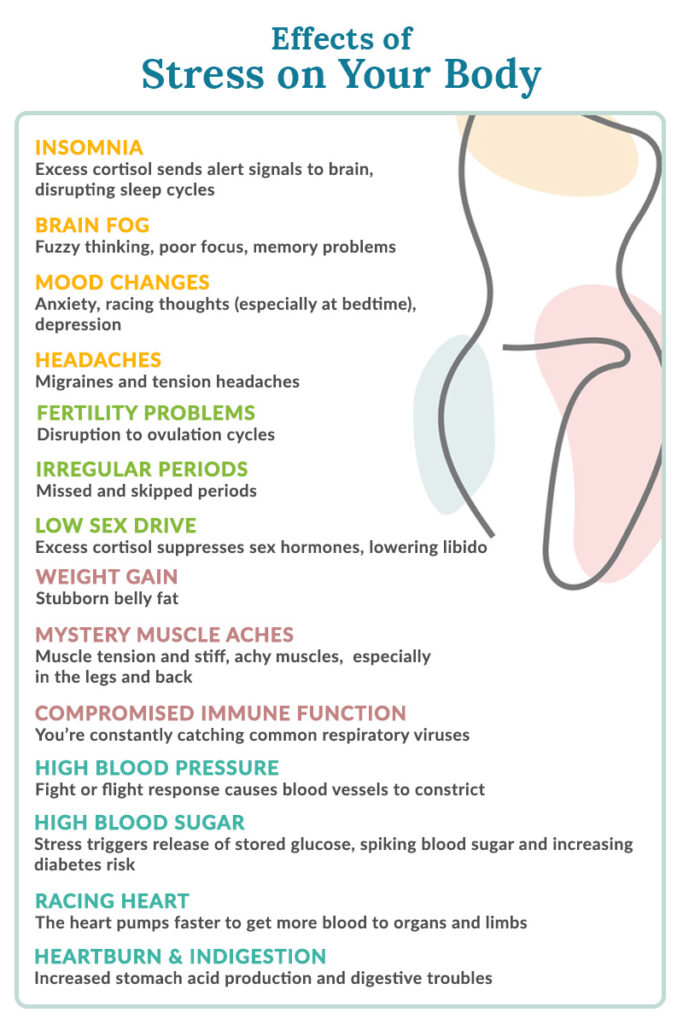
there are huge implications for your brain function. Prolonged exposure to cortisol
actually damages brain neurons and reduces your ability to think clearly and efficiently.
Reducing overt stress, both emotional and environmental, and learning positive coping
mechanisms are terrific therapy for the brain, and your lifestyle and daily schedule
may be the first place to start when thinking about what may be causing your mental
fog.
Better sleep on it
Another lifestyle factor within your control is how much sleep you get, and the
quality of that sleep. While we do not yet understand all the reasons why both too
little sleep and too much sleep can be detrimental to our health, it is sleep deprivation
— ranging from minimal to dramatic — that is the more pervasive problem
in our culture. We all know that when we are running on empty we just don’t
think well.
If your “to-do” list is keeping you up late at night, or if you are
drinking excessively in order to relax, your REM sleep may be deficient, and a valuable
part of information processing occurs during REM sleep. Go too long without it and
you will feel the disembodied mental effects directly — as anyone who has
pulled one too many all-nighters can attest.
You may think you’re functioning “normally” for days at a time
on limited sleep each night, but several cognitive–behavioral functions slip,
including declarative memory (your ability to recall specific facts and
experiences) and memory consolidation (your ability to crystallize recent
events into long-term memory), just for starters. Then too, studies show that getting
less than six hours a night can very quickly reduce reaction time, judgment, and
coordination, so with less and less sleep not only can you not think straight, you
are also compromising your safety.
We do not metabolize glucose well without adequate restful sleep either. In recent
analysis of over 70,000 women enrolled in the Nurses Health Study, researchers found
both too little sleep and oversleeping were associated with an increased risk for
diabetes. In other studies, poor memory function, including spatial memory
(the ability to remember locations and the “lay of the land”), were
found to be more common in individuals with diabetes and individuals otherwise compromised
by low blood glucose.
When sleep deficits are short-term, we can generally recover well and quickly return
to normal functioning once better sleep patterns are restored. But many women face
each day with an ongoing sleep deficit that is cumulative over weeks, and even years.
So catching up on your zzz’s is one of the easiest and quickest ways to improve
fuzzy thinking. (Read our article on insomnia in women
for more practical ways to reduce the effects of this health-robbing problem.) The
next place to look is your diet.
Nutrition, inflammation, and exercise
Optimal nutrition plays a tremendous role in brain function, as anyone who has sat
through a long meeting without eating breakfast knows. The B-complex vitamins, especially
B1, B2, B6 and folate (folic acid, or B9), which are commonly associated with energy
and stress, are also critical to our capacity to reason, verbalize, and remember.
Not only are the B vitamins important, but research also suggests that antioxidants
and essential fatty acids (EFA’s) likewise support optimal brain function,
in part perhaps by reducing inflammation and plaque production along nerve endings.
Studies indicate people with ADHD have lower-than-normal blood levels of omega–3
fatty acids, and numerous studies correlate behavioral and cognitive improvement
with supplemental omega–3’s, omega–6’s, and vitamin E. Fish
truly is brain food, especially if you eat the right kind and it’s free of
mercury. (For specific recommendations, see our
nutritional and lifestyle guidelines.)
Omega-3 fatty acids have also been shown to reduce inflammation markers, such as
C–reactive protein (CRP), in the blood. Inflammation is an immune process
carried out by the body to protect itself from foreign substances. Sometimes, however,
our bodies produce an inflammatory response when there aren’t any foreign
substances to fight. Inflammation in the brain has been linked to neurological disorders,
such as Alzheimer’s and ADHD, and may play a role in how well the brain functions.
So eating your omega–3 fatty acids may be a way to protect that important
function.
Exercise is also a key player in cognition. Just as less plaque on our arteries
makes way for easier blood flow, exercise naturally opens your arteries to increase
blood flow as well. Like all living tissue in our bodies, the brain needs oxygen
(via blood) to do its job and regular exercise makes for better circulation all
around. Fittingly, some common symptoms of heart disease are memory loss, aphasia
(a loss for words) and fuzzy thinking, thanks to inefficient blood circulation.
Again, these conditions are at the far end of the scale, but it only makes sense
to prevent inflammation as much as possible before it gets the upper hand.
Food sensitivities and mental clarity
Inflammation can also be caused by undiagnosed food sensitivities, allergies, exposure
to environmental pollutants, excessive caffeine, alcohol and sugar intake, and pervasive
GI issues. In regards to cognitive dysfunction, I see a lot of women who drastically
improve once they remove wheat and gluten from their diet. Sensitivity to yeast
(Candida) can also manifest
as fuzzy thinking, which can improve when you avoid yeast’s favorite food:
sugar! The metabolic by-products of yeast can actually be neurotoxic.
Each one of us is an individual with a unique reaction to different substances,
so you may have some sleuthing to do — but don’t disregard the possibility
of mental fuzziness as the telltale sign of something awry in your diet. The cleaner
you can make your diet and your environment, the easier it is to identify any possible
connections — and the clearer your thinking will become. Try a gentle detox
like our two-week Quick Cleanse plan
to see what comes to light. Most of my patients report a rapid increase in energy
and mental alertness within days of initiating a detox diet if food sensitivities
are an issue. Who knows — you may even recover that photographic memory!
And while implementing a change in your nutrition, you should also consider a reduction
in carbohydrate consumption. Let me explain why this is important for your memory
and attention.
Insulin resistance — an overlooked cause of depression and fuzzy thinking
Your cognitive function relies on a steady supply of oxygen and glucose. When levels
dip, you yawn or begin to crave food. If your circulation and metabolism are hopping
along, and your hormones are balanced, your brain gets what it needs without much
fanfare. However, insulin resistance
— a precursor to diabetes, metabolic syndrome, and cardiovascular disease
— can make this whole process far more complicated by causing inflammation
and affecting brain function.
Let’s digress for just a moment, to help you understand how insulin can dramatically
affect your mental functions. Insulin and glucagon are the major hormones that facilitate
your body’s ability to regulate blood sugar (called glucose). If each of your
cells had a door, insulin would be comparable to a key that unlocks the door and
enables the cell to access glucose. If the cell does not require any energy (in
the form of glucose), insulin stores that energy for future use in fat cells. Glucagon
is the hormone responsible for releasing glucose from storage if needed.
A diet high in simple carbohydrates (the kind found in the ubiquitous “white
foods”: bread, pasta, cereal, refined sugars) and overly processed foods cause
levels of insulin in the body to remain extremely high. Sooner or later, if insulin
levels aren’t normalized, your cells become resistant to insulin’s effects
and their doors stay closed and locked. What happens to all that glucose in circulation?
It’s transported straight to fat cells — usually around the belly —
even if your other cells are actually starving! And because your cells can’t
function properly without glucose, insulin resistance can lead to other serious
health problems as well.
The brain isn’t exempt. Insulin resistance prevents brain cells from accessing
glucose as well. What fills the void? In some cases, possibly cortisol. Our brains
are not geared to run on cortisol for long periods of time; it’s only meant
to be an emergency substitute. In any event, if this situation isn’t rectified
it can have far-reaching implications, including neurotransmitter imbalance, cognitive
malfunction, and possibly a steady decrease in thyroid function, too. All of these
conditions may present initially with a lack of mental clarity.
Some women discover that they’ve become insulin resistant when they enter
perimenopause and menopause. Before that time, estrogens appear to have a protective
effect; when levels decline the protective effect is diminished, but you gain the
opportunity to understand what’s really been going on in your body. This is
one of the many gifts of menopause.
If you are dealing with insulin resistance, reducing your simple carbohydrate load
may significantly improve your mental clarity — not to mention your mood.
And once you’ve stabilized your insulin and cortisol levels, addressing other
components of hormonal balance becomes more straightforward. Your body can’t
balance its “minor” hormones (estrogen, progesterone and testosterone
among them) until your insulin metabolism is on an even keel.
Estrogen and brain circuitry
Estrogen and progesterone balance is also crucial for proper brain functioning and
healthy neurotransmitter levels. Any woman who has experienced
sugar cravings, bouts of fatigue,
or extreme mood swings
as part of PMS knows instinctively
that estrogen and progesterone influence how you feel and think.
The effects of hormones on cognitive processes are being scrutinized more closely
by the medical research community as recent studies show correlations between estrogen
levels and the incidence of Alzheimer’s disease. Estradiol in particular appears
to have a potent neuroprotective, antioxidant effect, preventing our neurons from
oxidative damage and early death. Studies are showing that estrogen in general profoundly
impacts mental agility by helping the brain strengthen and expand the nerve endings
— dendrites — that complete the final, crucial steps in cognitive functions.
Estrogens help connect the little wires in our brains to make processes like memory,
reasoning, and mood run smoothly.
So, it makes perfect sense that as estrogen levels shift during perimenopause and
menopause, memory and attention may wax and wane. Supporting your body’s hormonal
transition with gentle endocrine support is one way to reboot your natural hormonal
rhythm and help regulate estrogen levels. Changing your diet, supplementing with
nutrients, and decreasing stress, inflammation and toxic exposure will also clear
out the mental cobwebs.
And speaking of clearing out, this brings me to one frequently overlooked topic
that should be addressed in relation to mental clarity.
Heavy metals and fuzzy thinking
Heavy metal toxicity is an extremely controversial subject and although it has been
implicated for many years in neurological disorders, adequate research remains to
be done to fully define the connections with cognitive impairment. At poisonous
levels, a loss in cognitive performance has been documented for at least seven different
heavy metals (cadmium, chromium, cobalt, lead, mercury, nickel, and silver). Although
aluminum is not categorically a heavy metal, work has been done that links exposure
with cognitive disorders, including reduced verbal and visual memory, visuo-spatial
problem-solving, concentration, “concept formation,” and attention,
as well as with increased risk of Alzheimer’s and other forms of dementia.
But in an overall sense, little has been done to quantify the cumulative effects
of daily exposure in humans to low levels of heavy metals — the kind of exposure
we all experience every day.
Mercury, arsenic, lead, and cadmium are the most common heavy metals with which
we come into daily contact. Studies of songbirds, aquatic life and groundwater show
that these metals are everywhere. We inhale, eat, absorb and breathe them —
and the younger we are the more dangerous they can be. Toddlers are particularly
vulnerable to lead poisoning, and the effects can be irreversible. To my thinking,
if we have proven that high levels of heavy metals affect brain development and
functioning, doesn’t it stand to reason that long-term exposure to low levels
would have a detrimental effect?
This month a landmark study of 4700 children will be published in Environmental Health Perspectives that documents
a causal relationship between childhood exposure to environmental pollutants with
a diagnosis of ADHD. In this particular study, prenatal exposure to cigarette smoke
resulted in a child being 2.5 times more likely to have ADHD, and childhood exposure
to lead elevated the risk four-fold. What’s more, scientists recorded this
increased risk when blood levels of lead were far below the Center for Disease Control’s
definition of acceptable blood levels. I encourage you to read this report for yourself
or peruse an interview with the lead researcher and another national expert on lead
poisoning at Living on Earth.
To put it bluntly, heavy metal toxicity doesn’t go away just because we’ve
grown up. After 20–plus years of treating women in my practice, I believe
that heavy metal toxicity is a real issue for many more people than we’d like
to believe — and it may be an issue for you.
Ironically, there is one metal that causes fuzzy thinking when you have too little
of it in your system: iron. Anemia, or iron deficiency, is a common concern in women.
From time to time anemia is the result of a blood disorder, but we see it most frequently
in postpartum women and in those who experience heavy periods. Fortunately, this
is a condition that is easily treatable with a few dietary changes and temporary
iron supplementation, but it is a situation that deserves medical attention.
Putting the pieces together: the Women to Women approach
For the sun to burn off your mental fog, you will need to tune in to the signals
your body is sending. Consider the possibility that your lifestyle and habits are
getting in the way, but if you don’t feel these are your main issues, talk
to your health practitioner about getting some tests. We recommend the following
tests:
- Iron levels
- Fasting insulin, glucose tolerance test, & 2–hour postprandial glucose
and insulin
- Homocysteine and CRP
- Thyroid function
- Adrenal function
- Hormone panel
- ALCAT or other allergy testing
- Urinalysis
- Other alternative tests we use include the organic acid profiles by Metametrix
Once your tests have ruled out any major underlying medical issues, you can put
your mind at ease and begin to take steps toward improving your core foundation
of health. Once you’ve made a few positive changes, I would not be surprised
if you find your mental agility returning in spades. Don’t let fear of ADHD,
dementia, or old age keep you from addressing mental difficulties.
For the vast majority of women, a combination approach that restores inner physiological
vitality will help keep you sharp as a tack well into your older years. And if you
are on medication for a more serious condition, these suggestions can only enhance
your prognosis:
Eat often and well. Focus on eating three well-balanced meals and
two snacks per day that include protein, richly colored vegetables and fruits, whole
grains, fiber and healthy fats. Drink plenty of water and take a balanced multivitamin
to fill in any nutritional gaps. I also suggest supplementing with omega–3
fatty acids, either through diet or capsules. Check to be sure your brand is lead–
and mercury–free, and also make sure that any multivitamin you take has a
rich complement of B’s and antioxidants like C and E.
Cleanse your system. Diagnosing hidden food sensitivities and cutting
them out can do wonders in terms of mental clarity. If you suffer from headaches
or joint pain along with your fuzzy thinking, you may very well be sensitive to
gluten. Limit alcohol, sleeping pills, and prescription pain medications. Try a
gentle detox for a couple of weeks. By ridding your body of environmental aggravators,
allergens, and toxins, you can give your immune system a rest and roll back the
brain fog bank.
Cultivate your relaxation and sleep habits. In fact, try to spend
about a third of your life doing this! There simply is no effective substitute for
the restorative effects meditation and sleep can have on your neurobiology; they
are fundamental to reversing the downward spiral of fatigue and stress.
Exercise daily. Moving your body will help focus your mind. When
you exercise, your heartbeat quickens and you breathe more deeply — which
gets more oxygen to your brain and sharpens your thoughts. If you find yourself
dull and tired, try taking a brisk walk around the block. If you feel refreshed
when you move, you are suffering from lethargy, not fatigue, and may find that increasing
your physical activity is fuel for your brain. Exercise also helps decrease cortisol
levels.
Restore hormonal balance. Avoid simple carbohydrates, refined sugar,
and processed foods to help keep insulin levels in line. Consider gentle endocrine
support to kickstart your natural hormonal balance and to promote a healthy ratio
of estrogen, progesterone and testosterone. This will also help keep your neurotransmitters
happy.
Reduce stress through time management. Try sitting down and making
a comprehensive to-do list. Decide which tasks fall into the “have-to”
pile and which fall into the “want-to” pile. Don’t underestimate
the value of the “too-hard basket,” either: it may be that some of your
life rescue missions are overwhelming you! Then take out your calendar and space
the have-to items evenly across the days of a week. At the top of each month, divide
the want-to items across the next six months. Be realistic. Most people can accomplish
only one or two extra errands or goals per week on top of their regular activities.
If there is something that can give, let it go — as long as it isn’t
sleep or exercise!
Stretch your brain. Crossword and Sudoku puzzles, games of logic,
and learning new skills (like a foreign language or an instrument) are great brain
workouts. Our ability to generate new brain cells after age 30 might be minimal,
but creative thinking exercises can help build efficiency and agility to those we
already have, and hopeful new studies indicate that even damaged nerve cells may
be able to recover under certain conditions. Try simple memory exercises like recalling
all your elementary school teachers’ names. Don’t let your computer
do your thinking! As you work on boosting your nutrition and increasing your physical
exercise endurance, don’t forget to challenge your brain power! Download games,
puzzles and brain teasers from Audible.com onto an iPod and do both at the same
time! Your brain power is like your muscle power; you have to use it or lose it.
Thinking comes from doing
With the complicated, often overlapping symptoms that fall under the umbrella of
“fuzzy thinking,” the average woman may leap to the conclusion that
she is developing a variety of serious diagnoses. And often with age comes a gnawing
fear that something is really “wrong” with our brains that will surely
get worse.
But before you take that headlong downer, take time to assess your total health
picture and face the reality of your diet and lifestyle. Are there things you can
do now to give yourself more support? I’m fairly confident the answer is yes.
Brain chemistry is not a fixed state and will react for better or worse to the way
we treat ourselves and our bodies. And this includes all women of all ages, whether
you have a clinical condition or not. So put your mind over matter and take action
— and lose those muddled moments for good.
|
Do you want to:

Need to know more before you order?
|
Related to this article:
References & further reading on fuzzy thinking
Last Modified Date: 04/20/2011
Principal Author: Marcelle Pick, OB/GYN NP