

Breast health

The state of breast health in 2008
A conversation between Marcelle Pick, OB/GYN NP, cofounder of Women to Women, and Dr. Dixie Mills, breast specialist, cofounder of Women to Women’s Personal Program, and Director of Research at Susan Love Research Foundation.
Those of us who grew up in the 1960’s may remember stories of women who went to see their doctors about a breast lump and, before they knew it, were waking up from a surgical procedure without one or both of their breasts. For younger women this may seem preposterous, but sadly it’s true — many women weren’t even told they had breast cancer before decisions were made about mastectomy. The good news is that we’ve come a long way from those dark days. From Betty Ford’s public announcement about her breast cancer in 1974 and the start of the Susan G. Komen organization, to Dr. Susan Love’s Breast Book published in 1990 and the countless marches and walks we participate in today, women have fought to raise money for research, education and more choices when it comes to breast cancer treatment and prevention.
And I have to say, we’ve made great progress. We are becoming much more familiar with preventing breast cancer through things like exercise, high quality nutrition and managing stress. We’re also learning that there may be more treatment options out there and we’re giving women more say about when that treatment happens. I have lots of success stories in my practice, but there is still so much more to learn. And the women I see — with and without breast cancer — have valid questions that need to be answered.
In honor of National Breast Cancer Awareness Month and the great effort put forth by women everywhere, I invited breast specialist Dr. Dixie Mills to talk with me about some of the biggest concerns on women’s minds when it comes to breast health today. So let me share with you the questions I hear most and the answers provided by Dixie, renowned breast surgeon and researcher in the field.
Preventing breast cancer — nutrition, exercise and stress management
MP: To start, Dixie, could you talk briefly about the research that you’re doing with the Dr. Susan Love Research Foundation?
DJM: Yes. Well, the Dr. Susan Love Foundation is really doing research on understanding the “normal” breast because, believe it or not, we don’t know much about the normal breast. It’s called the “resting breast.” We know more about the lactating breast, but for instance, there is a big controversy even about how many ducts there are. We’re taught in medical school that there are 15–20 ducts, but there are probably only eight to nine ducts. And we’re taught in medical school that you can just divide the breast up like a pie, and each duct is a piece of the pie. Well, in fact, we’re finding that one duct may be a third of the breast, and there may be a lot of other smaller ones. So, we’re looking at the breast anatomy and physiology, and the fact that each duct makes different hormones and each ductal system should be probably treated differently.
The other thing we’re doing is encouraging more research into what goes wrong in the breast before it becomes cancer. We’re looking at carcinogenesis, prevention, and that’s why we’re starting the Love/Avon Army of Women, where we’ll have women who are ready to volunteer. Already since October 1st, over 180,000 women have signed up. Scientists thought they could only work on mice, or cells in Petri dishes in the lab — they didn’t think women would be willing to give their blood, or give a core biopsy, or their urine or sputum. Well, in fact, I think most women would want to do more than just march or wear pink. Many of us will give up our bodies to find prevention for our friends or daughters or sisters, granddaughters, aunts or cousins.
MP: I agree. There’s so much more to breast health awareness than wearing pink! Dixie, even though we don’t definitively know what prevents breast cancer, what are some of the most important things that you recommend for patients to do?
DJM: Well, I think it’s a combination of just practicing good lifestyle health measures and having fun with them. Not so much being afraid of anything, but more exercising in a fun way, eating good food that you enjoy eating, and taking care of yourself — reducing stress by doing things you really want to do, taking time for yourself, quiet time. We can get into more specifics later, but that’s the overall message.
MP: Okay. So, let’s talk about stress for a minute. I love that one because I talk about it a lot at my practice. When you talk about stress reduction, what do you have in mind?
DJM: Well, I think that stress covers so much. One person’s stress is another’s adrenaline. And some just handle stress better than others. But I see stress as the stuff that gets in your way, that doesn’t bring joy. The stuff that makes your shoulders get tense.
MP: What I say to my patients is that a lot of times, who we are as adults is colored and flavored by our stories from our past. And oftentimes what worked for us as children — always trying to be “good,” trying to kind of protect oneself, being on guard all the time, or being over-cautious — doesn’t serve us as adults. It oftentimes creates more stress.
A lot of times women are multitasking, trying to be perfect mothers, trying to be perfect wives, trying to be perfect homemakers, trying to be perfect so on and so forth, and it’s just not possible. None of us can ever be perfect. And all these things cause stress hormones like cortisol to be elevated. So encouraging them to breathe and take time for themselves is certainly something that I can share with my patients.
DJM: Right.
MP: So what do you think about meditation? Our lives are so full with computers, iPhones, and Blackberries that work goes on even after we get home, and it makes it very, very difficult to really stop and unplug at the end of the day. One of the things I tell my patients is, if you even have one minute, just close your eyes for that moment. If you don’t have a minute, just think about one word to quiet your thoughts. Also, having a spiritual connection, and that doesn’t mean religious per se, but some kind of spirituality can help calm us.
DJM: Right. Also being outdoors and getting into nature. Even if it’s just a tree, or some green grass, to stop and reach out to touch it helps take us away from our busy lives.
MP: So let’s get back to nutrition. I talk with some of my patients about how to make their diets more anti-inflammatory. I encourage them to include turmeric (or cucurmin) and other natural anti-inflammatories in their diets — lots of cruciferous vegetables (which contain indole-3-carbinol or DIM ), a fair amount of fish oil (for essential fatty acids). I advocate trying to go organic as much as possible and testing their vitamin D levels on a regular basis. I also suggest being conscientious about using enzymes to help with digestion. Are there any foods, other than those, that you recommend for your patients?
DJM: You know, I try to keep it simple because people get overwhelmed with “Oh, you know, you should do this; you shouldn’t do that…” But I think making it easy, like having a nice container on your kitchen table with spices or just sprinkling some turmeric on all the food you’re cooking; cleaning out your refrigerator of all the “whites” and the “bad fats” or trans fats — simple things which then become permanent if you can get into a routine with them.
So if, for instance you have a family history of breast cancer or you simply want to do what you can to prevent it, try incorporating these things into a day-to-day routine, instead of trying too hard and possibly failing.
MP: I encourage my patients to eat more what I call a combination Paleolithic/Mediterranean diet, so that they have small amounts of protein throughout the day — it could be beans, soy, and other legumes — and make sure they have good cheeses like goat cheese and feta cheese, good kinds of fats like olive oil, and lots of vegetables and fruits. It also means staying away from the “whites,” the donuts and the Dairy Queens, and those things — not that you can’t have them periodically...
DJM: Right, right. You need to treat yourself now and again. But make it a treat.
MP: And I think that’s true. I think some of my patients are so rigid with what they eat, that this too is causing cortisol to be elevated. So striving to dance between being really good to your body and respectful. Wouldn’t you say?
DJM: Yes. And that’s the same with exercise. Too much exercise may be just as harmful as not any. So it’s doing exercise that you love doing, and doing it for shorter amounts of time, and getting your heart rate up for a couple minutes and then down, up, down.
MP: Burst training. That’s what I teach my patients to do. When they only have 20 minutes, if they burst throughout those 20 minutes, they can get tremendous benefit. And then they have extra time to go do other things instead of exercising for an hour and a half every day, which is practically impossible to do! If you have kids and a family, a job, and everything, as many women do, there’s always something to do — that’s the story of our lives.
Breast cancer and our environment
MP: So what about environmental toxicity? How does environmental toxicity play into breast cancer?
DJM: Well, I think people are finally waking up. Along with understanding global warming, we’re realizing that what we’re doing to Mother Earth isn’t good for us, either. For genes, there hasn’t been a big change, but I think we won’t know for maybe a couple of generations what we’re doing to our DNA with all the chemicals. Maybe some people’s DNA is okay with it, but I think a lot of ours may not be. We know that the fish don’t do well, and the animals that eat the fish. I’m sure that there are ways, even though we’re all amazingly resilient, we could cut down on toxins.
MP: What I’m interested in, in my practice, is the number of people, and it seems to be anywhere from 25–40%, that are not able to detoxify very well. Many of them have an enzyme deficiency and can’t utilize folic acid well. It would be interesting to know how many of those people, because they’re exposed to some of these toxins, actually have more of a tendency towards breast cancer or other cancers. If so, it’s very difficult to tell who these people are.
We have to be mindful that the liver’s got a very hard job, always having to detoxify medications and everything else we ingest. For this reason I think it’s important that we use things like milk thistle or other things to really help with liver detoxification.
DJM: And hopefully, in the near future, we’ll have a better understanding of personalized medicine, to understand who is at risk for what, and what treatments work better for different people, so that one size doesn’t fit all.
Not all breast cancers are alike
MP: While we’re on the subject of one size fits all, when I talk to some of my patients, they are really confused about the concept of breast cancer in general. And many of them think that all breast cancers are the same.
DJM: Well, that’s definitely not true. We know from studying the anatomy of cells and tissues that breast cancers are different. And now we know that molecularly, they’re very different. There are some which probably aren’t even really cancers, and people are definitely not going to die from them. And then there are others which are very lethal. And then there is a host of — at least probably five or more — types in-between. We know that some respond better to chemotherapy, some respond better to hormones, some don’t need any treatment beyond surgery at all.
There’s a new test called Oncotype DX that they can do on the tumor. Even if your nodes are positive they can do a test on the tumor, and it will give you a score of its aggressiveness, and whether chemo may be valuable, or if chemo doesn’t make any difference. So I think that’s really important that women know that is out there. Your physician needs to ask for it for you, and it is expensive, but insurances do cover it.
Dealing with the fear around breast cancer
MP: There is such fear in our culture of breast cancer in general, and we think, “Oh, no — I have to have chemo.” But wait a minute; we need to put things in perspective, women need to learn more about what they have before jumping into treatment.
DJM: Right. And no one dies from the in situ type of breast cancer. I think that people die from the fear of it, or die from the idea that they’re going to have to go through such strenuous treatment.
MP: I think you’re right, Dixie, about the fear of what happens for people, and the terror that takes over. Women really need support along the way.
DJM: I always say get a second opinion, get a third opinion. If you’re hearing things that aren’t resonating with you, or if someone’s not explaining things well to you, there is somebody else out there. And you have time!
Most women, when they get a diagnosis, think they need to do something the next day, or they should have done something yesterday. But by the time breast cancer has been diagnosed, it’s probably been there for years. And taking a month, or taking a couple weeks, or six weeks, or two months to investigate everything you want, or to try something different, is not going to make a big difference in the long run.
Now, there may be like, 5–10% of breast cancers which are very fast-growing, and maybe you do need to do something a little bit more quickly. But it’s not like in the old days, where you’d have a biopsy and have the surgery that same day. I think it’s really important that women become informed.
MP: I’d like to reiterate that, because what happens is that people get so frightened that they can’t really think. And you need time. Time is always helpful for people, because they get a sense about what’s truly the right path.
DJM: And so they don’t feel they’ve been pushed into something, because that’s the toughest thing, where things backfire. When three years later, you realize, “Good grief — I did this to myself, and I didn’t really want to — why did I do it?” And a lot of women (though maybe not some of the younger ones) feel that they don’t want to offend their doctor. But the doctor has 20 other patients that day or that afternoon, and hopefully they’re above being offended if the patient wants to go for another opinion. And if they are, then they shouldn’t be doing what they’re doing. Not everyone can please everybody, and not everybody wants to go under the same therapy.
The Gail Risk Model
MP: Let’s talk a little bit about risk. What do you think about the Gail Risk model?
DJM: Well, the Gail risk score was developed as a tool for assessing a population’s risk more than an individual’s. It has a few questions that have to do with family history and hormonal questions, but it misses a lot of the other things. I think it’s an easy little test to do, but I wouldn’t take it as “the only thing to do.”
What’s interesting is that the score is usually lower than women expect. So in that way it may help reduce people’s anxiety, if before they take the quiz they think they have a 50% chance of getting breast cancer, then learn their chances are, like, 5%. But I think we can do better, hopefully, in the future, with a urine test or blood test, or seeing how you’re metabolizing things or what your enzymes are.
MP: When I was first hearing about the Gail Risk test, I was thinking that there are so many more questions it should ask! It just doesn’t seem personal enough.
DJM: Yes. It was really devised to be used in research studies on larger populations. What’s more, it’s really only made for white women, so its ability to predict risk in other populations is very limited.
Estrogen and breast cancer
MP: So Dixie, what are your thoughts on the concept that estrogen causes breast cancer? The newest information about estrogen metabolites isn’t definite, but it certainly seems to hold some promise.
DJM: I think that estrogen causing breast cancer is just too simple. There may be some evidence that estrogen, and particularly estrogen plus progestins, may feed breast cancer, more like a fertilizer. But I don’t think that estrogen itself causes breast cancer. I think an overabundance of it, or a certain amount of it, in certain women, may lead to more cells proliferating and having more chance of mutation. And estrogen metabolites are interesting; it may be that certain metabolites are more likely to be carcinogenic or be DNA-adducts (a piece of DNA bonded to a cancer-causing chemical), and cause DNA changes.
MP: That’s interesting. In my practice, I do evaluate estrogen metabolism for women with and without breast cancer, and what I see, more often than not, is women with breast cancer seem to have abnormal estrogen metabolism pathways. Again, I don’t think that’s the only thing that causes the breast cancer, but it may be that — especially if they are on estrogen replacement therapy, and they’re not doing anything to help with that metabolic pathway— it certainly can contribute to the process of carcinogenesis. But then the question is: is it truly estrogen? Because as we go further away in time from our exposure to estrogen, the cancer risk increases.
DJM: Right. And people have assumed that it was hormone replacement or hormone therapy in postmenopausal women that led to cancer, but I don’t think that’s the only thing. And this is clearly a disease where rates have historically been higher in developed countries — but rates are increasing worldwide now. Whether it’s just mammograms picking up more breast cancer that would never have done anything — I don’t think that’s all of it, either. There is also what we were talking about before — the toxins in our environment and the stress in our lives.
MP: One of the things that certainly makes us quite different from other places around the world is what we eat, but also how we live our lives in terms of how much we expect of ourselves in comparison to less developed countries. The cortisol issue, again, and the stress levels again, play into it.
DJM: The other thing is that — to simplify it, maybe — we don’t have our children before we’re 20 anymore, and that causes some higher rates of breast cancer. But that just seems so unfair. And it can’t be only that. I mean, not everybody who doesn’t have children, like the nuns for example, get breast cancer.
Mammograms and breast cancer
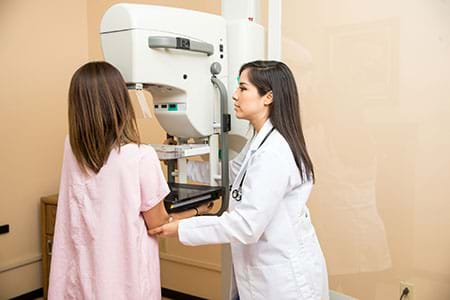
MP: So let’s talk about mammograms, Dixie. What do you believe to be the merits of mammograms?
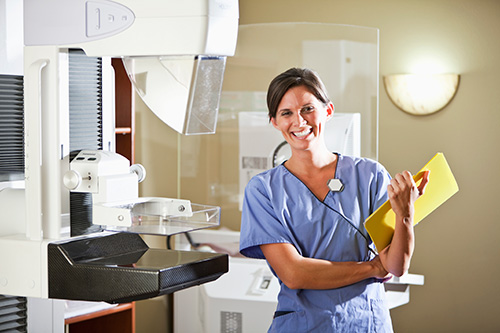
DJM: Well, as I explain in my article on this subject, mammograms are not my favorite contraption. I tell my patients that I’d like to be the curator of a mammogram museum when I retire. I think they do have some usefulness in postmenopausal women with fatty breasts, to see breast cancer. (The breast is made of glandular, fatty, and fibrous tissue. As we age the “resting” breast tissue typically becomes more fatty, less dense, and easier to read mammographically.) But mostly the breast cancers they’re finding are not the aggressive type. There are some new imaging techniques on the horizon, but I don’t even think that imaging is the way we need to go. Because if women have already jumped off the cliff, then we need to find something that says, “This is the cliff, and you don’t have to go over it if you don’t want to.”
MP: It’s important for women to know that mammograms are not preventive; they’re actually diagnostic.
DJM: Right.
MP: Because a lot of people think that when you have your mammogram, that’s prevention, and that isn’t true. They’re just ensuring that there is nothing apparent at that time. I think it’s also important, Dixie, to let people know that mammograms do have a false-negative rate. When someone has a mammogram that registers negative, it doesn’t make me absolutely certain that there is nothing there. I will usually recommend that they get a second opinion or try another diagnostic test like an ultrasound.
DJM: Oh, definitely. It might be more helpful if it were the standard here in the US for mammograms to be double-read (read by two people), as it is in many European countries and some other places. But of course, it costs more to have a mammogram read by someone in addition to the radiologist, so they are also developing computer-aided detection systems to help improve performance in screening mammography. And having a mammogram isn’t reducing your risk. It’s not like brushing your teeth or flossing — these things do prevent cavities. But a mammogram just finds a cancer.
The role of thermograms in breast health
MP: So what do you think about thermograms?
DJM: Well, I think exactly how to use them isn’t clear yet. When something shows up on them, generally speaking you are asked to get a mammogram anyway. I think they need to figure out a way to use them. Has that been your experience?
MP: It has been my experience. I think that if people started having thermograms, Dixie, in their 30’s, they could start seeing pattern changes. That’s probably when it needs to happen. Because the problem with thermograms is that they don’t often pick up cancer when you already have it.
They really detect changes in patterns before they’ve advanced too far. And I think that’s appropriate. The problem is when you find these changes, and it’s not yet a cancer, what happens? And from my perspective, that’s when the dietary changes, the indole-3-carbinol (or DIM or different types of broccoli extract), exercise, more meditation, less stress — by decreasing cortisol levels — making sure vitamin D levels are optimal, using cucurmin — that’s when all this would probably have even more impact.
DJM: Right. It wouldn’t be a bad idea if perhaps the medical community approached thermograms as a way to follow trends in the breast’s health status, beginning in a woman’s 30’s — almost like how a dentist uses an x-ray to watch the state of your teeth over time.
Merits of the breast exam
MP: So what about breast exams? What are your thoughts about breast exams?
DJM: Well, I think that with breast self-exams women should feel comfortable touching themselves, but I don’t think that they should feel they have to do have to do it a certain way to find something. I think they should just know what their breasts feel like and ask questions if something doesn’t feel right.
The frustrating thing to me is that even though breast self-exams can help detect a lump, there is some very clear evidence that when done once a month — and even when done by a physician — breast exams don’t decrease mortality from breast cancer.
But... we don’t know about the concept of breast massage for preventative purposes. We haven’t studied that!
MP: Exactly! Or even the concept of lymph drainage, because we have a huge number of lymph glands surrounding our breasts and under the arms. Is there a possibility that we could help prevent breast cancer by massaging the lymphatic system to stimulate movement and draining? Maybe.
I think what you and I are both saying is that there is still a lot we don’t know.
Hope for the future
DJM: But I do think that there is also a lot of hope. Since 2003 the incidence of breast cancer has gone down. We don’t have more recent data, but maybe it’s more than just stopping the hormone replacement therapy. It could be that women are exercising more than they were, or the fact that Title IX came in and those who exercised when they were young are benefiting now, or that the food is better, or things that we didn’t even realize are happening.
MP: I definitely think that more and more of my patients are much more aware of nutrition, and how having lots of fruits and vegetables, quality supplements, fish oil and the good quality fats, and exercising regularly could be reducing the risk of many things, including breast cancer. And again, you’re right. Maybe that’s a part of what has decreased the risk for people — for occurrence and recurrence.
Above all, I sincerely hope there will come to a day where we can steer away from the one-size-fits-all approach to breast cancer and look at a woman’s DNA to personalize her breast cancer treatment. Dixie, thank you so much for talking with me, and good luck with your research.
Keep the dialogue going
If I’ve learned anything over the years about breast health, it’s that breast cancer prevention and treatment are both extremely personal. I’ve had patients try lots of different avenues with success. My advice to you is: stay educated, find your best path to breast health, and stick to it. No one should have more say about your body than you! However, if you have been diagnosed, remember that you didn’t do anything wrong! We just don’t know what causes breast cancer. In the meantime, I hope this conversation about breast health will continue from friend to friend, mother to daughter, sister to sister and so on, because we’ve come this far — and there’s so much more to discover!
Our Personal Program is a great place to start
The Personal Program promotes natural hormonal balance with nutritional supplements,
our exclusive endocrine support formula, dietary and lifestyle guidance, and optional
phone consultations with our Nurse–Educators. It is a convenient, at-home
version of what we recommend to all our patients at the clinic.
If you have questions, don't hesitate to call us toll-free at
1-800-798-7902. We're here to listen and help.
We’re always happy to welcome new patients to our medical clinic in Yarmouth,
Maine, for those who can make the trip. Click
here for information about making an appointment.
Related to this article:
References & further reading on the state of breast health
Original Publication Date: 10/14/2008
Last Modified: 08/16/2010