


Reviewed by Dr. Sharon Stills, NMD
When a woman who isn’t nursing a baby notes fluid seeping from her nipple it can be very distressing. But nipple discharge is actually quite common — it just isn’t talked about much. Many women become anxious and worried about fluid coming from their nipples. Some are curious about it, others are completely freaked out about it, and some are just plain disgusted! Fortunately, nipple secretion is benign the vast majority of the time. Even so, it’s important to distinguish the rare situation in which further evaluation may be needed, since so many different things can cause nipple discharge and problems stemming from it can usually be treated most effectively when detected early. Let’s take a closer look at the breast to learn more about what causes nipple discharge and when you should seek evaluation.

Anatomy of a nipple
The word nipple is a derivative of an obsolete German word meaning meaning “small protuberance” and, like breasts, nipples come in all shapes and sizes. Nipples develop in mammalian embryos in a line extending from the armpit to the groin. In human fetuses most of these nipples disappear by the end of nine months’ gestation. But people who are born with third nipples — typically located beneath the breast on the ribcage — are not altogether uncommon. In fact, that Napoleon was said to have one.
Although the function of our nipples is to provide milk for our babies, men also have nipples because all embryos start out as proto-female by default until about six weeks’ gestation when, because males have a Y chromosome, testosterone kicks in and creates the male brain and genitalia but leaves a pair of nipples. And truth be told, women do not have a monopoly on breast issues: men can get breast pain and swelling (called gynecomastia); breast cancer, though rarely; and more rarely still, males have been reported to lactate under certain circumstances!
The nipple itself is a fascinating anatomical device created to deliver the milk made in our breasts to nourish our offspring. It is designed to be easily latched onto by the day-old mouth, to suckle and, almost like a watering can, provide essential nutrients. Nipple tissue is quite sensitive with a robust supply of nerves, which is why they can be an erotic zone for many women. Many women say they know they are pregnant when their nipples become more sensitive.
The darker circle of skin surrounding the nipple is called the areola. They, too, come in all colors and sizes, but I think it serves as the perfect target for a newborn baby’s eyes. The areola darkens with pregnancy — all the better for baby to see the bullseye! Newborns will sometimes have discharge from their nipples, as well, due to high levels of hormones crossing the placenta before birth. This neonatal milk has been called “witch’s milk,” and will most often resolve itself within a couple of weeks.
The nipple itself has about 20 microscopic openings called pores. Recent work by Susan Love, MD and colleagues has investigated where these openings go. They found that only about five to eight of them lead to true ductal systems — the pipelines and branches to the lobules in the breast that convert blood and other fluids into milk. The others seem to be short blind tubes that may secrete sweat-like substances or have some other as-yet undefined function. Each of the ducts within the breast has a small sphincter right under the opening which prevents substances from freely entering or leaving the breast.
A human female’s breasts are unique among mammals, having multiple ducts in one breast — other mammals such as rodents or cats and dogs have only one duct per teat. Even other primates have smaller breasts which do not develop as much after puberty or childbirth. The significance of this is unclear.
Immediately after delivering a baby, a woman’s estrogen and progesterone levels fall, signaling the hormones prolactin and oxytocin to begin producing milk. The entire miracle of milk production is a remarkable, carefully orchestrated interaction of multiple hormones. Women who choose to nurse and those who have tried know that the process can be quite amazing – and at times frustrating.
What causes nipple discharge?
There are many different causes of nipple discharge. Discharge from both nipples when a woman is not nursing is usually a physiological or a normal system response to something not quite right or different going on in the body. It is known as galactorrhea when it looks like milk but is not associated with childbirth or the nursing of an infant. (The term galaxy was actually derived from the Greek word for milk — galaktos — think Milky Way!).
Nipple discharge can be relatively common during perimenopause, when a woman’s hormones are in a state of transition. No one knows exactly what, why, and where the fluid comes from. Some people think of it as just a stagnant pool which, for unclear reasons sometimes decides to erupt spontaneously from the nipple. Obviously there is something more to it than that.
We do know more about the breast as it prepares milk for breastfeeding our offspring. We know that many food compounds, caffeine, nicotine, and now even pesticides can be found in breast milk. Any mother who has breastfed will have some story to tell about something she ate that affected her baby. But we don’t know if substances can be transferred from the blood into the ducts when a woman isn’t lactating. Hopefully these questions and others regarding nipple discharge will be studied soon.
We also know that repetitive squeezing can cause perpetuation of the discharge. Some methods of breast self-examination have women squeeze their nipples, but this action is now discouraged by most breast specialists. Studies have found that over half of women — by some estimates up to 85% — can elicit some fluid from their nipples and that it is not abnormal. This nonspontaneous discharge is also nearly always benign.
Benign breast discharge can also be caused by many drugs, such as birth control pills, hormone replacement therapy (HRT), and certain anti-anxiety medications (see table). There is also an undefined neuropsychological component which is probably related to the release of hormones such as cortisol and oxytocin. From time to time in “empty-nest” mothers and women who have newly become grandmothers will see this — especially if for some reason they have little opportunity to spend time with their new grandchildren.
What should you do about breast discharge?
Nipple discharge should always be brought to the attention of your health care practitioner so he or she can determine whether further evaluation and treatment are needed. If you and your provider can see that the discharge is coming from both nipples and out of more than one opening you shouldn’t worry. If you stop squeezing it should go away on its own in a few months.
If the fluid looks like milk and comes out pretty freely you should probably have your prolactin level checked. This can help rule out problems such as a pituitary tumor called a prolactinoma. If the test is positive, the next step is an MRI of the brain to confirm this small, benign tumor which secretes too much prolactin and causes the discharge. These tumors can be watched or you can take a medication — rarely are they removed. You should also see an endocrinologist and a neurosurgeon for treatment of these rare tumors.
There are other causes of galactorrhea, and we’ve compiled a table of some of the more and less common sources of breast discharge. Another simple blood test that should be checked is a thyroid level — thyroid imbalances can also affect the breast either with breast pain or breast discharge.
Nipple discharge and breast cancer
Women and their doctors are naturally quite fearful of breast cancer. Everyone knows someone who has had breast cancer, and everyone wants to diagnose this disease as early as possible whenever it’s present. Unfortunately, breast cancer has few early symptoms. When anything out of the ordinary occurs in the breast such as pain, itching, or discharge, women naturally worry that it may be a sign of cancer. Fortunately or not, discharge is rarely a sign of breast cancer — probably less than 2% of all nipple discharges are related to cancer. There are a few exceptions, however and women should be aware of them. The following list includes the types of discharge that should definitely be looked into, although the majority of these cases will turn out to be benign:
- When discharge is spontaneous (occurs without manipulation)
- When the discharge is from only one opening in one nipple
- When the discharge has a sticky, clear consistency
- When the discharge occurs in a woman over age 60 who is not on hormones
- When the discharge is bloody
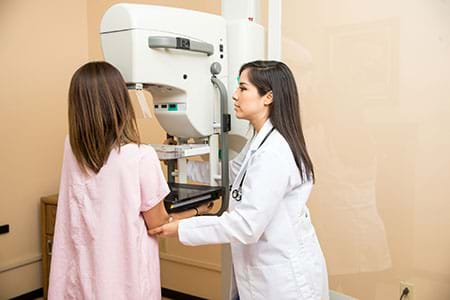
- When there is a lump or other abnormal finding on a mammogram
Under any of the above conditions, women should be referred to a breast specialist who can evaluate the condition in more detail by taking a detailed history, including a family history; reviewing medications; performing an extended breast exam; and ordering additional tests if needed.
Testing nipple discharge
Every breast specialist has a slightly different algorithm for working up abnormal or pathological breast discharge. Some may start with a smear of the discharge. This is an easy test to do, and it is comforting to the woman to know that something is being done right then and there. If the result shows some atypical cells, something further should be done — usually a surgical biopsy — sooner rather than later. If the smear is read by a cytologist as benign (hopefully at a center which does a lot of them), other less invasive tests can be done.
An ultrasound (again, at a center which does a lot of them) can identify a dilated duct and even a small growth within the duct.
A ductogram (again, hopefully performed by an experienced radiologist) can identify a filling defect or blockage in the duct, such as a papilloma (a small, benign wart-like growth). During a ductogram, a very small catheter is inserted into the opening that is emitting the discharge, a small amount of dye is injected, and then a mammogram is taken to outline the ductal system. If done correctly ductograms are actually not painful.
Some centers are now exploring the use of MRI to evaluate the ducts as well, but this is quite expensive and still experimental. And of course, if a woman hasn’t had a mammogram in more than six months, one should be ordered.
Ductal lavage is a relatively new evaluation technique in which a catheter is inserted into a ductal opening as in a ductogram. A small amount of the anesthetic lidocaine may be used, and then fluid is injected instead of dye to rinse out the duct. The fluid is then aspirated back out through the catheter and sent for cytology. The cytologist studies the aspirate for cells that have sloughed off from the ductal lining (somewhat like a Pap smear); hormone levels may also be analyzed; and some centers are now trying to identify biomarkers for very early precancerous changes.
If there is any question after any of these tests or if the discharge persists, most doctors and patients want the duct removed surgically so the discharge stops. This can be done in a very non-deforming way if the surgeon is able to identify the correct duct and simply excise it and a small amount of tissue around it. Most breast surgeons can identify the duct with some sort of a probe or dye. The filling defect in the duct may have to be found preoperatively with an ultrasound or mammogram. An incision is made around the areola and should not create a significant scar. The old-fashioned way, where surgeons did major ductal excisions and took all the ducts and created deformed breasts, is thankfully obsolete.
Inverted nipples and nipple cancer
Some women with inverted nipples can have a small amount of exudate that is usually just sweat and not actually discharge from the ducts. If a woman’s nipple starts to invert where it never had before, this should be brought to a healthcare provider’s attention. Sometimes a lump underneath the nipple can cause the nipple to retract and can be a warning sign of cancer. However, many women are simply born with inverted nipples. These women can still nurse their babies, though the nipple may require a bit of stimulation to evert and will usually then retract. This normal variant is very different from a pathological nipple inversion.
Another sign of cancer can be a red and itchy rash over the areola. This type of condition does not respond to lotions or antibiotics and can be a rare form of breast cancer called Paget’s disease. If you are worried about something like this (it is usually only present on one nipple), you should be seen by a breast specialist who will then do a small skin punch biopsy in the office. We know now that cancers found in the nipple and only located in the nipple can be effectively treated conservatively with lumpectomies and radiation. The nipple can then be reconstructed by a plastic surgeon or, alternatively, many women do without and are just thankful they still have their breast form and cleavage.
Nipple infections
Women can get infections around their nipples, which can become quite sensitive and painful. Most breast specialists will attempt to treat them with antibiotics first but they can be quite difficult to cure, requiring lengthy periods on drugs. This type of infection (chronic subareolar abscess) is usually found in smokers or people who are exposed to second-hand smoke.
We really don’t understand the etiology of these infections, and usually women go on to have some sort of surgery to drain the abscess or remove the duct. But even with surgery the infections often recur. Again this is something for which a woman would want to see a specialist, one who sees this condition often. It is obviously a nuisance but not life-threatening, and sometimes time and patience are the best medicine.
Don’t ignore what your nipples are telling you
Women should always feel that they are being listened to and not thought to be complaining or whining when they are genuinely anxious about breast or nipple change. Neither should they ever be made to feel so worried, or that they might have done something wrong. Knowledge is power, and a woman should always feel comfortable asking questions — and more questions — if necessary.
If you are confused or worried about something that is occurring in your breasts or nipples, call your healthcare practitioner for an appointment. If you can’t talk freely with him or her, ask friends and relatives for a referral. Women have a complicated relationship with this part of their anatomy. The breasts and nipples are where human life begins to be nurtured: make awareness of breast health a part of your own process of self-nurturance.
1 Vaidyanathan, L., et al. 2002. Benign breast disease: When to treat, when to reassure, when to refer. Cleve. Clin. J. Med., 69, 425–432.
Williams, R., et al. 2002. The relevance of reported symptoms in a breast screening programme. Clin. Radiol. 57, 725–729.
2 Klimberg, V.S. 2003. Nipple discharge: More than pathologic [Editorial]. Ann. Surg. Onc., 10, 98–99.
3 Dunn, et al. 1998. Galactorrhoea with moclobemide [Letter]. Lancet, 351, 802.
Egberts, et al. 1997. Non-puerperal lactation associated with antidepressant drug use. Br. J. Clin. Pharmacol.,44, 277–281.
Fetrow C., & Avila, J. 1999. Professional’s handbook of complementary and alternative medicines. Springhouse, PA: Springhouse Corp., 82–83, 248–249.
Guven, K., & Kelestimur, F. 1995. Hyperprolactinemia and galactorrhea with standard-dose famotidine therapy [Letter]. Ann. Pharmacother., 29, 788.
Lee, S. 1992. Hyperprolactinemia, galactorrhea, and atenolol [Letter]. Ann. Intern. Med., 116, 522.
PDR staff. 2000. Physicians’ desk reference: Companion guide. Montvale, NJ: Medical Economics. 1293, 1315, 1337.
Stuart, M, ed. 1979. The Encyclopedia of herbs and herbalism. NY: Grosset & Dunlap, 176,191,239, 276–277.
Windgassen, K, et. al. 1996. Galactorrhea and hyperprolactinemia in schizophrenic patients on neuroleptics: Frequency and etiology. Neuropsychobiology, 33, 142–146.
4 Leung, A., & Pacaud, D. 2004. Diagnosis and management of galactorrhea. Am. Fam. Phys., 70 (3).
Recommended reading
Dr. Susan Love’s Breast Book, by Susan Love, MD. The “bible of breast care books.”
Finding a Lump in Your Breast: Where to Go… What to Do, by Judy C. Kneece. This is a nice small book that is very accessible for women. Includes a list of drugs that affect breast health.
Additional resources
www.susanlovemd.org — Resources, information, and links from the “mother” of the breast cancer movement. Dr. Mills is currently conducting breast cancer research in association with Dr. Susan Love’s Research Foundation in California.
The La Leche League is a supportive and informational resource available to breastfeeding women in over 40 countries worldwide.