
changing women's health naturally
small medium large

Breast health

Dixie Mills, MD, FACS on fibrocystic breast condition

The beautiful, lumpy breast — how fibrocystic breast condition responds to changing hormones

by Dixie Mills, MD, FACS

Recently I heard a phrase about the non-lactating breast that I love so much, I’m now sharing it at every turn I can. It’s called “the breast at rest.” I’ve said before that the primary role of the breast is to nourish, and this is miraculous. So in some ways, it’s true that a non-lactating breast is at rest. But we don’t always think about non-lactating breasts as “working” or being active — and yet they are! A breast at rest really isn’t at rest at all — our breasts are always changing — and this is a miraculous thing too.

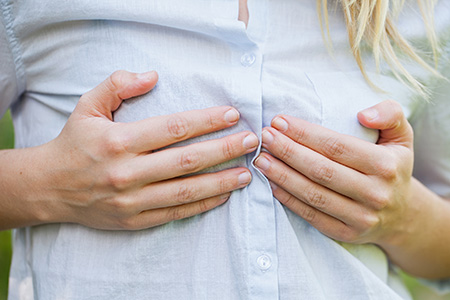
As a breast care specialist, I am always in awe of the variation in shapes and consistency of the breast — they are all textured in their own way with bumps and lumps, large and small. (In a way, the word “lump” is unfortunate since it sounds like a non-lumpy breast is somehow more perfect.) The fact is that everyone’s breasts are textured to some degree, since the bumpiness is really part of their natural appearance and makeup. When you give yourself a breast exam, for example, what you feel are the mechanisms that make our breasts work: prominent milk glands, ducts, fat or adipose tissue, and other fibrous-type tissues. But some women who discover lumps in their breasts panic, thinking that all lumps are bad news — and the reality is that it’s just not that black-and-white.

For the most part, general breast lumpiness is a natural part of their amazing design and functionality — but there are also those women with lumpier, more textured breasts who experience fluctuating breast pain, tenderness or discomfort, and this can indicate a common concern called fibrocystic breast condition. This condition is not breast cancer, nor does it signify cancer — but there’s so much fear out there about cancer that for many women, there’s no distinction between “lump” and possible cancer. So how can we tell which breast lumps to be concerned about? Should women with fibrocystic breast condition be worried about the lumps in their breasts? I’d like to share my thinking about fibrocystic breasts and the role that balancing our hormones can play in sustaining good breast health.

Exploring the resting breast

At the Dr. Susan Love Research Foundation, they are studying the resting breast and how it differs physiologically from the lactating breast. They gave about a dozen women NoDoz and cimetidine (an OTC anti-ulcer pill), then washed out their breasts in a process called lavaging, every 2—4 hours for 12 hours.

We know that caffeine and cimetidine get into the breast milk in about an hour in nursing mothers, but in these non-lactating women of all ages, it took an average of 6 hours to get into the milk ducts.

This is just the beginning of exploring how the resting breast works! To learn about more studies open to any woman, check out the Love/Avon Army of Women website — www.armyofwomen.org

Form follows function — identifying fibrocystic breasts

One way to help identify fibrocystic breast condition, or have a better understanding of your breasts overall, is to learn more about what our breasts actually look like and how they work. Learning about breast anatomy has helped many women understand how normal fibrocystic changes appear when they occur, which makes it less frightening when we go to our practitioners to check out a new lump.

Inside our breasts are branching trees (or ducts with lobules — like “leaves” that make milk when needed) that converge into the nipple. There is a great debate about how many ducts there are — some say 5—9, others say 20—29. Several fibrous strings hold up the breast, and with the surrounding fat give the breast its size and the cushiony feeling. Although there is no one specific cause for why breasts get lumpier or swell and cysts occur, it all appears to happen when the normal milk-producing glands or ducts enlarge during a menstrual cycle.

A breast cyst is a tiny sac filled with fluid — like a water balloon. They can be small or larger, and often feel round or oval like a soft grape — or they can also feel firm. Only one breast cyst may appear in a fibrocystic breast, or there may be several, or (as noted above) none! Another feature which distinguishes a cystic lump from a malignant tumor is that cysts actually move around — a breast cyst usually doesn’t connect with our underlying breast tissues. However, sometimes cysts can be accompanied by nearby tissue that is very thick, making them less mobile. Many times breast cysts also seem to happen overnight — a woman can wake up, and all of a sudden notice a lump in her breast.

Painful or enlarged lumps in fibrocystic breasts are also connected to the fluctuations of ovarian hormones — this is why changes in fibrocystic breast condition tend to correlate with menstrual cycles. So for women with fibrocystic breast condition, after menopause, the degree of pain or discomfort you can feel in your breasts usually subsides with the balancing or reducing of your hormones.

But the most wonderful news is that you don’t have to wait until after menopause for your symptoms to subside. Knowing how our hormones affect fibrocystic breast condition, and what we can do to achieve hormonal balance, can also empower us take charge and do something about it right now.

How hormones and our menstrual cycle affect fibrocystic breast condition

While many are quick to point a finger at estrogen sensitivity or estrogen dominance as the culprit behind fibrocystic breast condition, it’s clearly not the sum total cause. Our hormones are always working in concert with each other, which means that estrogen, progesterone, and prolactin, all naturally occurring female hormones, are performing quite a balancing act in our bodies. And many other hormones (hypothalamic, other pituitary hormones, thyroid, parathyroid, adrenal, pineal, pancreas, ovarian, and duodenal hormones) can also contribute to fibrocystic breast condition.

But we usually look to estrogen specifically, since most women feel relief from their symptoms when they achieve estrogen balance. Estrogen is thought to affect the cysts and cellular activity in our breasts — and women with higher levels of estrogen tend to have more symptoms of fibrocystic breast condition. It may be more of a case that the ratio between estrogen and progesterone is too high (estrogen dominance) than that the amount of estrogen itself is high.

But there’s more to this hormonal puzzle than first meets the eye.

With all the emphasis on breast cancer, fibrocystic breast condition often gets the short end of the stick — there’s little authentic research into the causes and treatment of the condition. But one thing that most researchers agree upon is that the normal hormonal variation which occurs during a woman’s menstrual cycle is a very strong contributing factor to the intensity and frequency of the condition. So to fully embrace the changing lumps in our breasts, it helps to get a bigger picture of what’s happening hormonally (and physically) as our bodies go through the menstrual cycle each month.

Most of us reading this article know the basics about what happens to our bodies during our monthly cycles: hormones stimulate cell growth lining the uterus, and if a woman does not become pregnant, this uterine lining is sloughed off and discharged from our bodies during menstruation. Similarly, in the breast, each month these same hormones are promoting the growth of tissues in the breast glands and increasing the blood vessel activity and cell metabolism — a lot of activity for a breast supposedly at rest!

The fullness and heaviness that any breast can endure is connected to all this activity — in other words, if you feel a little bloated when you’re about to get your period, your fibrocystic breasts are probably reacting, too. But the major difference is that our breasts have no way of “sloughing away” all this extra growth — there’s not really so much that it needs to be pushed out through the nipple (thank heavens we don’t need monthly breast pads!) — so when the monthly cycle is over, the breasts are thought to undergo a natural process called apoptosis: a naturally advantageous process of programmed cell death and disposal.

During apoptosis, enzymes are activated that break our cells down into fragments. These fragments are further broken down by our scavenger cells (inflammatory cells) and nearby glandular cells. The fragments of these broken cells and the heightened inflammation can sometimes lead to scarring (fibrosis) of our milk-producing glands and ducts. This triggers the release of hormone-like substances that act on our nearby healthy glandular, ductal, and structural support cells. After a woman has nursed and gone through the weaning process, the breast experiences apoptosis when her breast glands — the ducts and lobules — turn in upon themselves, die off, and then grow back.

There are other outside factors that get involved in how well our bodies can manage the amount of cellular breakdown and degree of inflammation, and how well our cleanup process goes. These factors have to do mainly with what we eat (or don’t eat) — but also there is a chance that iodine deficiencies can affect the fibrocystic breast.

Treating the pain of fibrocystic breast condition — the role that iodine can play

Some women with severe fibrocystic breast condition-related pain undergo multiple needle biopsies over the years to drain (aspirate) their cysts. Needle biopsies can relieve the pain, but they might not always be necessary if we can lower our estrogen sensitivity in other ways. So one possible avenue to consider is the many roles molecular iodine can play.

Molecular iodine can decrease breast sensitivity to estrogen; works independently of thyroid function (so it won’t overstimulate the thyroid); and is beneficial to fibrocystic breasts. Iodine deficiency is widespread among women, and when our iodine levels are regulated, the success rates for treating fibrocystic breast condition are very promising: in one study, 98% of women were completely pain-free after undergoing iodine treatment, and improvement was seen in nearly 72% of the cases!

So one good strategy is to have your iodine levels checked, or simply ask your healthcare practitioner for a 24-hour urine test, which I have given many women at the clinic. Sometimes if we suspect a possible iodine deficiency, I’ll have patients paint a quarter-size area of brown topical iodine on their breast at night, and if it is gone in the morning, then we keep doing it. It works over half of the time, and is never toxic. (This practice also has been found to be beneficial for cyclic mastalgia, or breast pain).

But it’s also a good idea to discuss with your healthcare practitioner whether iodine could be helpful for you, since there are some possible side effects (usually minor) which can occur with iodine treatments. Healthy iodine levels are also necessary for proper thyroid function, so you may want to ask to have your thyroid profile checked, too.

But many women with healthy iodine levels can still be experiencing fibrocystic breast condition, and for them, there are plenty of natural methods to try by simply looking at what we eat.

Changing your diet to treat fibrocystic breast condition — the Women to Women way

There is some great news in all of this: there are many diet options available which women report as helpful in managing fibrocystic breasts naturally. To date there hasn’t been a great deal of research funded on this subject, and reviews are definitely mixed, but for so many women who suffer from severe pain and tenderness related to fibrocystic breast condition, the improvement they see with a natural approach can feel truly like a miracle. So what follows is a list of dietary suggestions to experiment with, to see if they can assist in the reduction of your symptoms.

You don’t have to try everything at once, and it doesn’t have to be forever — spend up to three months working some of these changes into your diet to see if you can feel relief. Also keep in mind that you are unique — the things you are sensitive to may differ from others, just as the dietary changes that work well for you may surpass or fall short of your sisters’ choices:

  • Trim the trans and saturated fats. Diets high in animal fats have been associated with higher levels of inflammation and higher estrogen levels. It may also relate to a general lack of anti-inflammatory fats (omega-3’s) in the modern diet — or even to all the fat-soluble toxins that industrialized animal husbandry practices bring to the table. In any event, cutting back on red meats, fatty meats, and processed meats in particular is a smart choice for women with fibrocystic breast condition. You can replace them with wild-harvested seafood, free-range poultry, and plant proteins like soy. Another simple way to sidestep xenoestrogens and other fat-soluble toxins is to go organic with all your dairy products, meats, and eggs. As for trans fats, just say no! There is more and more evidence of their inflammatory and other health-damaging effects. You may have heard that New York City has completely banned trans fats from their menus — that’s how unhealthy they are!
  • Eat foods high in fiber. Power up on soluble and insoluble fiber, which aid estrogen metabolism and help to excrete it from the body. Beans (soybeans, garbanzo), seeds (flax seed, psyllium), and whole grains (brown rice, millet) are wonderfully high in soluble fiber. Enjoy plenty of vegetables and fruits, too — they may reduce cellular growth, as well as decrease intestinal “transit time.” If gas or bloating is an issue for you, eat smaller amounts more frequently throughout the day, and consider helping things along with digestive enzymes and probiotics.
  • Moderate alcohol intake. Our livers are constantly working to detoxify circulating estrogen, so cutting back on the wine, beer, or any kind of alcohol is a good thing to try. “Tee-totalism” has worked well for some of my patients, too, but may not be helpful for everyone with fibrocystic breast condition.
  • Curb the salt. Benign breast cysts are affected by fluid retention. Staying active and avoiding the kinds of processed foods that are sky-high in salts can help this problem. Many dishes need only a light sprinkle at the table, rather than salting during preparation. Iodized sea salt is less likely to be problematic than non-iodized forms.
  • Eliminate excess water with naturally diuretic foods. Eat plenty of naturally diuretic foods, like parsley, celery, and cucumbers, to help your body cleanse itself of toxins and flush out excess fluids.
  • Try eliminating caffeine and chocolate. This doesn’t work for everyone, but a small subset of women is sensitive to compounds called methylxanthines, which include caffeine, theobromine, and theophylline. Theobromine is found in chocolate and cola, theophylline occurs in tea leaves, and caffeine occurs naturally in coffee and tea, is added to many beverages, and is present in small amounts in chocolate. Methylxanthines cause dilation of blood vessels, which in sensitive women may promote swollen, painful breasts. If breast swelling and pain are recurring problems for you, try eliminating caffeine and other methylxanthines to see if this makes a difference.
  • Moderate white sugar and white flour intake. Refined carbohydrates are pro-inflammatory. Even if we could ignore all their damaging effects on our hormonal balance, they would still be foiling our appetite for more nutrient-rich, wholesome foods.
  • Try herbal remedies. Women in Europe have long used oil of evening primrose (Oenothera biennis) to help diminish breast pain (mastalgia). Mature primrose seeds contain approximately 7—10% gamma-linolenic acid (GLA), a relatively rare essential fatty acid. Studies on this effect show mixed reviews, but women with fibrocystic breasts may want to give evening primrose oil supplements a try.
  • Take a high-grade multivitamin/mineral complex. As with most dietary considerations for fibrocystic breast condition, the research on the vitamin therapy is minimal, and results are mixed. But there is some suggestion that higher intakes of vitamin E, vitamin B6, beta-carotene, fish oil, and again, iodine are associated with lower incidence of fibrocystic breast condition.

What else would we suggest? Here are two more very simple things you can do to boost breast health:

  • Treat your breasts to massage therapy. You can do a little research on lymphatic breast massage therapy, a relaxing, natural way to drain the lymph nodes and restore your body to its natural balance. Visit the Breast Health Project for helpful diagrams — or even check out their instructional video at YouTube.
  • Get up and go! All kinds of body movement aids circulation of lymph to drain the breasts. We humans evolved as highly active creatures, so consider taking up some form of enjoyable exercise to “massage” your breasts naturally!

Some of the best news about fibrocystic breasts and menopause

With decrease in estrogen after menopause, most women find relief from the condition. But achieving better hormonal balance and relief from symptoms of fibrocystic breast condition is possible now, and every woman should spend a little extra time with “the girls,” and know her breasts as well as she can.

Perform a self-breast exam regularly, just so you can know which lumps and bumps are a normal part of your breasts’ makeup, and so you can tell if something out of the ordinary comes along. Anything abnormal should warrant a visit to your healthcare practitioner, but it shouldn’t always warrant panic.

We all need to be aware and educated — but not fearful — about breast lumps and textures. There is new research going on that can identify cancer with a blood or urine test. The days of thinking of our fingers as mine detectors and our breasts as the minefields will be a thing of the past. Just like all of us, our breasts really are miraculous, as they are constantly changing, and never fully “at rest.” But when hormonal balance is achieved, you are not just giving yourself the opportunity to find harmony in your life, you’re giving your breasts the chance to relax as well.

Our Personal Program is a great place to start

The Personal Program promotes natural hormonal balance with nutritional supplements, our exclusive endocrine support formula, dietary and lifestyle guidance, and optional phone consultations with our Nurse–Educators. It is a convenient, at-home version of what we recommend to all our patients at the clinic.

If you have questions, don't hesitate to call us toll-free at 1-800-798-7902. We're here to listen and help.

Related to this article:

References & further reading on hormones and fibrocystic breast condition


Last Modified: 09/10/2012
Principal Author: Dixie Mills, MD


Our Promise

Questions about the Personal Program?

Call 1-800-798-7902

We're here to listen and help.