


Reviewed by Dr. Sharon Stills, NMD
There’s little that scares women more than finding a breast lump — especially if you know you’re at risk for breast cancer because of family history or for other reasons. But if it happens to you, the first thing to do is take a deep breath (and then another, and then another if you need to) and try to stay calm, because that lump doesn’t necessarily mean what you think it does.

So what does that lump mean? There are lots of possibilities.
- Painful lumps are generally unrelated to cancer. They’re often cysts that become tender in relation to the menstrual cycle. However, they can also be inflamed cysts, cellulitis, or abscesses (pockets of infection), so you should still get them checked out.
- Solid, firm lumps may be fibrocystic breast tissue or fibroadenomas — benign tumors most commonly found in younger women (< 35). They are not cancerous and do not increase your risk of cancer, but you may need a biopsy to be sure that’s what they are.
- Painless lumps may or may not be cancerous, but new painless lumps should always be checked out as soon as possible, especially if accompanied by nipple discharge.
- Significant rashes, warmth, or swelling of the breast’s skin should always be checked out by a healthcare provider. Though there are many non-cancer-related causes for rashes on the skin of the breast, such changes (especially “orange peel” appearance) may be the hallmark of a particularly aggressive form of breast cancer.
Know your breasts
The first thing to know is that almost every woman has some lumpiness in her breasts, most of which is normal fatty or fibrocystic breast tissue. That’s one of the reasons breast cancer advocacy groups have encouraged women to practice breast self examinations on a regular basis — so you know the “landscape” of your breasts and can better identify a lump that develops unexpectedly.
If you haven’t yet gone through menopause, the “regular” part of that recommendation is even more important, because your breasts (and their lumpiness) are likely to change just before you menstruate. Knowing what “PMS breasts” feel like versus how they feel just after your period is important, too. (Not to mention — when checking your breasts, be sure to check all the way into your armpits, as your breast tissue can extend there.)
So if you’ve never spent much time doing breast self exams before, and you try it and find a lump or multiple lumps, don’t panic. Take some time to get to know where the lumps are. Explore them and think about these questions:
- Do they feel hard, rubbery, or squishy?
- Is there just one, or are there multiple lumps?
- Are they painful
- Do they come and go or change over time?
- Do they change based on where you are in your menstrual cycle, if you’re pre- or perimenopausal?
- Does the skin of your breast look normal?
Most of the time, the lumps are benign fibrous tissue or cysts and nothing to worry about, but keep up your breast exams so you have a sense of what is normal to you.
If you already have that familiarity, though, and you find something that feels different or unfamiliar when you’re examining your breasts — or even if your gut just tells you “this is not right” — it’s important not to ignore it.
What to do about a suspicious breast lump
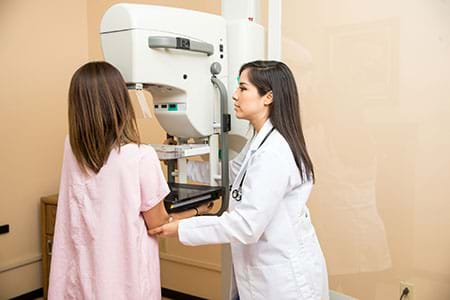
If you find a lump that has you worried, make an appointment with your healthcare provider as soon as possible to obtain an ultrasound and/or a mammogram. Most healthcare providers will try to accommodate you quickly, particularly if you have familial risk factors or, in the case of women over 40, if you have not yet had your first mammogram screening. An ultrasound will show whether the lump is filled with fluid (a cyst), is solid (possible tumor but not necessarily cancerous) or just fibrous breast tissue. Mammograms also may be helpful but aren’t as useful in women under 40, whose denser breast tissue makes spotting abnormalities difficult.
If you do not have a regular healthcare provider or lack insurance, you can still get breast screening via the National Breast and Cervical Cancer Early Detection Program, which provides low-cost or free screenings for women without health insurance.
Your next steps depend on what the imaging shows. If you have an ultrasound and the lump is identified as a cyst, there’s not much to worry about — but make note of the cyst’s location so you can be aware that it’s there for future breast exams. An ultrasound showing a solid or “questionable” mass means you should see a provider specializing in breast health, who can (if necessary) take a biopsy sample via a fine needle aspiration (or core needle aspiration). Examining the tissue cells under a microscope allows the pathologist to identify or rule out whether cancer is present, usually within 24-48 hours of the biopsy.
A breast lump that is found to be benign doesn’t have to be removed — unless you want it to be. It is up to you whether a needle biopsy or an excisional biopsy (surgical removal and examination of the entire lump) is the way to go. This is something that you and your healthcare provider should discuss.
What if the findings are abnormal?
If the pathologist looks at your biopsy sample and finds abnormal cells, your healthcare provider will be told what was found and will meet with you to pass on that information. Understand that “abnormal” doesn’t always mean “cancer,” but there are certain abnormal cells that may mean you need further investigation — that is, the tissue mass may need to be surgically removed (if it wasn’t already) so the pathologist can get a better look.
If the pathologist’s report shows that cancer cells were found, it will also tell your healthcare provider specific details of what kind of cancer was found and whether it responds to certain hormones or has certain genetic characteristics. This information will help your practitioner to identify treatment strategies that will work best to treat the cancer. Some common cancers are easily treated with surgery, chemotherapy, immunotherapy or radiation therapy and have a high cure rate. Other, more aggressive cancers can be more complicated, but may have targeted therapies that will help fight them.
Your healthcare provider will explain the options to you. Don’t be afraid to ask questions about anything you don’t understand, or to ask for a second opinion if you’re unsure about your diagnosis.
Take care of yourself
Finding a lump can be frightening. Your first priority is to take care of yourself — which means more than just “go see a doctor.” If you have women friends or relatives who have been through this, talk to them! Even if the lump proves to be benign, having supportive people around you can make a difficult time easier and less stressful. There are many, many resources that can help you if your lump turns out to be cancerous, so don’t feel you have to go it alone.
Resources:
- American Cancer Society: Breast cancer early detection and diagnosis.
- BreastCancer.org: Where to get a mammogram.
- Mayo Clinic: Breast Biopsy: What you can expect.