
Women’s health articles
Prioritizing your health when money is tight

by Marcelle Pick, OB/GYN NP & Dixie Mills, MD
We all go through times when we’re worried about money. Whether it’s
a downturn in the nation’s economy or an unexpected rough patch in our personal
finances, most women at some point experience the stress — sometimes extreme
stress — of finding that their expenses are greater than their income, or
that their hard-earned savings have shrunken during a financial decline. We often
remind our patients that tough times are exactly when it’s most important
for them to remain mindful of nutrition, exercise, and the signals their bodies
send every day — all the ingredients for maintaining good health.
Many of our patients feel stuck between the proverbial “rock and a hard place”
when it comes to health care costs. “I can’t afford to be sick!”
is a half-joking complaint we hear from some patients. Sometimes there’s an
undertone of suppressed panic that lets us know what she really means: My insurance
won’t cover the cost of this visit, or the test you’ve ordered, or the
prescription you just wrote for me — I don’t know how I’m going
to pay for it all. When these feelings of panic take hold, many women cut
back on health care, or even avoid it altogether — they skip their periodic
check-ups, don’t fill prescriptions they may need but can’t afford,
or downplay symptoms until they become too severe to ignore. Yet study after study
has shown that the longer we put off addressing health issues, the greater the amount
of intervention (and expense) needed to correct them.
We know it’s often difficult to take a deep breath and step back for perspective
when you’re in the middle of a financial crisis. The good news is that although
health is a genuinely priceless commodity, maintaining it doesn’t have to
be a financial burden. There are many ways to preserve and improve your health on
a budget, as well as methods for conserving resources when you’re sick —
it just takes a little planning, forethought, and most of all prioritizing. So let’s
look at some money-saving tips you can use to keep yourself healthy without breaking
the bank.
Prevention – the best way to reduce healthcare costs
“An ounce of prevention is worth a pound of cure” is not just an old
saying — it’s a recipe for health, especially when resources are limited.
And preventive care is something that we all can do without too much trouble or
expense. When given the right support, our bodies will naturally tend toward a state
of health.
What women often don’t realize when they’re frightened about finances
is that cutting corners on healthcare actually worsens their economic picture.
Without the care you need (and deserve), you’re more susceptible to illness,
which costs you time at your job or interferes with your ability to do your job
well. Or your illness becomes harder to treat once you finally do go to your practitioner
— which ends up costing still more time and money. And when it comes to an
acute illness, like a stroke or heart attack, putting off appropriate care is downright
life-threatening!
Ultimately, our health is a sound investment. When we take steps to prevent illness
and promote our overall well-being, we not only feel physically better, but it improves
our outlook even when we have tremendous pressures and worries. If you know
you’re healthy because you make your health a priority, you’ll have
confidence in your body — and this can help you stay grounded and reduce stress,
which supports your health still more.
There are so many ways we can build this strong foundation without too much expense.
Let’s look at some simple methods for supporting our health.
Make your grocery budget support your health as well.
Even though costs are rising, food is still the least expensive form of medicine
there is. And since you have to buy food anyway, why not choose foods that promote
health rather than detract from it? Your grocery budget can do double-duty as a
health maintenance fund if you make a conscious commitment to buy only foods that
support health.
Here are some tips on what to look for — and what to avoid.
- Buy organic if you can — but if you can’t, at least try for fresh, whole
foods as much as possible. While these products are a little bit more expensive,
consider the cascade of benefits they create for your health. With these foods,
it’s often what’s not in them that makes the difference.
- Buy a lot of fresh fruits and vegetables — they’re packed with nutrients
and fiber and can tamp down hunger pangs. If you can’t afford fresh produce,
head to the freezer aisle and choose brands with the fewest — or no —
added ingredients. Many nutritionists think frozen produce can be as good for you
as fresh.
- Buy in bulk, watch the flyers for what’s on sale, cook in large quantities,
and freeze pre-made meals so you’re eating healthy, home-cooked frozen foods
rather than paying for the packaging that accompanies prepared frozen meals (most
of which are loaded with unnecessary salt, sugar, artificial colors, and preservatives
anyway). This is a great opportunity to turn food preparation into a family affair.
Set aside a time for the whole family to get together to make meals and freeze them
for the week or month ahead. It saves time and money and brings everyone into the
process, including kids and spouses. After all, everyone eats — and turning
mealtime into a fun, family-oriented event can release stress and make you healthier!
- Stay away from processed foods as much as possible — though some of these
might be cheaper at the checkout, they cost you more in terms of health. Stick to
the outer aisles of the store to avoid temptation, since most of the highly processed
foods and junk food, like chips, candy, and soda, are usually found in the middle
while the fresh, whole foods are usually located around the perimeter of the store.
- Go spice shopping. Spices add color and flavor to your food, and many have medicinal
properties in the right amounts. Garlic, for example, lowers blood pressure and
acts as a blood thinner; ginger and turmeric are natural anti-inflammatories; and
hot peppers contain a compound called capsaicin that has been found to lower cholesterol
and triglycerides, enhance immunity, and soothe pain associated with shingles and
arthritis. Although some spices are expensive, they tend to last a long time and
they have the added bonus of brightening up everyday meals. And it’s a little-known
fact that you can buy spices you don’t use often in packages smaller than
those found on the shelf for much lower cost — you just need to ask for them.
- Drink filtered tap water and sun tea instead of bottled beverages — you’ll
save money because you won’t be paying for the bottles, and you’ll get
the health effects of better hydration without all the sugar and chemical additives
that go with many bottled drinks. Or, if you must have bubbles, drink seltzer with
a little lemon or lime juice in place of soda. We suggest using a Brita jug for
filtered water because it’s less expensive than most tap filters.
- Make your own sweets. Treats taste better when they are homemade and they don’t
contain unfriendly, processed ingredients. Plus, if you make rather than buy your
treats, you won’t be able to just grab a handful of cookies off the shelf
on impulse — you’ll really have to want a treat if you are
willing to take the time to make it from scratch.
Remember your Mom’s advice about sleep and hygiene.
Mothers are always reminding their children to go to bed at a reasonable hour, wash
their hands, and brush their teeth — even when the “child” is
a full-grown adult. And of course, they’re right. All of these practices support
wellness no matter what our age. As adults, we may disregard Mom’s advice
when we’re pressed for time or have too much on our minds to worry about these
“little” things. But there are good reasons why we should reconsider:
- Sleep helps us shed the day’s stresses and restore
energy. At the same time, our body’s systems are detoxifying and repairing
the damage of day-to-day life. Without seven to eight hours nightly, there is a
buildup of the toxins and damage that our sleep cycle would ordinarily address —
and that will contribute to a breakdown in health in the long run. One of the best
ways to get adequate and refreshing sleep is to routinely go to bed at
a reasonable hour — early enough that you’ll get about eight hours even
if you don’t fall asleep right away. For more tips on good sleep hygiene,
see our article on women’s health myths. If you have trouble falling or staying
asleep, our article on insomnia offers some additional guidance.
- Washing your hands regularly and practicing good general
hygiene can greatly reduce the transmission of communicable diseases. The Centers
for Disease Control and Prevention says that “keeping your hands clean is
one of the best ways to keep from getting sick and spreading illnesses.” The
more people you come into contact with on a regular basis, the more important this
advice becomes. But this does not mean you need to use antibacterial soaps or carry
“waterless” hand hygiene products in your purse to stay well. Unless
you are working in a high-risk setting (such as a hospital or a school), periodically
rubbing your hands together under warm running water with a bit of old-fashioned
soap throughout the day will get them clean enough. (It also greatly helps to avoid
touching your eyes or nose with your hands.)
- Brushing and flossing regularly doesn’t just prevent
cavities, gum disease, and bad breath, recent studies show a connection between
good oral hygiene and reduced risk for heart disease. Bacteria in the mouth can
be a starting point for infection and inflammation
that leads to atherosclerosis, which ultimately increases the chance of heart attacks
and strokes. So the more you do to care for your teeth and gums, the better your
chances of avoiding these effects — and it just feels pleasant to have squeaky
clean teeth!
Take time for yourself. Our physical health is so closely
tied to our emotional well-being that simply paying attention to how we’re
feeling is one of the best preventive measures we can take. Getting a handle on
stress is all the more important when we’re trying to be healthy in difficult
times. We frequently tell our patients to take a deep breath and remind themselves
that “this too shall pass.” Take time to recognize the blessings in
life even when the world around us seems to be permanently in crisis. Our fears
often color the way we see our world, so stop for a moment to put things in perspective.
Often we find that our lives really aren’t as bad as we feared. If we keep
that in mind, we can choose to live without fear — and that’s a big
part of what keeps us healthy.
And along with eliminating fear, let’s get rid of guilt! Many women put their
own health last after that of their children and spouse — but there are good
reasons why women should consider their health at least as important as their family’s
health, if not more important. We’ve all seen the video on airplanes that
reminds us to put the oxygen mask over our own faces before assisting our children
— the (unstated) lesson is that if you put your child’s needs ahead
of yours, you may succumb to the lack of oxygen and leave the child helpless and
alone, whereas seeing to your own needs first enables you to better help the child.
This lesson also applies to your health in everyday life — if you become sick
because you downplay your health needs, you’ll have a harder time seeing to
the needs of your family. The bottom line is that we don’t have to feel guilty
when we take care of ourselves, because in supporting our own health, we support
our family’s well-being too.
Do the math — it pays to kick a bad habit. When
we are under stress or consumed with worry, we may cling even more tightly to bad
habits because we have gotten used to the quick comfort we think they provide.
But kicking a bad habit has a double pay-off: not only does it improve your health,
it saves money because you stop buying the soda, cigarettes, alcohol, or junk food
your body doesn’t want or need.
You may be surprised how much you spend on these things, so do the calculation.
Even something that seems as innocuous as one 20-ounce bottle of cola every day
can cost between $1.50 to $2.00 — which doesn’t seem like much until
you multiply it by 365 days in a year. That’s when you realize you’re
spending more than $500 a year on cola, and that’s just what comes out of
your wallet — it doesn’t scratch the surface of all the “hidden”
health-related costs associated with your habit! Insulin resistance, poor dental
health, bone and muscle weakness, stomach discomfort — the sugars and acids
in soda can contribute to any or all of these, so switching to water or tea could
save you money you’d otherwise pay to your practitioner to help you feel better.
Coffee, cigarettes, candy, junk food, and alcohol are expensive not only in terms
of money, but in terms of what they can do to your health. Most of us know how hard
it is to break the hold these habits have, but we can start by just noticing our
patterns of use. The “observation” stage usually leads to accepting
the reality of the time and money you spend, and is often followed by the “action”
stage: the desire to make a conscious effort to end or cut back on such habits.
You’ll save a bundle, and improve your nerves, digestion, immune system, cardiovascular
health, bones, and muscle strength, too. (For more tips on how to change health
habits, see our article on making life changes.)
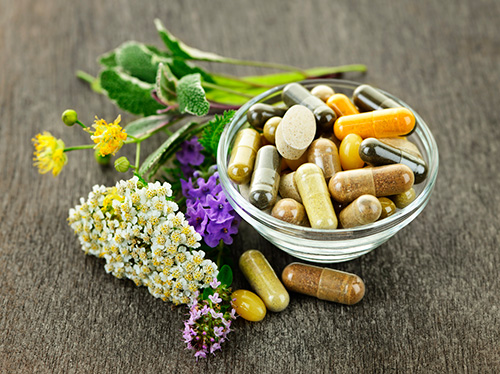
Don’t skip your multivitamin. A lot of people look
at a daily multivitamin as an added expense, but the truth is it’s an essential
component to health maintenance. Just as your car won’t run if you don’t
keep putting gas and oil into it, your body depends on continuous supplies of nutrients
to keep functioning properly. When we are deficient in key vitamins and minerals,
we quickly “run out of gas” — we feel fatigued and weak, and we’re
more likely to get sick.
Poor nutrition sets us up for a host of chronic health problems, such as heart disease,
cancer, obesity, diabetes, depression, metabolic and digestive disorders (including
heartburn and acid reflux), rheumatoid arthritis, fibroids, and osteoporosis, among
others. It also lowers our resistance to communicable diseases because our immune
system is so busy attending to the consequences of our poor diet, it may not have
the resources to take on an invading microbe.
Most of us don’t get all we need from our food — particularly when we’re
under stress and eating poorly — so a multivitamin is a cost-effective safety
net that gives support to your body when you’re under stress, as so many of
us are during times of financial trouble. We often urge our patients to get enough
of important disease-preventing nutrients, especially the following:
- B vitamins are important during stressful times, because they counteract the corrosive
effects of cortisol.
- Antioxidants such as vitamins A, C, E, and beta-carotene support the immune response,
which helps us fight off infections and inflammatory conditions. They also prevent
our cells from being damaged by free radicals — a factor in many chronic diseases,
including cancer, Parkinson’s, and atherosclerosis.
- Omega-3 fatty acids act as natural anti-inflammatories, and may help prevent a host
of inflammatory diseases. They also boost mood, memory, and emotional well-being
— a very important effect when financial concerns put us under pressure.
- Vitamin D is a key component to overall health as it promotes normal cell growth
and tissue renewal in many different body systems. It is also particularly important
in the synthesis of neurotransmitters, helping us to avoid the depression and anxiety
that can compound our stress. When we’re deficient in this vitamin, we’re
prone to low energy and fatigue, decreased immunity, mood swings, and sleep disruptions,
all of which contribute to even greater stress. While it’s the least expensive
nutrient of them all — our skin makes it when exposed to sunlight —
many people don’t get enough sun exposure to make all they need, particularly
in winter months.
In so many ways, these nutrients are key factors that protect us from disease —
and when you compare the cost of taking vitamins to support health with the cost
of recovering from illnesses brought on by poor nutrition, it’s clear that
the vitamins are hands-down cheaper. For about the price of a large coffee at Dunkin’
Donuts, you can provide your body with the daily support it needs via a good nutritional
supplement!
Rethink your “necessities” and scrimp in health-promoting ways.
There are a lot of little lifestyle changes that can both improve your health and
free up your budget. Some of these suggestions may seem radical, but once you get
used to them, you’ll wonder why you ever did it any other way.
- If you have multiple TV’s in your household, think about reducing it to one.
It encourages family togetherness as you all gather to watch the same show and will
save money too. Then consider scheduling times to unplug the TV and VCR altogether,
and shut off your computer at least two hours before you go to bed. These may be
tough steps, but are well worth the effort, because when you find yourself without
any screens to stare at, you’ll be prodded towards more health-promoting,
relaxing activities like going for walks, playing with your children, reading a
book, or even having sex! And you’ll find very quickly that your electricity
bills are reduced dramatically — we never realize just how much energy (and
money) we spend on operating electronic entertainment until we turn them off for
a while. (If you’re wondering why we say “unplug” rather than
“turn off,” it’s because a lot of electronic devices use power
even when turned off — so unplugging is the best way to eliminate extra electricity
costs.)
- Try going to bed an hour earlier than usual — again, turning the lights out
for an extra hour will save on electricity (and heat, if you turn down the thermostat
in winter), and the extra hour of sleep will make you healthier.
- Stress reduction through exercise, meditation, or yoga can improve your health markedly
— and if you get into the habit of doing it at home, it’s free!
(“Unplugging” can help you find time to incorporate more stress relief
into your daily routine). If you need guidance for these activities, you can often
find exercise or meditation books or videos at the library, or at yard sales for
little or no money. You can also cut out the cost of a health club membership by
buying used equipment from yard sales or moving sales — you can often find
good, barely used exercise bikes, treadmills or weights at great prices.
- Another form of stress reduction takes even less time, effort, and money —
you need only lift one finger and turn off the news! Sometimes, “staying informed”
doesn’t do anything but stress you out. You may just need to limit your exposure
or embark on a temporary “news fast” so you feel less worried —
and disconnecting from the world to focus on yourself and your family each evening
can be almost like having a vacation. After a stressful day, if you can prevent
your evening cortisol levels from staying high, you will sleep more soundly and
your overall stress response and hormonal balance will be healthier.
- Home remedies for common colds and minor ailments can be far more economical and
equally effective as many over-the-counter remedies — for example, sinus flushing,
a neti pot, or steam for congestion, tea with honey and lemon for cough,
gargling with hot salt water for sore throat, and herbal teas like chamomile to
calm your mood, valerian for sleep, or peppermint to soothe minor stomach upset.
- Use chemical-free alternatives to common cleaning solutions. You can turn inexpensive
products like vinegar, lemon juice, and baking soda into your own cleaning solutions
that are environmentally friendly. They’re better for your health because
you’re not being exposed to quite as many toxins, cheap to make, much more
pleasant to smell — and effective!
- Plan ahead for the inevitable sick days we all have. Whether it’s back-up
childcare or knowing how you’ll shift your budget around when you lose a day’s
pay to illness, assessing the options ahead of time will calm your mind and give
you one less thing to worry about when you’re not feeling well.
Abandon worry in favor of fun — and love. Making
a conscious effort to limit the time you spend on worry and anxiety in favor of
enjoyable pursuits can have a profound impact on your health. The upside to less
disposable income is that we spend more time with our families and friends, indulging
in simple but satisfying pleasures while making personal connections that offer
us emotional support. Playing board games with the kids, watching DVD’s with
the neighbors, or organizing magnificent potluck suppers at home are just a few
ways we can make the most of our leisure time without spending very much. Even taking
a little time each day to practice deep breathing, read a good book, or simply hug
your child or cuddle a pet can give you long-lasting benefits, physical as well
as emotional.
Don’t underestimate the influence of having a good attitude about health either.
It’s important to believe you’ll stay healthy, because biologically,
a strong belief system is vital to your well-being — but gambling with your
health is not.
And if you do get sick, speak up about costs!
When you do get sick or need surgery or other medical care, you may hesitate to
tell your practitioner that you’re concerned about costs — it’s
only human nature. It may feel awkward, but take it from us — there’s
no need to be embarrassed or ashamed if you have money woes, because you’ve
got plenty of company!
We can tell you from experience that it’s very important that your healthcare
providers be told up front that money is a consideration, because it helps us craft
a plan of action for your specific diagnosis and treatment. We’ll always give
you our best care, but maybe we’ll hold off on asking for an expensive test
if we think that the results are unlikely to be positive — or if we are already
99% sure that the result will be positive, and the test is intended just
for confirmation. We may also look for an effective alternative to an expensive
new prescription drug that works better, but maybe not a lot better, than an older,
less expensive generic or herbal treatment for the same problem.
Your practitioner may also know of programs designed to help patients meet costs,
and direct you to them if he or she is aware that cost is a concern. Some hospitals
and clinics also have case workers to help patients navigate insurance reimbursement,
but again — unless you inform your practitioner or healthcare facility that
you need these services, you won’t get them, so don’t be afraid to speak
up. There are many resources to help people manage their finances when they’re
sick, particularly if you’re faced with a chronic or long-term illness, and
oftentimes your practitioner or a hospital caseworker can point you in the right
direction. (See our article on managing
the finances of illness for more information.)
And there’s another good reason to share your concerns: being open with your
practitioner about financial worries may help you communicate more freely, especially
about your health concerns. Sometimes if we hold back on one matter that worries
us, we inadvertently hold back on others as well — so when your practitioner
asks you about symptoms or health issues, you may withhold important information
without really meaning to, which only complicates the job of diagnosing and treating
your illness.
Health is not a luxury — it’s the foundation of true prosperity
The bottom line is that our health is the underpinning of everything we want in
life, whether it’s happiness, love, family, a fulfilling work life, or financial
security. When we don’t have health, all of these are harder to acquire and
keep — and it’s certainly harder if not impossible to enjoy what we
do have if we’re not healthy. We can’t do much to change the
ups and downs of our nation’s and the world’s economy, but we don’t
have let our fears lead us to compromise our well-being in the process. And we can
make good choices for ourselves to maintain our health — financial as well
as personal.
Our Personal Program is a great place to start
The Personal Program promotes natural hormonal balance with nutritional supplements,
our exclusive endocrine support formula, dietary and lifestyle guidance, and optional
phone consultations with our Nurse–Educators. It is a convenient, at-home
version of what we recommend to all our patients at the clinic.
If you have questions, don't hesitate to call us toll-free at
1-800-798-7902. We're here to listen and help.
Related to this article:
References & further
reading on prioritizing your health when money is tight
Last Modified Date: 06/02/2011
Principal Author: Marcelle Pick, OB/GYN NP & Dixie Mills, MD, FACS