




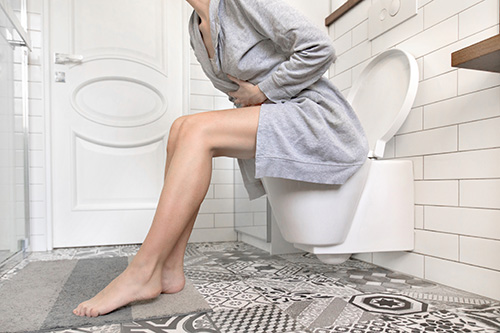
I often receive questions from women experiencing intense pelvic discomfort or the urge to urinate frequently. For some, trips to the bathroom are controlling their lives — as often as 60 times a day and 10 times at night! Others are just desperate to alleviate a painful, stabbing sensation in their pelvis. While there are many avenues to explore for women with these symptoms, one common — but often misdiagnosed — bladder condition is interstitial cystitis (IC), or painful bladder syndrome (PBS).
In this article
- What is interstitial cystitis and why haven’t I heard of it?
- The possible causes of IC
- IC, estrogen, and menopause
- Discovering your trigger foods
- The Women’s Health Network approach to treating IC
Interstitial cystitis affects over 1.2 million people in the United States, 90% of whom are women. Women at all stages of life, from puberty to menopause, have unique challenges with IC, since our hormones, especially estrogen, play a big role in managing (or even preventing) the inflammation that relates to IC. Although the symptoms can feel a lot like a urinary tract infection (UTI), no one has been able to identify an infectious agent to date, so the condition won’t show up on standard urine cultures for bacteria and other pathogens. And taking antibiotics won’t help. Nor will drinking more cranberry juice — natural UTI treatments can actually make IC symptoms worse.
- Urinary tract infection
- Vaginitis
- Urge incontinence
- Chlamydia, herpes, and other STD’s
- Kidney stones
- Endometriosis
- Bladder cancer
Interstitial cystitis can be downright debilitating for some women, preventing them from going to school, work, or any of their normal day-to-day activities, not to mention making their sex lives very painful. Too often women just “live with it” for years before seeking help. Or a woman may see up to five different practitioners over the course of years before being properly diagnosed with interstitial cystitis! Let’s talk about this unusual condition and look at what you can do to protect your bladder — and your sanity.
What is interstitial cystitis, and why haven’t I heard of it?
The symptoms of IC are easily confused with a wide range of other problems, from UTIs and urge incontinence to bladder cancer, endometriosis, STD’s, and kidney stones. These disorders have different root causes and require different treatments. Many women with IC see their healthcare practitioners thinking they have a UTI and are told their urine is “clean” — that is, no bacteria or other microbes were found in their urine samples. If there is no detected “problem,” it often means no solution for women.
To clarify the diagnosis, the National Institutes of Health created diagnostic criteria for IC in the late 1980’s:
- bladder and pelvic pain
- urinary urgency and frequency
- diminished bladder capacity
- identification of Hunner’s ulcers (only affects about 10% of all cases)
Interstitial cystitis is generally regarded as a chronic neuroinflammatory disorder affecting the bladder — a complicated relationship between bladder nerves, the immune system, and the urinary tract. Untreated, IC can lead to scarring or stiffening of the bladder walls and an inability to hold much fluid in your bladder. Glomerulations, which are pinpoint hemorrhages in the mucosal lining of the bladder, can also develop, as well as star-shaped sores called Hunner’s ulcers (fortunately, these are rare).
As more medical professionals learn to recognize the IC criteria, they are better able to help women manage and even overcome this condition. Organizations like the Interstitial Cystitis Association and the Interstitial Cystitis Network are also wonderful resources to help women, and promote greater awareness of the causes and symptoms of IC.
Possible causes of interstitial cystitis
We are still learning about IC, and to date no one precise cause has been pinpointed. There are probably many “insults” to the bladder that could lead to interstitial cystitis. What is clear is that inflammation is at play, with immune dysfunction, specifically allergies and sensitivities, having a central role. Here are some possibilities.
Chemicals in urine. Urine itself can act as an irritant in the urinary tract, particularly if tissues are already damaged from other primary causes. More specifically, studies show that patients with IC have a molecule in their urine called antiproliferative factor (APF). APF inhibits the normal growth of bladder wall cells, making it difficult for your bladder to repair itself if scarred.
Mast cell activation. Studies have shown that some of the contents found normally in our urine (like potassium, for example) can penetrate the bladder lining in IC patients, leading to mast cell activation and the release of histamine — which can then result in further damage to the bladder lining and increased inflammation. More than 70% of women with IC have highly activated mast cells.
Previous bladder damage. A number of factors can damage the bladder, making it more vulnerable to the interstitial cystitis. Some of which include:
- A history of bladder trauma, including pelvic surgery
- Spinal cord trauma
- Pelvic floor muscle dysfunction
- Bladder overdistention
- Inflammation of pelvic nerves
- Autoimmune disorders
- Repeat bladder infections
- Low estrogen
Interstitial cystitis, estrogen, and menopause
Many women note the symptoms of IC wax and wane with the natural hormonal shifting that occurs in our bodies monthly. And some notice their first symptoms during the years leading up to, or after, menopause. Why? It most likely has something to do with estrogen levels. A decrease in estrogen levels can actually activate our mast cells.
And researchers at Tufts who examined bladder mast cells under an electron microscope also noticed an increased number of estrogen receptors in cells from women with IC. In these women, the net result of this imbalance is similar to a “progesterone deficient” state, leading to increased mast cell secretion of histamine.
In anatomical terms, the bladder lining and the muscle that actually governs urination, the detrusor, are affected by inflammation, mast cell activity, and estrogen. If we have ongoing low-grade inflammation over the course of many years, particularly when coupled with significant hormonal imbalance during perimenopause and menopause, our tissues and muscle can become thinner and drier — and even more susceptible to inflammatory changes. So without restoring our hormonal balance, there is a greater chance that we can become more susceptible to IC.
But there are options to treat and manage interstitial cystitis, and a great place to start is by looking at your diet and lifestyle.
Discovering your triggers — an IC elimination diet
So many women say that their symptoms abate when they follow an alkalizing, low-inflammatory diet by avoiding certain trigger foods, and by eliminating alcohol and smoking. Tobacco is an especially common trigger culprit because it constricts the bladder’s blood vessels, making it harder for our bodies to naturally cleanse inflammatory substances from the bladder tissues.
Here are the foods that the Interstitial Cystitis Network calls “The Worst” because they trigger the most symptoms in the most people. These top offenders are a good place to start:
- Coffee. The acid and caffeine in coffee can cause intense irritation and discomfort. Additionally, caffeine acts as a diuretic. So reducing your coffee consumption to 12 ounces or less per day is a wise move — in reality, most women with IC need to completely eliminate coffee to feel greater relief.
- Tea. Black teas and even decaffeinated teas can spark inflammation in your bladder. Green teas and some herbal teas also tend to have a certain level of acidity. Most women are (quite understandably) unwilling to give up their delicious hot drinks, so we suggest hot water with grated ginger and honey as a substitute, or mint teas containing only peppermint or spearmint leaves (avoid teas that combine mint with other herbs or with black or green tea).
- Cranberry and other acidic fruit juices. Cranberry juice is so often recommended for treating urinary tract infections, but an IC bladder is highly aggravated by the acidity in cranberry juice. So if juice is a must, try less acid varieties like pear, apple, and blueberry. Pear juices and pear sweeteners are widely considered your safest bet.
- Diet soda. Your average diet soda contains four major bladder irritants in one shiny can: acidic carbonation, citric and phosphoric acids, caffeine, and artificial sweeteners. If you absolutely must have a soda, we recommend a non-diet, non-caffeinated root beer, and diluting it with ice or water is even better.
- Tomatoes. Though they’re full of so many good things, tomatoes are also high in potassium, and are highly acidic, too. For tomato-lovers, low-acid varieties might be substituted as an occasional treat.
At Women’s Health Network, we would add a few more items to this list of top offenders. In our experience, the following substances also have the potential to trigger symptoms:
- Artificial food colorings (dyes) and flavorings. Food colorings are surprisingly common in food (even some health foods) as well as most over-the-counter multivitamins and prescription medications.
- Foods that promote yeast. Sugar, vinegar, and other foods can cause yeast overgrowth. You may want to follow a yeast-free, sugar-free diet — many of the women we see with IC symptoms are found to have systemic yeast, but once the yeast overgrowth is resolved, the IC symptoms abate.
- Gluten. This problematic, inflammation-promoting protein is found naturally in grains and also in many other foods through additives and contamination. Read our article on gluten sensitivity for more on the effects of gluten and how to address them with a gluten-free diet.
- Certain nutrients. Some women actually have allergies to certain nutrients — which is why you may read advice recommending that women with IC discontinue multivitamins. If you cannot find other causes for your allergic reaction to foods, consider NAET — an allergy elimination technique that has helped many people overcome problematic allergies and sensitivities.
Once you know which foods set you off, you can start to make a list of your trigger foods. When you feel better — which often happens within a week or two — experiment with how much of each food your body will process comfortably. Take heart: even the most strict IC diet doesn’t have to last forever. But changing to a more alkalizing diet has tremendous overall health benefits for your body, and I know plenty of women with IC who are able to enjoy all of the above foods in smaller amounts!
The Women’s Health Network approach — options for treating interstitial cystitis
Currently there is no surefire cure for interstitial cystitis, but fortunately, a number of effective treatment approaches exist. Since our bladders may have difficulty repairing themselves when we have IC, women should speak with their healthcare practitioner and urologist about the best IC treatment.
Here are some options:
-
- Keep a bladder diary. If you are experiencing painful bladder, or more frequency than usual, keep a personal bladder diary. For 24 hours (or more), jot down what you eat and drink (and smoke), how often you experience the urge to urinate, the level of your pain intensity, and how relieved your bladder feels after urination. You can then bring your bladder diary with you when you visit your healthcare practitioner to aid in determining patterns and whether you have IC or not.
- Understand your triggers. See the section above on common interstitial cystitis triggers and learn how you can modify your diet to lessen your symptoms.
- Follow an IC/alkaline diet. Actively managing the acid–alkaline balance in your body can help all urinary disorders, and reduce your discomfort. It has also helped women cut back on the foods that cause other inflammatory concerns in the body. To start, there are wonderful cookbooks that can get you started with some good recipes. One excellent resource is A Taste of the Good Life: A Cookbook for an Interstitial Cystitis Diet.
- Balance your hormones. Estrogen plays a major role in inflammation, and during times of hormonal imbalance your body may be more susceptible to the inflammation that can lead to interstitial cystitis. Consider a natural approach to hormonal balance in your entire system, such as our Herbal Equilibrium. Some women also consider more potent natural hormone therapies when needed, such as those we discuss in our vaginal dryness treatment article.
- Investigate anti-inflammatory supplements. For many women, calcium citrate can promote a more alkaline system and reduce the inflammation that contributes to issues like IC and vulvadynia/vestibulitis. Also, omega-3s can be a powerful support to many tissues and membranes, as well as helping to reduce systemic inflammation. Probiotics also help restore normal flora and reduce inflammation, as well as combat systemic yeast triggers. Also, a promising new treatment, quercetin, is an antioxidant in the flavonol group with marked anti-inflammatory actions. Quercetin-containing supplements are very well tolerated and are reported to provide significant symptomatic improvement in patients with IC.
- Try physical therapy. Many people with IC also have pelvic floor dysfunction, a condition in which the muscles of the pelvic floor do not relax enough to allow easy urination. Physical therapy to rehabilitate the pelvic floor can be very helpful toward easing the pain of IC, as is bladder “retraining” to gradually expand the time between trips to the bathroom. And a technique called myofascial tissue manipulation shows promise for reducing IC symptoms.
- Address body and mind. Some women have regular acupuncture treatments or biofeedback to relax the bladder and detrusor muscles. We have suggested education in the Feldenkrais method, with good success. Guided imagery is another readily available intervention with no harmful side effects — in a study on guided imagery published in 2008, IC patients reported significant improvement in pain and IC symptom management.
- Investigate conventional approaches. Depending on the severity of your symptoms, you might first try less invasive therapies, but if you don’t see improvement, don’t despair — nothing is guaranteed to help every woman the same way. You can always talk to your practitioner about more conventional treatments, and seeing a urologist or uro-gyn specialist who is familiar with cutting edge IC treatments available, such as:
- Oral medications. Antidepressants can block pain for some women. These medications may work by interfering with nerve activity, and their effect may also prevent psychological stress, which can activate mast cells. Some researchers are developing treatments based on AFP, such as the prescription medication Elmiron, that “coats” the bladder wall to protect it, thereby reducing irritation and inflammation. Many experts now believe you can just start a trial of this medication based on symptoms, without need for painful cystoscopy testing.
- Bladder treatments. Some women with especially severe cases of IC treat their conditions with bladder distensions (stretching the bladder during a cystoscopy), or by inserting drugs that inhibit inflammation and pain into the bladder through a catheter. Heparin and even Elmiron are used in this manner.
- Surgery. For those who cannot find pain relief elsewhere, surgery to expand the bladder remains a last resort — but since so many women find success treating their IC in other ways, surgery is uncommon.
Get out of the bathroom and back to your life!
There are options for you if you have interstitial cystitis. Talk with your healthcare practitioner about a combination of natural approaches, alongside the IC diet, to seek relief. Because with the right treatments, whether naturally and holistically, or through conventional medicine, most of us can learn how to manage our IC symptoms well enough to get out of the bathroom, and back to our lives!
1 Clemens J., et al. 2007. Interstitial cystitis and painful bladder syndrome. In: M. Litwin & C. Saigal, editors. Urologic Diseases in America. Washington, DC: US Government Printing Office. NIH publication 07–5112, 123–154.
See also:
Department of Health and Human Services, Public Health Service, National Institutes of Health, National Institute of Diabetes and Digestive and Kidney Diseases. 2008. Interstitial cystitis. NIH Publication No. 08–3220. URL: https://kidney.niddk.nih.gov/kudiseases/pubs/interstitialcystitis/ (accessed 11.05.2008).
2 Zamula, E. 1995. Interstitial cystitis: Progress against disabling bladder condition. URL: https://www.fda.gov/fdac/features/995_cystitis.html (accessed 12.05.2008).
3 Osborne, J. 2006. Interstitial cystitis network (ICN): Patient handbook: Understanding diet and IC. URL: https://www.ic-network.com/handbook/diet.html (accessed 11.18.2008).
4 Chang, D. 2007. Interstitial cystitis (painful bladder syndrome) < Frequently asked questions < womenshealth.gov. URL:https://www.4women.gov/faq/interstitial-cystitis.cfm#b (accessed 12.05.2008).
5 Metts, J. 2001. Interstitial cystitis: Urgency and frequency syndrome. Am. Fam. Phys., 64 (7). URL: https://www.aafp.org/afp/20011001/1199.html (accessed 12.05.2008).
National Institute of Diabetes and Digestive and Kidney Diseases. 1994. Interstitial cystitis. Rockville, MD: US Dept. of Health and Human Services, Public Health Service, National Institutes of Health. NIH publication no. 94-3220.
6 Enerbäck, L., et al. 1989. Histamine and mucosal mast cells in interstitial cystitis. Agents Actions, 27 (1–2), 113–116. URL: https://www.springerlink.com/content/b172364g26t04487/ (accessed 12.05.2008).
7 Chang, D. 2007.
8 Interstitial Cystitis Association of America. 2006. Interstitial cystitis: What healthcare providers need to know. ICA Nursing Presentation. Ed. V. Ratner. URL (PDF): www.ichelp.org/Portals/0/ProfessionalPerspectives/ProPerspectives-Autumn%2007.pdf (accessed 11.19.2008).
9 Parsons, C. 1993. The role of the glycosaminoglycan layer in bladder defense mechanisms and interstitial cystitis. Int. Urogynecol. J., 4 (6), 373-379. URL (abstract): https://www.springerlink.com/content/m11m78713n9226g2/ (accessed 12.05.2008).
10 Lee, J., et al. 2006. Is interstitial cystitis an allergic disorder? A case of interstitial cystitis treated successfully with anti-IgE. Int. J. Urol., 13 (95), 631–634. URL (abstract): https://www.ncbi.nlm.nih.gov/pubmed/16771742 (accessed 12.04.2008).
11 Rashid, et al. 2004. Interstitial cystitis antiproliferative factor (APF) as a cell-cycle modulator. BMC Urol., 4, 3. URL: https://www.pubmedcentral.nih.gov/articlerender.fcgi?artid=411044 (accessed 11.16.2008).
Keay, S., et al. 1996. Decreased 3H-thymidine incorporation by human bladder epithelial cells following exposure to urine from interstitial cystitis patients. J. Urol., 156 (6), 2073–2078. URL (abstract): https://www.ncbi.nlm.nih.gov/pubmed/8911393 (accessed 12.05.2008).
12 Theoharides, T., et al. 1995. Activation of bladder mast cells in interstitial cystitis: A light and electron microscopic study. J. Urol., 153 (3 Pt. 1), 629–636. URL: https://www.ncbi.nlm.nih.gov/pubmed/7861501 (accessed 12.05.2008).
Theoharides, T., & Sant, G. 1991. Bladder mast cell activation in interstitial cystitis. Semin. Urol., 9 (2), 74–87. URL (abstract): https://www.ncbi.nlm.nih.gov/pubmed/1853017 (accessed 12.05.2008).
See also:
Hanno, P. 2007. Painful bladder syndrome (interstitial cystitis). In Hanno P., et al., editors. Penn Clinical Manual of Urology, 217-234. Philadelphia: Saunders.
Hurst R., et al. 1997. The role of glycosaminoglycans in normal bladder physiology and the pathophysiology of interstitial cystitis. In G. Sant (Ed.), Interstitial Cystitis, 93–100. Philadelphia: Lippincott–Raven Publishers.
Parsons, C. 1993.
13 Interstitial Cystitis Association. 2008. About IC. URL: https://www.ichelp.org/WhatisIC/AboutIC/tabid/416/Default/ (accessed 12.04.2008).
14 Association of Reproductive Health Professionals. 2008. Screening, treatment, and management of interstitial cystitis/painful bladder syndrome. URL (PDF): https://www.arhp.org/uploadDocs/CPICPBS.pdf (accessed 12.05.2008).
15 Hughes, R. 1995. Two types of misery — bacterial cystitis and interstitial cystitis — includes related information on prevention measures. Harvard Health Letter. URL: https://findarticles.com/p/articles/mi_m1585/is_n3_v20/ai_16026389 (accessed 12.05.2008).
16 Boschert, S. 2000. Interstitial cystitis often misdiagnosed. OB/GYN News. URL: https://findarticles.com/p/articles/mi_m0CYD/is_1_35/ai_59579584 (accessed 11.14.2008).
17 Letourneau, R., & Theoharides, T. 2003. Intragranular activation of bladder mast cells and their association with nerve processes in interstitial cystitis. Brit. J. Urol., 77 (1), 41–54. URL (abstract): https://www3.interscience.wiley.com/journal/119198729/abstract (accessed 12.10.2008).
18 Sandler, G., & Sandler, A. 2002. Interstitial cystitis, hormones, perimenopause and menopause. URL: https://www.ic-network.com/iclifestyles/march02.html (accessed 12.05.2008).
19 Osborne, J. 2006. Interstitial cystitis network (ICN): Patient handbook: Understanding diet and IC. URL: https://www.ic-network.com/handbook/diet.html (accessed 11.18.2008).
20 Osborne, J. 2006.
21 Brown, S. 2003. Excessive acidity may aggravate urinary disorders. A case study — A novel therapy for interstitial cystitis. Total Health, 25 (3), 22–23
22 Katske, F., et al. 2001. Treatment of interstitial cystitis with a quercetin supplement. Tech. Urol., 7 (1), 44–46. URL (abstract): https://www.ncbi.nlm.nih.gov/pubmed/11272677 (accessed 12.05.2008).
23 Theoharides, T., et al. 2007. A retrospective open label study of CystoProtek in painful bladder syndrome/interstitial cystitis (PBS/IC). URL (PDF) https://www.algonot.com/pdf/TCTPoster.pdf (accessed 12.05.2008).
24 Interstitial Cystitis Association. [No publication date.] Pelvic floor dysfunction. URL: https://www.ichelp.org/Default/?tabid=229 (accessed 02.06.2008).
Peters, K., & Carrico D. 2006. Frequency, urgency, and pelvic pain: Treating the pelvic floor versus the epithelium. Curr. Urol. Rep., 7 (6), 450–455. https://www.ncbi.nlm.nih.gov/pubmed/17052440 (accessed 02.06.2008).
24 National Institute of Diabetes and Digestive and Kidney Diseases (NIDDK). 2008. Physical therapy in women with interstitial cystitis (IC03). A single-blinded randomized multi-center trial to evaluate the efficacy and durability of myofascial tissue manipulation in women with interstitial cystitis/painful bladder syndrome. URL: https://clinicaltrials.gov/ct2/show/record/NCT00733603 (accessed 12.05.2008).
Weiss, J. 2001. Pelvic floor myofascial trigger points: manual therapy for interstitial cystitis and the urgency–frequency syndrome. J. Urol., 166 (6), 2226–2231. URL (abstract): https://www.ncbi.nlm.nih.gov/pubmed/11696740 (accessed 12.05.2008).
25 Carrico, D., et al. 2008. Guided imagery for women with interstitial cystitis: results of a prospective, randomized controlled pilot study. J. Altern. Complement. Med., 14 (1), 53–60. URL (abstract): https://www.ncbi.nlm.nih.gov/pubmed/18199015 (accessed 12.05.2008).
26 Spanos, C. 1997. Stress-induced bladder mast cell activation: implications for interstitial cystitis. J. Urol., 157 (2), 669–672. URL (abstract): https://www.ncbi.nlm.nih.gov/pubmed/8996395 (accessed 12.05.2008).
Further reading
Books
- Stewart, E. 2002. The V Book: A Doctor’s Guide to Complete Vulvovaginal Health. NY: Bantam.
- Lauman, B. 1998. A Taste of the Good Life: A Cookbook for an Interstitial Cystitis Diet. Freeman Family Trust Publications.
Pelvic physical therapy
- Alexander technique: https://www.alexandertechnique.com/at.htm
- Feldenkrais Method of Somatic Education: https://www.feldenkrais.com/