



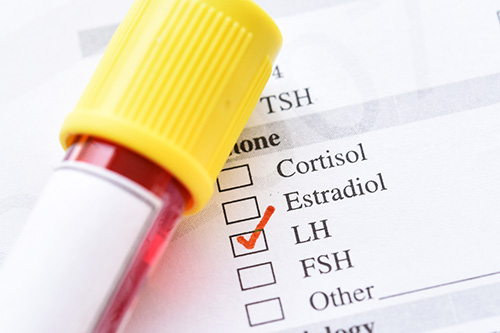
FSH and LH are two hormones secreted by the pituitary gland in the brain during the menstrual cycle. Blood levels of these hormones are often tested to determine how your ovaries are functioning. FSH (follicle-stimulating hormone) is released when estrogen levels are low.
During a regular menstrual cycle, FSH levels begin to rise sharply midcycle, a day or two before ovulation. FSH stimulates the ovary to ripen a follicle, and, with the help of a spike in LH (luteinizing hormone), to release an egg. After that, FSH and LH levels fall off and progesterone levels rise as your uterus prepares for pregnancy or another period.
Testing for FSH and LH levels might be recommended for women and men experiencing fertility issues because it can provide some insight into how your sex organs are functioning. If FSH and LH levels are abnormally high, it may indicate problems with the ovaries or testicles. If they are low, there may be an issue with the pituitary or hypothalamus.
FSH levels are also often tested to see how close a woman is to menopause. Follicle-stimulating hormone is typically high when a woman is in perimenopause or menopause. But keep in mind these levels are not set in stone. In our opinion, this is the problem with FSH lab work and over-the-counter test kits — depending on your hormonal balance, your nutrition, your mood and stress levels, you may influence FSH levels up or down in any given month. Many women have this kind of hormonal fluctuation for up to ten years before menopause. In my opinion, the best way to gain insight into your body is by listening to it and tracking changes yourself.