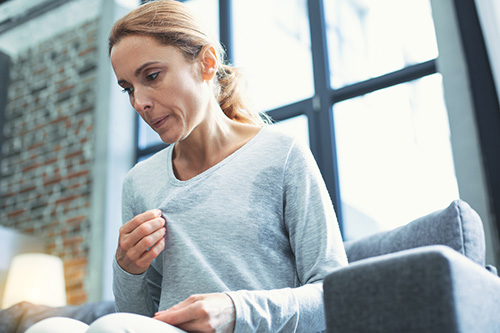



Possible causes of anxiety: adrenal imbalance, hormonal imbalance
One in every four women will develop anxiety over her lifetime. Women with even mild to moderate anxiety can suffer from panic attacks, nervousness, and fearfulness, or anxiety combined with depression. If you’re dealing with any of these symptoms of anxiety, you may wonder what works to find relief — and give you your life back. Our Women’s Health Network perspective? To finally end anxiety and related symptoms, you need to discover and remove the factors that cause it.
Getting to the bottom of anxiety in women
Women are constantly subjected to significant stress — with far-reaching physical and emotional effects. Emotional stress can be triggered by just about anything, major or minor — a bad boss, an argumentative partner, a sick child or parent, not getting enough rest or having too many things on your to-do list. (And it should go without saying that if you’re going through menopause, you’re already dealing with the stress of crazy hormone swings and all the menopause symptoms that go with them.)
Many of the things we do to soothe our stress actually make it worse: skipping meals or eating on the run, consuming sugar, processed foods, and caffeine, and staying up late doing things that don’t help us rest, like watching TV or doomscrolling on social media. These things may seem innocuous in the short run, but they add biophysical stress to our emotional stress — and a combination of poor nutrition, lack of sleep, lack of exercise take a toll on all your body systems, from thyroid to blood sugar to hormone balance.
Worse, some of your body’s responses can add to your emotional stress — such as an upset stomach that hits you because you’re stressed out, sending your running for the bathroom during a crucial work meeting! It becomes a seemingly never-ending cycle of physical and emotional stressors piling on top of one another. What can you do to stop it?
How stress hormones produce anxiety
It’s important to know what’s actually happening here: When you’re under stress, your body produces hormones such as cortisol and adrenaline — the “wake me up” chemicals produced by your adrenal glands to prepare your body to fight off (or flee from) danger. This response supports your blood pressure, blood sugar balance, and energy levels as a way of keeping you safe in the face of whatever danger you’re facing. But it’s supposed to be a short-term response, and when the stress in your life is unrelenting, your body struggles to keep up with the ongoing activation of your natural stress response—and all those systems that are affected by it struggle, too.
When your stress response is depleted and out of whack, either it overreacts to the slightest blip—leading to a surfeit of stress hormones (and anxiety)—or it doesn’t have enough “mojo” to respond, leaving you fatigued and foggy. We call that adrenal imbalance—a lack of equilibrium between your stress response and your stress levels.
Bringing back balance in your body — and your life
Medications can help people with severe anxiety disorders, but for the larger number of women with chronic anxiety or mild anxiety disorders, gentle, natural approaches to support your physical stress response system and reduce your emotional burdens can provide soothing relief. The most effective natural treatments for anxiety are comprehensive and target both the physical causes of anxiety and relevant emotional issues.
Natural techniques often succeed even when other methods have failed. The most likely cause to investigate when looking for the source of your anxiety is adrenal imbalance, though anxiety sometimes relates more directly to overall hormonal imbalance, such as hormonal imbalances experiencing during perimenopause and menopause.
Natural relief for anxiety as a symptom of adrenal imbalance
If you feel anxious and “on edge,” it’s important to consider how much stress you have every day. Stress reduction and management are key factors to feeling better. While anxiety is unnerving, most women usually do not need drugs to feel better. A comprehensive natural approach to alleviating anxiety can help you feel calmer and less tense:
Start with rest
The best place to start in relieving anxiety is getting rest. Your whole body is depleted when you’re under stress. It needs rest. Set aside your busy schedule and your to-do list, and prioritize your sleep. You need at least 8 hours of sleep each day at the best of times; when you’re under severe stress, you may need more. If insomnia is an issue, take a look at the top 5 causes of insomnia to see how you can get better sleep.
Not all rest happens at night, though. Maybe you can’t take a vacation right now, but even taking an hour each evening that you might normally spend surfing the web and instead doing something restful — meditation, a warm bath, 15 minutes of yoga, or just sitting quietly reading a book — will help restore some of your balance.
Breathe and move
When stress hits, you tense up and you hold your breath. It’s a reflex — and it has negative effects on your brain and your body when you do it too often. When you feel yourself tensing up, make a conscious effort to breathe deeply — in through the nose, out through the mouth — and tell your muscles to relax. Going for a short, brisk walk will help work off that nervous energy as well — and force you to breathe deeply too!
Take time for healthy eating
It’s all too easy to shortchange yourself nutritionally when you’re pressed for time. Eating healthier takes a commitment, and that means putting aside the time to gather nutritious foods for your meals. Start slow — promise yourself one healthy meal a day (homemade if you can, but a restaurant meal packed with fresh veggies and lean protein is a good second-best — and use a carefully chosen nutritional supplement to make up the difference. The important thing is to get the nutrition into your body to support your systems’ healthy function — and drink plenty of water to stay hydrated!
Add natural adrenal support
Mild to moderate anxiety is a common symptom of adrenal imbalance. To help women reduce their anxiety symptoms, we’ve found success with phytotherapy (plant-based remedies) to help restore and re-balance the adrenals. Learn about Adaptisol and Serinisol, our doctor-formulated adrenal health supplements. Combined with good, consistent nutrition and a few lifestyle adjustments, taking the time to address your adrenal imbalance limits the effects of stress on your body, solving the major physical causes of your anxiety symptoms.
“Within two weeks of stopping your supplements, my symptoms returned, including the anxiety. So I went back on them and within just a few days I started feeling better again.”
– Darah, Adrenal Health Program customer
We’ve seen our approach work for thousands of women! To assess your adrenal symptoms, take our on-line Adrenal Health Profile. To understand if you have a combination of hormonal imbalances present, take our Hormonal imbalance quiz to evaluate your hormonal health.
If you have questions and want to talk to a real woman, call us toll-free at 1-800-448-4919. We’re here to listen and help.