



At Women’s Health Network we believe that by knowing more, women find they can worry less. We want you to know what to expect if you are anticipating your first pelvic exam and Pap smear, or to understand better if you’ve never really been told what’s being done to you each year — or why! — during your routine Pap and gynecologic exam.
We think being well informed can help you understand the value of regular pelvic exams and Pap smears. We feel this information can help you become your own best advocate, and to comprehend why this is all necessary, so you can feel comfortable with the process.
Routine Pap testing and pelvic exam
The Pap test process is rather fast and takes only minutes, so if this is your first Pap smear and pelvic exam, don’t let the lengthy explanation put you off!
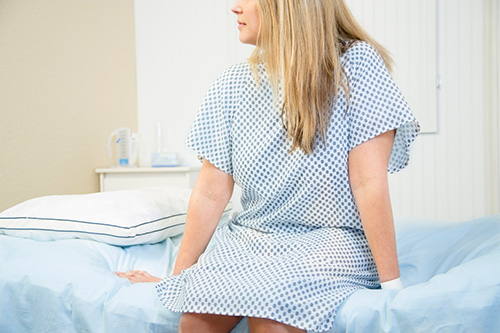
First, a woman sits at the edge of an exam table. Then, when instructed, she places her feet in the stirrup-style foot rests and lies back on the table (like the women in labor so stereotypically depicted on TV or movies). The clinician will usually ask her to separate her thighs and remain calm so the muscles are relaxed. The more relaxed and dropped apart her legs remain, the more comfortable the woman will be and the faster the process will go. (Wriggling the toes can be a great way to reduce tension in the legs, groin, or buttocks.)
The examiner usually touches the outside of the vulva with a gloved hand to separate the labia and view the external genitalia for normalcy. A speculum, which is like a tampon applicator with a handle, is then gently inserted into vagina to widen the opening. Different sizes and styles of speculums are used for different women. The speculum allows the clinician to view the vaginal walls and the cervix. The cervix is found high up in the vagina. It looks like a mini bagel projecting into the vagina, and feels like a firm, nose-like projection if you were to touch it with your finger. The cervix is occasionally positioned so it is hard to visualize, but a skilled clinician can usually find it with some gentle shifting about of the speculum.
Once the speculum is in place, the clinician can collect a sample of tissue from the outside of the cervix (ectocervix) with a spatula, then another from the cervical canal to the womb (endocervix) with a cytobrush. Several types of devices are used to collect samples, the most common being a contoured plastic spatula similar to a tongue depressor. A small mascara-like brush is used to swish the inside of the cervical canal, and a small plastic broom-like brush is also frequently used. All these devices are gentle but can feel a bit funny to the patient when used. Many women have a more fragile cervix that bleeds a bit when scraped, but this is generally not a serious concern. And some women are more sensitive than others, which is also perfectly understandable.
Nowadays it is pretty standard for the clinician to place the collected samples in a liquid-based container, but in some settings the samples are still smeared onto glass slides and a fixative applied.
Chlamydia and gonorrhea testing is done separately, before or after the Pap. If there is vaginal fluid of concern, the clinician may use a Q-tip to swab the vaginal walls and will check the sample under a microscope for signs of a vaginal yeast infection or other types of infection.
The speculum is then removed, at which point the clinician will typically perform a quick bimanual examination, where she feels the uterus and ovaries as best she can with her skilled hands — placing two fingers of one hand inside the vagina and the other hand on the lower belly. Then the clinician will press a little to feel what cannot be seen.
The Pap sample is sent to a pathology lab for the technician to review the cells under a microscope, checking for normal and abnormal features. An HPV DNA analysis can also be done at that time if requested, to determine whether a high-risk strain is detectable, particularly when the patient indicates she may be at risk or her practitioner notes genital warts (condylomata). When the analysis is complete a report is sent to the practice.
The clinic will usually send you a notice that all is well or will call you if anything requires follow-up. Some clinics have a policy of contacting you only if further follow-up is needed, so if you want to be notified of the findings regardless of their nature, be sure to ask them to clarify their policy.
The new ThinPrep Pap smear — liquid-based technology
Originally the Pap test consisted of using a small wooden spatula to sample the outermost cell layer of the cervical os (the opening to the womb inside the vagina), then smearing the sample onto a glass slide for a pathologist to examine (hence Pap smear). The technology and research have changed tremendously over the past ten years, to include both liquid-base Pap tests and human papilloma virus (HPV) DNA typing to assist in the interpretation and management of abnormal Pap smears.
With the new “liquid-based” Pap tests (i.e., ThinPrep® and SurePath®), the cell sample is placed in a jar of liquid fixative for rinsing and transport to the lab for further processing and review. This method provides a cleaner, easier-to-read sample and has proven to have a significantly lower margin of error.
You can now have HPV DNA testing from that same sample. If you do learn that you have been exposed to a high–risk HPV strain, don’t be alarmed — it just means that you will be best served by close monitoring and follow-up over time to ensure your lifelong cervical health.
Our Bodies, Ourselves: A New Edition for a New Era (2005 edition), from the Boston’s Women’s Health Book Collective.
Changing Bodies, Changing Lives: A Book for Teens on Sex and Relationships (expanded 3rd edition), by Ruth Bell.