
Heart disease
High blood pressure — lowering the strain
by Marcelle Pick, OB/GYN NP
What makes your blood pressure rise to unhealthy levels, and what can you do to
bring it back down naturally? Here’s our guide to the prevention and cure
of hypertension.
With one in four women in America being diagnosed with high blood pressure, chances
are you or a woman you love will be affected. Cases of hypertension (the medical
term for high blood pressure) in the US have jumped 30% in just the last decade.
Though this doesn’t quite mean it’s an epidemic, numbers like this are
cause for concern.
Just because you don’t have a diagnosis of high blood pressure now doesn’t
mean you aren’t at risk. Hypertension is often thought of as a condition that
doesn’t afflict women because until they reach menopause, their risk of developing
it is much lower than males their same age. But once women lose the protection of
estrogen after menopause, the incidence of high blood pressure rises sharply to
reach levels similar to men’s.
Sadly, most people experience no discernable sign of high blood pressure until the
damage is done and cannot be reversed. Chronic high blood pressure can shorten your
lifespan by 10–20 years and is linked with some of our most entrenched degenerative
problems, like type 2 diabetes and coronary heart disease (CHD). Ultimately, hypertension
places you at high risk for stroke, heart attack, and renal failure.
So high blood pressure is a serious women’s health problem. If you are on
medication or need to be, I fully support that as a starting point. But more women
need to understand that hypertension is not an inevitable part of aging or genetic
destiny. Nor is a lifetime of medication the only course of action!
The truth is that this is one area of your health that is fully modifiable if you
are willing to commit to some positive changes in your diet and lifestyle. You can
begin to prevent or treat your high blood pressure today. Let’s find out how.
What is blood pressure?
I like to associate the role blood plays in the body with the role many women play
in the lives of those around them. Women shuttle between home, work, community and
family, nourishing and nurturing, forming a conduit through which life is constantly
protected and supported. Likewise, blood circulates tirelessly through the body,
feeding and oxygenating our cells, removing toxins, and defending our organs from
disease and degeneration.
Blood pressure is the force exerted by the flow of blood on the walls of major arterial
blood vessels — similar to the flow of water through a garden hose. It is
determined by the amount of blood being pumped by the heart in a minute (cardiac
output) compared to the resistance of the arterial vessel walls.
This explains why both the amount of fluid in your arteries and the relative elasticity,
or "hardening" of the arteries, are factors in high blood pressure. Again,
think of a hose. If the water is turned on full blast and there is a kink in the
tubing, the pressure builds up. Likewise, the higher the volume of blood and the
stiffer the artery, the harder the heart has to work to pump the blood around your
system.
Because blood is the foundation of life, nature is mainly concerned with a loss
of blood pressure. If your blood pressure drops suddenly, during shock or in reaction
to medication for example, our bodies have multiple protective measures to instantly
restore homeostasis.
But nature has fewer mechanisms to address high blood pressure, so the best defense
is a good offense. How do you know if you have high blood pressure? Up to a third
of the people who have it don’t even know it. Since there are virtually no
symptoms until hypertension is advanced, the best way to tell is to get regular
blood pressure readings.
Conventional treatment for hypertension
If your doctor diagnoses you as prehypertensive, you will most likely be told to
modify your diet and lifestyle. If no significant changes are seen at your next
visit, or if your initial reading was above 140/90 mmHg, there’s a high probability
you will be given a prescription for one of the many potent antihypertensives on
the market. These medications continue to work only while you’re taking them.
For many, this means a lifetime of drugs.
Antihypertensives work in one or more ways: by decreasing blood volume via increased
urine production (diuretics); by facilitating blood flow through dilation
of blood vessels (alpha-blockers, ACE inhibitors, and sympathetic nerve
inhibitors); or by decreasing the rate and/or force of heart contractions,
thereby decreasing volume of blood pumped through arteries (alpha-beta blockers,
beta-blockers, and calcium channel blockers). Other drugs, like
angiotensin blockers and mineralocorticoid receptor antagonists,
block natural chemicals produced by the body to combat low blood pressure.
These medications treat the symptom of hypertension but do little to heal the underlying
causes. Some may not even control your blood pressure over a full 24–hour
period. They also come with their own side effects, such as annoying cough, dizziness,
hyperglycemia, dangerously low blood pressure, kidney problems, and worsening congestive
heart disease. In addition, some antihypertensives have adverse interactions with
other conventional medications and medicinal herbs.
Because the dangers of high blood pressure are very real, I advise women with troubling
high blood pressure to use medication to avert any immediate threat. But I proceed
from there with the understanding that the medication is only treating the symptom
of hypertension, not the root problem, and that by working on addressing the root,
we can eventually come off the medication.
Risks associated with high blood pressure
High blood pressure does its damage over time by undermining the entire cardiovascular
system and kidneys. Tight arterial walls stress not only your heart but all your
major organs. The higher your blood pressure rises, the greater the stress on the
blood vessels, leading to abnormal tissue deposits, clogging, hardening and narrowing
(arteriosclerosis), congestive heart disease, enlargement of the heart, and other
heart damage.
If arteries become stiff, inflamed, or blocked, or if too much fluid is trying to
circulate, the heart must labor too heavily. Over time, circulation suffers, even
though blood pressure stays high, putting the whole body into a deficit state. The
heart must struggle to compensate. Poor circulation is one reason why women with
high blood pressure often experience cold hands and feet. (This is also true for
women with low blood pressure; they have poor circulation too, just for the opposite
reason). Headaches, dizziness, palpitations and fatigue are other possible symptoms,
but keep in mind that hypertension for the most part is asymptomatic.
As for graver risks, when the arteries serving your kidneys are affected, the kidneys
must struggle to remove wastes and extra fluid from your body. Impaired kidney function
and high blood pressure compound one another, and in severe cases, the kidneys give
out in progressive renal failure. The retained fluid in your vessels raises blood
pressure even higher, and now the situation is very serious. Does this seem extreme?
Yes, but high blood pressure results in about 25,000 new cases of kidney failure
per year in this country, more than double what it was in 1982.
What causes high blood pressure?
The major body systems and chronic high blood pressure affect one another in a highly
complex and individualized way, and it has proven difficult to pinpoint the responsible
mechanisms — but that doesn’t mean there isn’t one. Most practitioners
agree that the renal (kidney), hormonal, nervous, and vascular systems are most
highly involved, with input from various genetic and environmental factors.
Some factors that affect blood pressure can’t be helped, like age, race, heredity,
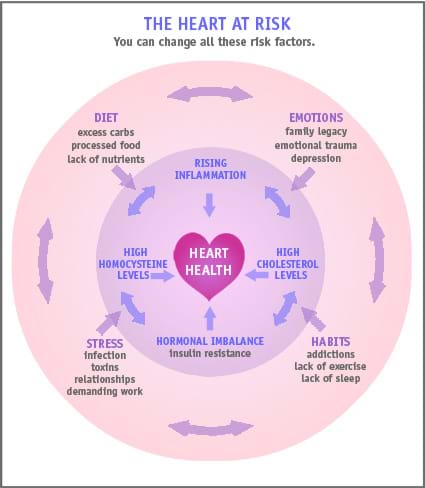
and gender. Then there are other predominant factors, such as diet, lifestyle, environment
and emotional state, that are just as important and wholly within your control.
Being overweight, smoking, high alcohol intake, elevated cholesterol,
inflammation, insulin sensitivity,
and emotional history all affect the progression of high blood pressure —
and you can change them.
Blood pressure is like a reflex, dependent on a wondrous interplay between your
parasympathetic and sympathetic nervous systems. When activated, the sympathetic
nervous system, which governs your fight or flight response, causes your heart rate
to increase and blood pressure to rise. The role of the parasympathetic nervous
system is to lower heart rate and blood pressure back to normal once the "threat"
has passed. This elegant dance evolved over the millennia as an automatic survival
mechanism. The problem is that such stress has become a constant in modern life.
Blood pressure and stress
For millennia, blood pressure was kept healthy by the nature of daily life: alternating
periods of intense physical activity, stress, and rest; hard work for limited calories;
and a restricted salt intake. All that has changed in the past 500 years. As our
"civilization" developed so did chronic high blood pressure, rightfully
seen as a rich man’s (and woman’s) condition because it was found almost
exclusively in the developed world.
One study quoted in the Textbook of Natural Medicine followed residents
of remote, agrarian areas in China, New Guinea, and Brazil (among others). Individuals
showed almost no evidence of hypertension until they made the shift to industrialized
societies. The incidence of high blood pressure then increased in proportion to
changes in diet, lifestyle, environment, and body mass.
Some argue there is a genetic component involved. In poorer countries like Haiti
and the Dominican Republic, high blood pressure is now rampant. But this may well
be due to the stress of poor diet, poverty and crowding. In industrialized urban
areas, African–Americans are four times as likely to have hypertension as
their Caucasian counterparts. Here again, while a variant DNA sequence in these
populations may be part of the picture, major studies have shown that it is exacerbated
by environmental factors, including issues of class and racism. There are some cultures
in Africa who have zero incidence of hypertension, and don’t even have a word
for it.
Even if high blood pressure is the price many of us will pay for modern life, it
is more important for you to remember that your blood pressure reading is not your
destiny. It is just a number that will respond to any positive modifications you
make. Even something as simple as learning how to breathe deeply can lower your
blood pressure. Imagine what other changes might do!
High blood pressure in women
The prevalence of hypertension among men and women is closely correlated with age.
At age 35, a woman is only one-third as likely to have high blood pressure, and
fares better in her prognosis, than a man her same age. By age 65, this gap evens
out, with women running the same risk as men.
Estrogen levels appear to play a significant role in modulating blood pressure,
but this mechanism isn’t yet known. Many women with normal blood pressure
readings throughout their earlier years develop hypertension after menopause. One
element might be that when estrogen levels decline, arteries lose some of their
elasticity. (For more information, read our article on
women and heart disease.)
The WHI study seemed to indicate that hormone replacement therapy (HRT) mimics estrogen’s
soothing effects on the cardiovascular system for a brief time following menopause.
Within five years, however, HRT appeared to have the opposite effect.
Bear in mind that the WHI study was conducted with one-size-fits-all Premarin, a
synthetic form of HRT that caused the participants’ estrone levels to skyrocket.
Estrone is just one of three estrogen forms in your body. The question this begs
for me is whether this is not more about hormonal balance than just estrogen: it
is possible that a sprinkling of bioidentical hormones (including estradiol, estrone,
and estriol, progesterone and testosterone), tailored to a woman’s own needs,
may indeed prove to soften arteries over the long term. I think we’ll know
the answer soon.
Diet, syndrome X, and high blood pressure
Being overweight or obese is a leading factor in high blood pressure. Fat that accumulates
deep in the belly (visceral fat) has been linked with high blood pressure,
high cholesterol, insulin sensitivity,
and heart disease. If you are overweight and have
high blood pressure, losing just five percent of overall body weight has been shown
to significantly lower blood pressure. So don’t give up, thinking it’s
impossible to make a difference — even a minimal decrease in weight will help.
The mechanisms behind weight gain and hypertension are complex. Almost every major
system in the body plays a part. I believe inflammation plays a critical role too,
and research has suggested how. Foods that lead to weight gain such as saturated
fat, trans fats, simple carbs, and refined sugar, elevate levels of inflammation–provoking
fatty acids in the blood. Inflammation is directly linked with atherosclerosis and
other cardiovascular problems that stiffen and gum up arteries. In addition, a higher
body mass stresses the heart, raising cardiac output.
Insulin resistance, type 2 diabetes and other endocrine concerns often co-exist
with high blood pressure. The prevalence of syndrome X, also known as metabolic
syndrome or MetS — marked by central obesity, elevated triglycerides and high
blood pressure — has engendered a new field of study around the relationship
between diet, metabolism, and blood pressure.
We are just beginning to understand how insulin resistance affects sodium retention
and sympathetic nerve activity. It appears to reduce the elasticity of cellular
walls by affecting the ion transport across the cell membranes, inadvertently increasing
sodium and calcium levels and making the vessels more reactive.
A 1997 study called DASH (Dietary Approaches to Stop Hypertension) concluded that
a diet high in fruit and vegetables and low-fat dairy products lowers hypertension,
while a diet high in animal fat and simple carbohydrates does the opposite. The
DASH diet, which is similar to a Mediterranean diet, has been found to significantly
raise below-average potassium levels, and to decrease blood pressure. Interestingly,
the blood pressure benefits of the DASH diet are most pronounced in individuals
whose potassium intake was lowest, and in those whose sodium intake was highest.
This leads us to the matter of salt. Because after sugar and fat, what is the most
common ingredient in the American diet? You guessed it — salt.
Salt and high blood pressure
In conventional medicine, salt is bad. This is too simplistic a view. Let’s
start with understanding sodium, the essential nutrient in ordinary table salt.
On average, we humans need only about a gram of sodium (less than a half-teaspoon
of table salt) per day to keep our systems functioning and ward off dehydration.
Naturally, needs vary according to climate and how physically active we are, which
govern how much we sweat. But between the huge amount of hidden sodium in processed
food and liberal use of iodized table salt (sodium chloride, which is about one-quarter
sodium), most Americans are getting four times their daily requirement per meal.
In most healthy people, the kidneys can manage all that extra sodium, but there
are many people whose kidneys are unable to excrete salt efficiently. The result
of keeping too much sodium on board is fluid retention, which raises blood volume
and pressure. It is estimated that 20% of people with hypertension are "salt-sensitive,"
particularly African-Americans and people of advanced age. This means that their
blood pressure is highly sensitive to even small changes in sodium intake, rising
5 mmHg with each additional gram.
While you may or may not have a genetic predisposition to salt sensitivity, your
chances of developing it become higher with age. An overabundance of salt in our
diets, especially the hidden salt in processed foods, puts everyone at risk, and
more so with each passing year. When our tastebuds build up a tolerance to salt,
we need more and more to get satisfaction. This can lead to salt sensitivity over
time. Have you ever watched someone raining salt from the shaker down upon their
food — sometimes without even tasting it beforehand?
Another point missing in the salt debate is that it is not just about the quantity
of salt you consume, it is the type — and salt comes in many forms! Though
we’ve been lectured ad nauseum that high sodium is the culprit when
it comes to high blood pressure, we’re beginning to see that low potassium
may play the more significant role. Supplementing with "good" salt while
decreasing "bad" salt intake has been shown to successfully lower blood
pressure.
So eat a diet high in potassium–rich foods. Good sources include avocadoes,
bananas, and yogurt. Read the labels on your favorite packaged foods to check for
hidden sodium forms of salt (e.g., MSG), which are often significant. And stick
to a good quality sea salt when cooking and setting the table — you’ll
get vital trace minerals without so much of the sodium and chloride found in ordinary
table salt. By any and all means, substitute fruits, nuts, vegetables, and natural
juices for low-potassium processed foods and soda.
In his book, What Your Doctor May Not Tell
You about High Blood Pressure, author Mark Houston relates his amazing
success at treating hypertension through diet, nutrient therapy, emotional techniques
and biofeedback. As the DASH study shows, you can achieve many of the same beneficial
effects on blood pressure through diet and lifestyle modification without resorting
to drugs.
So don’t buy into the idea of a lifetime of medication without at least trying
to change your diet first. But in addition to what you eat, it’s also important
how you live.
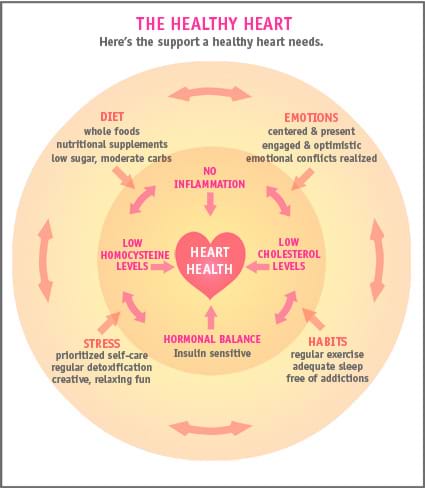
How to prevent or treat high blood pressure with a healthy lifestyle
Managing blood pressure with a healthy lifestyle can be approached in many ways.
Just take it one step at a time. You don’t have to fit everything in all at
once to do yourself good. Real transformation takes place over time through small
but steady changes.
- Engage in some form of physical activity every day.
When it comes to lowering blood pressure, exercise has proven as effective as medication.
And you can start exercising right now! Get up and walk. Learn how BreathWalk can help lower your blood pressure by integrating
walking with breathing. Try to exercise 30–60 minutes almost every day. Start
out slowly, walking to the mailbox, taking the stairs, or leaving your car at the
far end of the parking lot. Then, add time and distance as you build up strength
and endurance. If that sounds too much like work, look into a ballroom dancing class
or the neighborhood pool. It really doesn’t matter so much what you do, only
that you enjoy it enough to stick with it over time.
Now if you think you can’t handle it, you should probably check in with your
healthcare provider first. But consider the fact that for 99% of human history we
were on the run, hunting and gathering — humans are adapted for endurance
exercise! Vigorous physical exercise is the number-one way to prevent and treat
hypertension. There are so many benefits to exercise that many practitioners regard
it as the fountain of youth.
Regular exercise helps individuals maintain a healthy weight, lose fat, and build
muscle. Exercise boosts metabolic function, which helps control insulin and other
hormones. It soothes inflammation, supports detoxification, combats the stress response,
boosts serotonin output, and wards off almost every age-related condition we know.
What’s more, exercise purportedly makes artery walls more elastic. And that
helps explain why it’s so great at reversing high blood pressure.
- If you are overweight (BMI over 25) or obese (BMI over 28), try to lose
ten pounds.
Even a moderate amount of weight loss
can really improve your blood pressure. Again, start slowly. Eliminate junk food
and soda and try not to eat after 7:00 p.m., earlier when you can. Keep some nuts
or a yogurt to snack on so you won’t be tempted to binge on sweets and other
carbs. Follow our
lifestyle and nutritional guidelines. This will ensure that you get an adequate
amount of complex carbs, lean protein, healthy fats, and fiber to keep your blood
pressure stabilized.
Here’s more good news for women: recent reports show that eating dark chocolate
(over 70% cocoa) has a positive effect on blood pressure and insulin resistance
— so go ahead and reward yourself with an occasional chocolate delight.
- Practice emotional stress management.
Poor stress management — or more accurately, emotional stress blockage —
raises your risk of high blood pressure. Unexpressed emotions, particularly anger
and fear, constitute a form of stress. Souring relationships, job strain, and childhood
trauma all have negative health effects.
Many of us have been conditioned to discount or conceal our emotions. What we are
not often taught is that emotions manifest themselves in a physiological way in
the body, especially if they’re repressed. In addition, nearly everyone experiences
some kind of emotional stress. Whether it makes us sick or not appears to be determined
by how well we deal with it. Social support is certainly a factor. In one telling
report, people with supportive spouses and a job they liked were found to have significantly
lower blood pressure than those who did not, given the same amount of external stress.
In another, loneliness was found to be associated with high blood pressure.
It’s clear that certain variables like family history and temperament, which
can be codependent, can increase your risk (see our article on
emotions and your health). There may seem to be no end to factors over which
you feel powerless. The good news is that you can offset these legacies by learning
how to calm your mind, support your physiology, and recalibrate your emotional responses.
Let’s revisit the autonomic nervous system for a moment. We often regard the
functions it regulates, such as heartbeat and blood pressure, as involuntary. But
this is not entirely so. The age-old practices of yoga and meditation alter a number
of autonomic functions, including heart rate and blood pressure. Visit the ABC-of-Yoga for poses and breathing exercises that can help
you stabilize your blood pressure, or consider other modalities such as biofeedback
or brain–heart integration systems like
HeartMath.
Other ways to get at the emotional root of your reaction to stress include talk
therapy, which can help uncover hidden trauma and subconscious patterns that are
blocking your ability to manage stress. Freeing yourself through the help of an
experienced counselor will make it easier to learn a new tune! Look into EFT or the Hoffman
Quadrinity Process for inspiration.
- If you self-medicate, quit or wean yourself off.
Women often turn to psychotropic substances to help them cope with the stress in
their lives. Of these, the most common — alcohol, caffeine and nicotine —
are all implicated in high blood pressure. These substances affect the nervous system,
artificially stimulating or inhibiting the various neurotransmitters involved in
the fight or flight response. Over time, higher dosages are needed to get the desired
effect, which ultimately throws the nervous system off-balance and raises blood
pressure. Alcohol and nicotine use can also accelerate the degenerative effects
of high blood pressure once it’s in place.
You may want to consider a course of acupuncture, which has been shown to be very
effective in reducing cravings, minimizing withdrawal symptoms, and breaking stubborn
addictions. Look for a practitioner experienced with addictive behavior. Techniques
like yoga and meditation can be used as adjunctive therapy to help calm your heart
and quiet your compulsions.
- Minimize environmental stress and toxic body burden.
Everyone has a certain level beyond which the body ceases to be able to detoxify
efficiently. The main organs of detoxification — the liver, kidneys, and skin
— eliminate internal toxins through feces, urine, and sweat. If any of these
organs become overburdened by toxins, many symptoms arise, and at the top of the
list is hypertension.
The most direct way to eliminate toxins is through cleaning up your diet, drinking
lots of filtered water, and adding certain antioxidant and supportive nutrients
to your daily regime. So stay hydrated. Flush toxins and excess salt by drinking
eight to ten 8–oz glasses of filtered water every day. This will assist your
renal function and weight loss. Take a pharmaceutical-grade multivitamin every day
to help compensate for and metabolize the toxic load. Make sure your multi contains
calcium, magnesium, and potassium to offset sodium salts, as well as essential fatty
acids to protect your blood vessels. (For more information, read our article on
detox.)
Lowering your blood pressure may take a combination of any or all of the above,
depending on your individual biology. Always work closely with a trusted professional,
especially if you have a family history or already show elevated readings, to monitor
your response to conventional or integrative therapies.
I can’t underscore enough the real, measurable effect that optimal nutrition,
physical exercise, and positive lifestyle habits have on your blood pressure. My
father has hypertension and serious congestive heart disease. After several very
scary experiences, he finally decided (at age 85) to commit to restructuring his
priorities, cleaning up his diet and undertaking some nutrient and alternative therapies
— including a heavy metal detox. After just a few months he went for an ultrasound
and his condition was improved markedly. To me this is proof positive that holistic
measures will work if you do the work — at whatever age.
If you are under a lot of pressure, serving as the lifeblood of your family, friends
and community, doesn’t it stand to reason that your own blood vessels would
mirror that pressure? So take the cue. Commit to small changes in a consistent way
over time, and the happy culmination will be a healthier life and more ideal blood
pressure levels. You, together with everyone around you, will thrive on your transformation.
Our Personal Program is a great place to start
The Personal Program promotes natural hormonal balance with nutritional supplements,
our exclusive endocrine support formula, dietary and lifestyle guidance, and optional
phone consultations with our Nurse–Educators. It is a convenient, at-home
version of what we recommend to all our patients at the clinic.
If you have questions, don't hesitate to call us toll-free at
1-800-798-7902. We're here to listen and help.
We’re always happy to welcome new patients to our medical clinic in Yarmouth,
Maine, for those who can make the trip. Click
here for information about making an appointment.
Related to this article:
References & further reading on hypertension
Last Modified:
02/16/2010