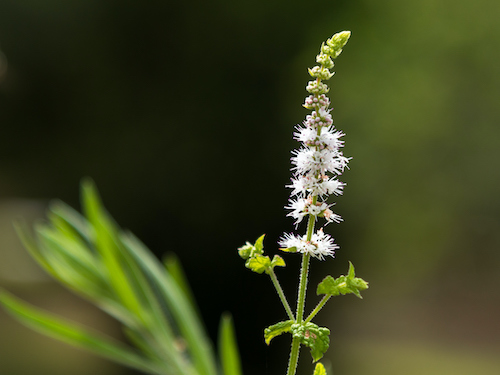



Many of us have become conditioned to view pharmaceutical drugs as the only ‘real’ medicine. Many people today may be unaware that phytotherapy, or plant-based medicine, dates back as far as the Neanderthal period. On top of that, at least 30% of pharmaceutical drugs are directly derived from plants.
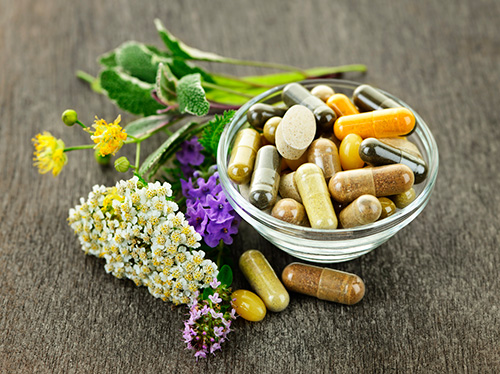
The use of medicinal plants to heal and restore balance in the body is called phytotherapy because “phyto” means plant. Phytotherapy is an invaluable treatment option, especially considering the hefty list of side effects that accompany many pharmaceuticals. It’s also a wonderful choice because it has the ability to adapt to the biochemical uniqueness of each patient.
Plant-based medicine is growing
More and more doctors are relieved to have such safe, effective and natural options to offer their patients. Of course, there is a time and place for most prescription drugs. But phytotherapy can work wonders for many women, either alone or alongside drugs. It is a particularly good first option for many common health concerns.
Owing to the global spread of information, the use of alternative medicine, especially phytotherapy, has significantly increased over the past couple of decades. Understanding how phytotherapy works helps explain why herbs can be so effective.
Herbs are at home in your body: a few examples
- Passionflower also works with the nervous system. It is believed to make the neurotransmitter, GABA, a natural relaxation chemical, more available to help with sleep and anxiety.
- Turmeric contains molecules with powerful antioxidant, anti-inflammatory, and antitumor actions, currently under study for their therapeutic benefit to the immune, musculoskeletal systems and others.
- Red clover is rich in isoflavones that act in the endocrine system, weakly binding to hormone receptors to calm symptoms that arise from fluctuating hormones.
- St. John’s wort interacts closely with the nervous system. Evidence suggests it’s as effective as standard antidepressants, without the side effects.
What is phytotherapy?
Phytotherapy taps into plants for healing purposes. We can use plants therapeutically as whole foods, or in a variety of other forms, such as standardized extracts and supplements. Medicinal use of herbs has been around for centuries, yet some people may still be hesitant to even try them. Worries range from concern that herbs might be dangerous or, conversely, that plants will be too weak to help.
Another factor is that medical doctors in the U.S. are not trained in phytotherapy, which may reinforce a negative bias against herbs and toward drugs. (I once overheard a doctor tell a patient, “Sure, take the echinacea if you insist, but don’t expect it to touch your cold.”) In contrast, for example, 70% of medical doctors in Germany prescribe herbs regularly, and the German Commission E, a government regulatory agency, has helped produce valuable research on herbal medicines.
Many drugs and pharmaceuticals are rooted in phytotherapy
Many drugs prescribed by healthcare practitioners got their start in the natural world, like digoxin from foxglove and aspirin from willow bark. Taxol, an early form of chemotherapy for breast cancer was developed in the 1960s as an isolate of the Pacific yew tree, Taxus brevifolia.
So then, why make drugs at all? The simple answer is money: plants cannot be patented. As a result, pharmaceutical companies identify active components of plants, and chemically modify them to magnify their actions. Then those companies can sell the products as patented drugs. Unfortunately, this process disrupts the natural balance of the plant — one big reason for the high incidence of side effects from pharmaceutical drugs.
Unlike pharmaceuticals, medicinal herbs rarely produce side effects. They’re inexpensive, and because they’re found in nature, plant-derived remedies are readily accessible to people all over the world. While a drug usually contains an amplified active ingredient, a whole plant (or plant extract) generally contains an assortment of constituents that are synergistic (working together).
Our recommendations
We formulate many of most effective phytotherapeutic products for health issues that affect women most, including:
- Herbal Equilibrium for perimenopause and menopause symptoms
- Adaptisol and Serinisol for the different symptoms of adrenal imbalance
- T-Balance for thyroid support and symptom relief
- WheySational for weight loss
- Super C Plus for joint comfort, oxidative stress and overall wellness.
You can buy our formulations individually. Many women get best results with these products as part of our comprehensive Health Packages.
This not only enhances the plant’s effectiveness, but also reduces risk of toxicity. Phytotherapy uses cell signaling to benefit our bodies early in the process of disease and imbalance, whereas pharmaceuticals are generally designed to only eradicate isolated symptoms. This does nothing to target, and resolve, the underlying cause of those symptoms.
The adaptogenic effect — efficient and safe
Have you ever seen a delicate fern growing up through a crack in the sidewalk? Or a tree root winding around a rock? The same way that plants can adapt to their environment is good news for your body.
One thing we love about phytotherapy is it gives us a more nuanced approach to healing that’s gentler than the “sledgehammer” effect drugs can have. With phytotherapy — particularly those adaptogenic herbs that tonify (stimulate energy flow) and nourish — the body can usually get what it needs, and only what it needs.
Like a gardener caring for a plant that needs more water on some days than others, most medicinal herbs are capable of both responding actively and quietly ‘listening’ to your cells to gauge what your body needs. Adaptogenic herbs are normalizing to your system and can be taken safely long-term. Synthetic drugs cannot mimic the brilliant adaptogenic effect or the level of safety provided by medicinal herbs.
Guidelines for using herbal medicine effectively
When it comes to phytotherapy, two universal principles can encourage success:
- Be patient. While some herbs act quickly, others require more time to do their gentle work. The natural healing of longtime metabolic imbalances doesn’t — and shouldn’t — happen overnight.
- Know your body. We’re all genetically unique and don’t always clear molecules through the liver with the same efficiency. If you know you’re generally sensitive to therapeutic agents, vary your dosage accordingly. Partnering with a practitioner experienced in these therapies helps with this. And we always advise letting your practitioner know what you’re taking, and why.
Learn more about our natural products.
More key tips for using phytotherapy:
- Choose standardized extracts. Standardized extracts provide pure, active components of plants at levels already demonstrated to be effective, and are usually the best option when going it alone. For deeper information, consult a licensed professional herbalist to choose the best formulation for you.
- Monitor your progress. Follow recommended dosage guidelines and remember — more is not necessarily better. Today negative interactions and side effects are uncommon with herbal remedies because harmful plants have already been removed from herbal pharmacopoeia. Even so, some herbs may interact with pharmaceutical medications.
- Be alert for herb-drug interactions. Discuss any herbs and meds you’re taking with your healthcare provider. If you drink, smoke, or take prescription meds consider potential herb–drug interactions before starting a new herbal therapy. For example, St. John’s wort may cause problems when taken with some antidepressants or other drugs because the herb can alter their clearance out of the body.
- Go for quality. Make sure that you’re using products from a reputable company that values the highest quality of manufacturing. Unfortunately, some herbal product manufacturers are less reliable than others. No nonsense money-back guarantees are a good sign you’re working with a trustworthy company.
- Opt for a diverse formulation. Phytotherapeutic formulations that combine a range of plant-based ingredients, such as those we offer in our Health Packages, often deliver more effective overall symptom relief than a single herb.
Plants speak our language — if we listen
Plant medicine has the ability to ease the body back into balance without the overwhelming effects pharmaceuticals can have. While there is a real need for drugs and surgical intervention for certain concerns, phytotherapy is a safe, natural and effective starting point. What can it do for you?
Winslow LC, Kroll DJ. Herbs as medicines. Arch Intern Med. 1998 Nov 9;158(20):2192-2199.
Kelly JP, Kaufman DW, Kelley K, et al. Recent trends in use of herbal and other natural products. Arch Intern Med. 2005 Feb 14;165(3):281-286.
Murray MT. Botanical Medicine—A Modern Perspective. In: Pizzorno JE, Murray MT, eds. Textbook of Natural Medicine. 4th ed. St. Louis, MO: Churchill Livingstone; 2013.
Winslow LC, Kroll DJ. Herbs as medicines. Arch Intern Med. 1998 Nov 9;158(20):2192-2199.
Murray MT. Botanical Medicine—A Modern Perspective. In: Pizzorno JE, Murray MT, eds. Textbook of Natural Medicine. 4th ed. St. Louis, MO: Churchill Livingstone; 2013.
Page last updated on 07/20/2020