


Reviewed by Dr. Mary James, ND
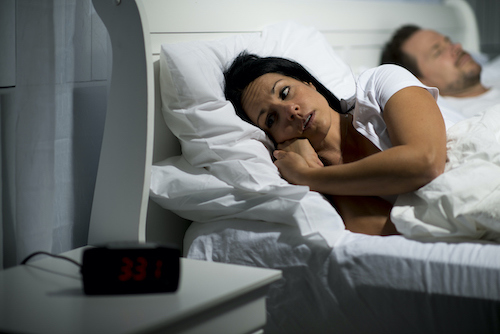
Women today are desperate for sleep! We race from one task to the next during the day only to find that when we settle in to bed at night, the race isn’t over. Now it’s our minds that are spinning along — worrying about what we left undone and need to do tomorrow, what we said or should have said, read on the internet, saw on TV, or talked about on our cell phones. It’s no secret that we are living in a faster-paced world than ever before — but our bodies haven’t adapted to this lifestyle.

In this article
Sound sleep is so crucial to our health and happiness! And if you can’t sleep, there could be many emotional and physical causes. One prevailing theme I see is the connection between insomnia and stress. Our stress hormones are intimately linked to our circadian rhythm. I’ve talked to so many women taking Tylenol PM, Lunesta, or Ambien, but these sleeping pills and other drugs don’t address the root cause of sleeplessness, and can often make us feel worse in the morning.
The good news is that you can reset your sleep-wake cycle. Nature has provided plenty of safe and effective ways to gently remind the body to rest. We can help you get to the root of your sleeping trouble, and offer some safe, natural sleep help in the meantime. Let’s take a closer look.
It’s been estimated that over a million cups of chamomile tea are consumed daily!
Source: National Institutes of Health – Public Access Author Manuscripts.
Choose the right herbs to help with sleep
For centuries wise women have treasured the following herbs for their calming influence, and phytochemists today are busy exploring and explaining the mechanics of how they support better sleep.
 Passionflower (Passiflora incarnata). This species of passionflower has a long history of use for calming anxiety and treating insomnia. Neuroscientists believe it works by increasing the availability of a “relaxing” chemical called GABA (gamma-aminobutyric acid). Its soothing effects on the nervous system may also be mediated by the same receptors in the brain sensitive to pharmaceutical-strength sedatives and anxiety drugs — but without the same risk profile. You can find passionflower in standardized powders, tinctures, infusions, and teas.
 Chamomile (Roman or English chamomile: Matricaria recutita, Chamaemelum nobile). Widely regarded for its ability to treat insomnia, calm frayed nerves, and dissolve worry, chamomile’s sedative effects have been attributed to the flavonoid apigenin. Similar to the active constituents in passionflower and other botanical nerviness, apigenin appears to bind to GABA, benzodiazepine, or similar neurotransmitter systems in the brain.
 Kava kava (Piper methysticum). The root of the kava plant has been used for generations to help relieve tension, restlessness, and insomnia. Though the FDA issued concerns in 2002 about kava and liver damage, these effects may have been due to inferior product quality or overuse. Herbal medicine researchers have attributed the relaxing, anti-anxiety actions of kava to the active principals known as kavalactones. These phytochemicals are believed to work through enhanced binding to GABA, dopamine, and opiate receptors in the brain.
Eat and drink for sleep. Connect the dots between what and when you eat and how well you sleep — sugar, caffeine, and alcohol may be factors to consider.
Adapt your routine. Set a reasonable bedtime, unplug before bed, and try exercising in the morning or at midday instead of in the evening.
Promote good sleep hygiene. Be sure your room is dark, quiet, and has comfortable bedding. Don’t allow electronics or digital clocks to “zap” you in the night.
Consider your stress and anxiety. The stress hormone cortisol is connected to our circadian rhythms. Supporting healthy cortisol balance and adrenal health may help to reset your sleep-wake cycle.
 Valerian (Valeriana officinalis). Valerian has been used as a mild relaxant since as far back as the time of ancient Greece and Rome. In more recent times research on valerian has demonstrated anxiolytic, tranquilizing, and sleep-inducing effects in both animal studies and clinical trials. Like the other “botanical nervines,” research additionally suggests that valerenic acid, valerian’s active principal, works to relieve nervous tension through enhanced binding to the GABA receptors in the brain.
Natural molecules that reset your sleep cycle
Our bodies are naturally equipped with molecules that guide us to sleep every night. When women are struggling with sleep, depending on their unique situation, I use these molecules to help gently coax the body back into a healthy sleep-wake rhythm. Talk with your practitioner to see if you would benefit from supplementing with any of the following. Or, learn more about our Adrenal Health Program formulations, which combine natural herbs, minerals, and molecules to help your body naturally get a good night’s rest.
-
- Phosphatidylserine (PS). This molecule is a basic structural component of our brain and nerve cell membranes. The nervous system depends on healthy cell-to-cell communication and biochemical messaging, which can be enhanced by PS and similar molecules. Among its other benefits PS can modulate the interaction between the hypothalamus, pituitary, and adrenal glands (known as the HPA axis), allowing for a more adaptive response to stress and thereby aiding in sleep.
-
- Melatonin. Naturally produced by the pineal gland in the brain whenever dusk approaches or you dim the ambient lighting, melatonin is actually a hormone. As melatonin levels in the blood increase, we become less alert and increasingly ready for sleep. Part of why we may have more difficulty falling asleep as we grow older is because our melatonin output begins to gradually wane after puberty, and especially after the age of 40. Supplemental melatonin has been found to be very safe and helpful for many people with insomnia, and may be an option for you to talk about with your healthcare practitioner.
- 5-HTP. 5-hydroxytryptophan is an intermediate amino acid formed naturally in the body from the precursor tryptophan during the production of melatonin and our “feel-good” neurotransmitter serotonin. This metabolic pathway, simplified, looks something like this:
Tryptophan ⇒ 5-HTP ⇒ Serotonin ⇒ Melatonin
Supplemental 5-HTP is extracted from the seeds of the Griffonia plant. 5-HTP supplements can be helpful for increasing the feel-good neurotransmitter serotonin, which may allow for the release of melatonin without accessing your brain’s light-regulation system. Studies show it to be beneficial for insomnia and to improve sleep quality.
Calming minerals to support sleep
When should you take your B vitamins?
In general, it’s best to take your B-complex vitamins in the first half of your day. B vitamins help reduce nervousness and anxiety and for that reason certain B’s are sometimes included in natural sleep formulations. Taking B-complex vitamins later in the day can make some people feel less sleepy, however. Many women notice an excellent boost to their energy from the B-vitamin component of our Essential Nutrients, so it’s best to take them in the morning and after lunch or a mid-afternoon snack. This practice helps offset the afternoon slump many women with adrenal imbalance experience.
Women are often surprised to hear that certain vitamins and minerals can be helpful for sleep. Various studies have noted improvements in anxiety and perceived stress with vitamin and mineral supplementation. In one recent study of otherwise healthy women, the ratio of calcium to magnesium in the blood was significantly correlated with perceived levels of anxiety and stress. Low magnesium in particular has been well-studied in association with anxiety and poor sleep, and supplementing with these minerals can help resolve these symptoms.
A combination approach
We’ve always found that feeling good requires looking at the whole body. Sleep is integral to health, but it doesn’t stand alone. Our sleep-wake rhythms are affected by the environment we live in, the foods we eat, and our daily stress to name a few. I hope you’ll find an approach to sleep that encompasses your whole health picture, such as our Adrenal Health Program. It’s designed with natural herbs, supplements, and a healthy eating plan to facilitate a natural sleep-wake cycle.
In addition to our high-quality nutrient support, phytotherapeutic stress-support, and one-on-one phone support, we’ve put a lot of research into our new sleep product, Serinisol. Serinisol combines calcium, magnesium, phosphatidylserine, and passionflower to help level your cortisol output, calm your anxiety, and support your sleep naturally. Whether you chose our approach or not, take comfort in the fact that you don’t have to rely on the sleeping pills offered in your drug store or pharmacy – you can make choices that feel good for you.
Lakhan, S., & Vieira, K. 2010. Nutritional and herbal supplements for anxiety and anxiety-related disorders: A systematic review. Nutr. J., 9, 42–56. URL (PDF): https://www.nutritionj.com/content/pdf/1475-2891-9-42.pdf (accessed 07.10.2010).
2 Appel, K., et al. 2010. Modulation of the γ-aminobutyric acid (GABA) system by Passiflora incarnata L. Phytother. Res. [Epub ahead of print]. URL (abstract): https://www.ncbi.nlm.nih.gov/pubmed/21089181 (accessed 02.14.2011).
Elsas, S., et al. 2010. Passiflora incarnata L. (Passionflower) extracts elicit GABA currents in hippocampal neurons in vitro, and show anxiogenic and anticonvulsant effects in vivo, varying with extraction method. Phytomedicine, 17 (12), 940–949. URL (abstract): https://www.ncbi.nlm.nih.gov/pubmed/20382514 (accessed 02.14.2011).
3 Nassiri–Asl, M., et al. 2007. Anticonvulsant effects of aerial parts of Passiflora incarnata extract in mice: Involvement of benzodiazepine and opioid receptors. BMC Complement. Altern. Med., 7, 26. URL: https://www.biomedcentral.com/1472-6882/7/26 (accessed 01.28.2011).
Salgueiro, J., et al. 1997. Anxiolytic natural and synthetic flavonoid ligands of the central benzodiazepine receptor have no effect on memory tasks in rats. Pharmacol. Biochem. Behav., 58 (4), 887–891. URL (abstract): https://www.ncbi.nlm.nih.gov/pubmed/9408191 (accessed 01.28.2011).
Wolfman, C., et al. 1994. Possible anxiolytic effects of chrysin, a central benzodiazepine receptor ligand isolated from Passiflora coerulea. Pharmacol.Biochem.Behav., 47 (1), 1–4. URL (abstract): https://www.ncbi.nlm.nih.gov/pubmed/7906886 (accessed 01.28.2011).
Medina, J., et al. 1990. Chrysin (5,7-di-OH-flavone), a naturally-occurring ligand for benzodiazepine receptors, with anticonvulsant properties. Biochem. Pharmacol., 40 (10), 2227–2231. URL (abstract): https://www.ncbi.nlm.nih.gov/pubmed/2173925 (accessed 01.28.2011).
4 Amsterdam, J., et al. 2009. A randomized, double-blind, placebo-controlled trial of oral Matricaria recutita (chamomile) extract therapy for generalized anxiety disorder. J. Clin. Psychopharmacol.,29 (4), 378–382. URL: https://www.ncbi.nlm.nih.gov/sites/entrez/19593179 (accessed 02.14.2011).
5 Viola, H., et al. 1995.Apigenin, a component of Matricaria recutita flowers, is a central benzodiazepine receptors-ligand with anxiolytic effects. Planta Med., 61 (3), 213–216. URL (abstract): https://www.ncbi.nlm.nih.gov/pubmed/7617761 (accessed 02.17.2011).
6 Lakhan, S., & Vieira, K. 2010.
7 Teschke, R., et al. 2008. Kava hepatotoxicity: A European view. NZ Med. J., 121, 90–98. URL (abstract): https://www.ncbi.nlm.nih.gov/pubmed/18841189 (accessed 02.17.2011).
8 Lakhan, S., & Vieira, K. 2010.
Yuan, C., et al. 2002. Kavalactones and dihydrokavain modulate GABAergic activity in a rat gastric-brainstem preparation. Planta Med., 68, 1092–1096. URL: https://www.ncbi.nlm.nih.gov/pubmed/12494336 (accessed 02.17.2011).
Dinh, L., et al. 2001. Interaction of various Piper methysticum cultivars with CNS receptors in vitro. Planta Med., 67, 306–311. URL: https://www.ncbi.nlm.nih.gov/pubmed/11458444 (accessed 02.17.2011).
9 Hattesohl, M., et al. 2008.Extracts of Valeriana officinalis L. s.l. show anxiolytic and antidepressant effects but neither sedative nor myorelaxant properties. Phytomedicine, 15 (1–2), 2–15. URL (abstract): https://www.ncbi.nlm.nih.gov/pubmed/18160026 (accessed 02.17.2011).
Leuschner, J., et al. 1993. Characterization of the central nervous depressant activity of a commercially available valerian root extract. Arzneimittelforschung, 43 (6), 638–641. URL (abstract): >https://www.ncbi.nlm.nih.gov/pubmed/8352816 (accessed 02.17.2011).
Lindahl, O., &Lindwall, L. 1989. Double blind study of a valerian preparation. Pharmacol. Biochem. Behav., 32 (4), 1065–1066. URL (abstract): https://www.ncbi.nlm.nih.gov/pubmed/2678162 (accessed 02.17.2011).
Balderer, G., & Borbély, A. 1985. Effect of valerian on human sleep. Psychopharmacology, 87 (4), 406–409. URL (abstract): https://www.ncbi.nlm.nih.gov/pubmed/3936097 (accessed 02.17.2011).
10 Yuan, C., et al. 2004. The gamma-aminobutyricacidergic effects of valerian and valerenic acid on rat brainstem neuronal activity. Anesth. Analg., 98 (2), 353–358. URL https://www.anesthesia-analgesia.org/content/98/2/353.long (accessed 02.17.2011).
11 [No author listed.] 2008. Phosphatidylserine. Altern. Med. Rev., 13 (3), 245–247. URL (PDF): https://www.thorne.com/altmedrev/.fulltext/13/3/245.pdf (accessed 02.14.2011).
12 Starks, M., et al. 2008. The effects of phosphatidylserine on endocrine response to moderate intensity exercise. J. Int. Soc. Sports Nutr., 5 (1), 11. URL: https://www.jissn.com/content/5/1/11 (accessed 01.20.2011).
13 Kelly, G. 1999. Nutritional and botanical interventions to assist with the adaptation to stress. Altern. Med. Rev., 4 (4), 249-265. URL (PDF): https://www.thorne.com/altmedrev/.fulltext/4/4/249.pdf (accessed 01.20.2011).
14 [No author listed.] 2011. Melatonin in the treatment of insomnia. Health Studies J. URL: https://www.nhiondemand.com/hsjarticle/?id=980 (accessed 02.01.2011).
15 Wade, A., et al. 2011. Prolonged release melatonin in the treatment of primary insomnia: Evaluation of the age cut-off for short- and long-term response. Curr. Med. Res. Opin., 27 (1), 87–98. URL (abstract): https://www.ncbi.nlm.nih.gov/pubmed/21091391 (accessed 02.17.2011).
Wade, A., et al. 2010. Nightly treatment of primary insomnia with prolonged release melatonin for 6 months: A randomized placebo controlled trial on age and endogenous melatonin as predictors of efficacy and safety. BMC Med., 8, 51. URL: https://www.biomedcentral.com/1741-7015/8/51 (accessed 02.17.2011).
16 [No author listed. No date of publication listed.] Alternative and integral therapies for sleep disorders. Melatonin and 5-HTP for sleep disorders. URL: https://www.holisticonline.com/remedies/sleep/sleep_ins_melatonin-and-5htp.htm (accessed 02.14.2011).
17 Birdsall, T. 1998. 5-Hydroxytrptophan: A clinically-effective serotonin precursor. Altern. Med. Rev., 3 (4), URL (PDF): https://www.thorne.com/altmedrev/.fulltext/3/4/271.pdf (accessed 02.17.2011).
18 Carroll, D., et al. 2000. The effects of an oral multivitamin combination with calcium, magnesium, and zinc on psychological well-being in healthy young male volunteers: A double-blind placebo-controlled trial. Psychopharmacology (Berl.), 150 (2), 220–225. URL (abstract/intro): https://www.springerlink.com/content/6vg3yg6k93rakn17/ (accessed 01.28.2011).
19 Jung, K., et al. 2010. Associations of serum Ca and Mg levels with mental health in adult women without psychiatric disorders. Biol. Trace Elem. Res., 133 (2), 153–161. URL (abstract): https://www.ncbi.nlm.nih.gov/pubmed/19543697 (accessed 02.09.2011).
20 Garalejić, E., et al. 2010. Hamilton anxiety scale (HAMA) in infertile women with endometriosis and its correlation with magnesium levels in peritoneal fluid. Psychiatr.Danub., 22 (1), 64–67. URL (abstract): https://www.ncbi.nlm.nih.gov/pubmed/20305593 (accessed 02.09.2011).
Jung, K., et al. 2010.
Lakhan, S., & Vieira, K. 2010.
Nielsen, F., et al. 2010. Magnesium supplementation improves indicators of low magnesium status and inflammatory stress in adults older than 51 years with poor quality sleep. Magnes. Res., 23 (4), 158–168. URL: https://www.ncbi.nlm.nih.gov/pubmed/21199787 (accessed 02.09.2011).
Jacka, F., et al. 2009. Association between magnesium intake and depression and anxiety in community-dwelling adults: The Hordaland Health Study. Aust. NZ J. Psychiatry, 43 (1), 45–52. URL (abstract): https://www.ncbi.nlm.nih.gov/pubmed/19085527 (accessed 02.09.2011).
Poleszak, E. 2008. Benzodiazepine/GABA(A) receptors are involved in magnesium-induced anxiolytic-like behavior in mice. Pharmacol. Rep., 60 (4), 483–489. URL (PDF): https://www.if-pan.krakow.pl/pjp/pdf/2008/4_483.pdf (accessed 02.09.2011).
Poleszak, E., et al. 2008. NMDA/glutamate mechanism of magnesium-induced anxiolytic-like behavior in mice.Pharmacol. Rep., 60 (5), 655–663. URL (PDF): https://www.if-pan.krakow.pl/pjp/pdf/2008/5_655.pdf (accessed 02.09.2011).
Spasov, A., et al. 2008. [Depression-like and anxiety-related behaviour of rats fed with magnesium-deficient diet]. Zh. Vyssh. Nerv.DeiatIm. IP Pavlova, 58 (4), 476–485. Russian. URL (abstract): https://www.ncbi.nlm.nih.gov/pubmed/18825946 (accessed 02.09.2011).
Eby, G., &Eby, K. 2006. Rapid recovery from major depression using magnesium treatment.Med. Hypotheses, 67 (2), 362–370. URL (abstract): https://www.ncbi.nlm.nih.gov/pubmed/16542786 (accessed 02.09.2011).
Grases, G., et al. 2006. Anxiety and stress among science students. Study of calcium and magnesium alterations. Magnes. Res., 19 (2), 102–106. URL (abstract): https://www.ncbi.nlm.nih.gov/pubmed/16955721 (accessed 02.09.2011).
Mucci M., et al. 2006. Soy isoflavones, lactobacilli, magnolia bark extract, vitamin D3 and calcium. Controlled clinical study in menopause.Minerva Ginecol., 58 (4), 323–334. URL (abstract): https://www.ncbi.nlm.nih.gov/pubmed/16957676 (accessed 02.09.2011).
Siwek, M., et al. 2005.[The role of copper and magnesium in the pathogenesis and treatment of affective disorders.] Psychiatr. Pol., 39 (5), 911–920. URL (abstract): https://www.ncbi.nlm.nih.gov/pubmed/16358591 (accessed 02.09.2011).
Durlach, J., et al. 2004. Importance of magnesium depletion with hypofunction of the biological clock in the pathophysiology of headaches with photophobia, sudden infant death and some clinical forms of multiple sclerosis. Magnes. Res., 17 (4), 314–326. URL (abstract): https://www.ncbi.nlm.nih.gov/pubmed/15726907 (accessed 02.09.2011).
Fromm, L., et al. 2004. Magnesium attenuates post-traumatic depression/anxiety following diffuse traumatic brain injury in rats. J. Am. Coll. Nutr., 23 (5), 529S–533S. URL: https://www.jacn.org/cgi/reprint/23/5/529S (accessed 01.28.2011).
Hanus, M., et al. 2004.Double-blind, randomised, placebo-controlled study to evaluate the efficacy and safety of a fixed combination containing two plant extracts (Crataegus oxyacantha and Eschscholtzia californica) and magnesium in mild-to-moderate anxiety disorders.Curr. Med. Res. Opin., 20 (1), 63–71. URL (abstract): https://informahealthcare.com/doi/abs/10.1185/030079903125002603 (accessed 01.28.2011).
Jonczak, L., et al. 2004. [Restless legs syndrome and periodic limb movements during sleep in a patient with obstructive sleep apnea]. Neurol. Neurochir. Pol., 38 (5), 427–430. URL (abstract)https://www.ncbi.nlm.nih.gov/pubmed/15565533 (accessed 02.09.2011).
Poleszak, E., et al. 2004. Antidepressant- and anxiolytic-like activity of magnesium in mice. Pharmacol. Biochem. Behav., 78 (1), 7–12. URL: https://www.ncbi.nlm.nih.gov/entrez/eutils/elink.fcgi?dbfrom=pubmed&cmd=prlinks&retmode=ref&id=15159129 (accessed 01.28.2011).
Singewald, N., et al. 2004. Magnesium-deficient diet alters depression- and anxiety-related behavior in mice — influence of desipramine and Hypericum perforatum extract. Neuropharmacology, 47 (8), 1189–1197. URL (abstract): https://www.ncbi.nlm.nih.gov/pubmed/15567428 (accessed 02.09.2011).
Vink, R., et al. 2003. Magnesium attenuates persistent functional deficits following diffuse traumatic brain injury in rats. Neurosci.Lett., 336 (1), 41–44. URL (abstract): https://www.ncbi.nlm.nih.gov/pubmed/12493598 (accessed 02.09.2011).
Ezhov, A., &Pimenov L. 2002.[Effect of adjuvant magnesium therapy on the quality of life and emotional status of elderly patients with stable angina]. Adv. Gerontol., 10, 95–98. URL (abstract): https://www.ncbi.nlm.nih.gov/pubmed/12577698 (accessed 02.09.2011).
Held, K., et al. 2002. Oral Mg(2+) supplementation reverses age-related neuroendocrine and sleep EEG changes in humans. Pharmacopsychiatry, 35 (4), 135–143. URL (abstract): https://www.ncbi.nlm.nih.gov/pubmed/12163983 (accessed 02.09.2011).
Murck, H. 2002. Magnesium and affective disorders. Nutr. Neurosci., 5 (6), 375–389. Review. URL (abstract): https://www.ncbi.nlm.nih.gov/pubmed/15565533 (accessed 02.09.2011).
Carroll, D., et al. 2000.
Chollet, D., et al. 2000. Blood and brain magnesium in inbred mice and their correlation with sleep quality. Am. J. Physiol. Regul. Integr.Comp. Physiol., 279 (6), R2173–R2178. URL: https://ajpregu.physiology.org/content/279/6/R2173.long (accessed 02.09.2011).
De Souza, M., et al. 2000. A synergistic effect of a daily supplement for 1 month of 200 mg magnesium plus 50 mg vitamin B6 for the relief of anxiety-related premenstrual symptoms: A randomized, double-blind, crossover study. J. Women’s Health Gend. Based Med., 9 (2), 131–139. URL (abstract/intro): https://www.liebertonline.com/doi/abs/10.1089/152460900318623 (accessed 01.28.2011).
Further reading on chamomile
Srivastava, J., et al. 2010. Chamomile: A herbal medicine of the past with a bright future. Mol. Med. Report, 3 (6), 895–901. URL: https://www.ncbi.nlm.nih.gov/pmc/articles/PMC2995283/?tool=pubmed (accessed 02.17.2011).