


Reviewed by Dr. Mary James, ND
Just like the rising sun or a crowing rooster, a mug filled with a caffeinated beverage says that morning has arrived. Whether it’s in the form of coffee, tea, cocoa, cola, or one of the new energy drinks, caffeine is a habit embraced by many women. We treasure the quiet moments spent sipping a hot drink, but mostly people love caffeine because it helps them feel more alert.
In this article
- The health benefits of caffeine
- The flip side — spiraling insomnia and fatigue
- Caffeine — what else is in your cup?
- The bottom line — it’s between caffeine and you
In recent years, studies investigating the effects of caffeine on the body have shown mixed results. While some research shows that caffeine supports wellness and can even have protective effects, many women worry that their caffeine consumption could be harming their health.
So what’s the real story? For most women, one daily 8–10-ounce cup of coffee or a similarly caffeinated drink is fine. But the caffeine habit can sneak up on women, and it can catch up with you, particularly at midlife. Like most habits, moderation is key, and there is no one right answer for every woman. So when fatigue, insomnia, or stress cause women to become concerned about their caffeine intake, deciding whether to cut back or quit caffeine should be guided by each woman’s unique health history and needs.
Let’s take a look at the “pros and cons” of caffeine in the light of the current science, so you can make up your own mind.
The sunny side of caffeine
It’s not just your imagination: caffeine really does help you feel more awake — at least, at first. Brain studies show it reduces sleepiness and improves alertness, effectively jump-starts a sleep-deprived mind, and increases the ability to pay attention. Feelings of fatigue can be offset by caffeine consumption, and when tiredness does set in and you feel less focused, it can help increase your energy levels. This effect makes you feel more attentive — a real bonus when there’s no time to rest.
We know so many women who say, “I can’t even think ‘til I’ve had caffeine.” And there is good evidence behind the contention that caffeine improves productivity and task performance. It has also been shown to improve response time and accuracy, especially in those who don’t use caffeine regularly.
But for those who do consume caffeine regularly, an even more intriguing benefit may be its capacity to stimulate positive feelings and perk up mood. Researchers think this mood-enhancing effect reinforces the consistent use of caffeine — and may explain why some individuals get “hooked.” And though recall studies show varied results, predictable, moderate caffeine consumption may genuinely improve both long-term and short-term memory.
These are some of the suggested advantages of caffeine consumption that make it seem so appealing. And taking in caffeine — in whatever form you prefer — is a comforting ritual that makes you feel good, and one we love to share with others. So there is often a powerful psychosocial component to caffeine consumption as well. What about the drawbacks?
The flip side: extra stress hormones and sleep interference
How we react to caffeine differs from person to person. Even though there is evidence that moderate caffeine intake has mostly positive effects on behavior, excessive use may lead to problems, especially in sensitive individuals and especially as we grow older.
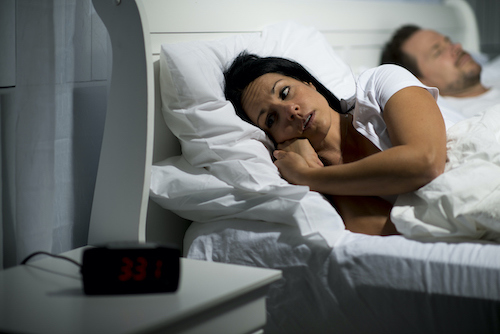
By the time they’re using caffeine habitually many women observe that, while it does pick them up at least for a while, it may induce deeper fatigue later on. That drop-off in energy may occur later in the day or even the next morning, when they find themselves reaching for more caffeine. For some, this rebound effect interferes with normal sleep patterns and disrupts their natural circadian rhythm.
In the brain, caffeine blocks the areas that receive adenosine, a biochemical compound with sedative effects. As the day wears on, the overworked brain naturally releases more adenosine to slow activity and trigger sleep. But when you take in caffeine, these receptors get blocked, your heart rate speeds up, and you get a jolt of heightened alertness — which might be what you want so you can keep going, but meanwhile your brain is looking to sleep, not caffeine, for restoration.
The caffeine buzz also comes at the expense of the adrenal glands, which are prompted by caffeine to pump out more of the stress hormones norepinephrine, adrenaline, and cortisol. As the adrenal glands become overworked, the daily rhythms of cortisol release are thrown off and we get both lasting fatigue and insomnia (something we talk about more in our article on caffeine and adrenal health). This is how the caffeine habit often backfires: the more you drink, the more it saps your energy.
Because the effects of caffeine are so entwined with our stress response, it can exaggerate our reaction to everyday stressful events, elevating our blood pressure and raising levels of hormones linked to feelings of anxiety. In some people, adverse effects also include “withdrawal symptoms” when trying to eliminate caffeine.
More than a feeling: caffeine’s effects on brain health
Aside from the way it makes you feel, we’re now seeing some surprising research on how caffeine affects long-term physical health. Results from a range of studies worldwide have been mixed, but moderate caffeine use seems to not only reduce the risk of developing dementia and Alzheimer’s disease, but also to slow their progression. In Finland, where coffee consumption is higher than anywhere else in the world, the lowest risk of Alzheimer’s and dementia later in life was found in those who drank three to five cups of coffee per day.
Another degenerative condition of the nervous system, Parkinson’s disease, can be affected by caffeine consumption. Though studies produced decidedly different results, one study suggests that the chemical action that creates caffeine’s buzz-like effect may help protect against Parkinson’s by preventing loss of the all-important neurotransmitter dopamine.
Another study shows that drinking three cups of caffeinated tea per day can delay the onset of Parkinson’s by nearly eight years, but if you replace that tea with coffee, onset actually speeds up by almost five years! Additional Parkinson’s studies show positive effects from caffeine in black tea, but not green tea. These confounding factors for Parkinson’s disease suggest that the protective ingredient in tea is something other than caffeine.
These assorted findings underscore the need for you to draw your own conclusions about caffeine, by evaluating your unique health history and risk set.
Heart health and caffeine
How caffeine affects your cardiovascular system depends on several factors: how much you consume; how well your liver detoxifies it (to the liver, caffeine is a toxin); and to a certain extent your genetic makeup. Some research shows that when people with a certain gene variant drink lots of caffeinated coffee, their risk of myocardial infarction, or heart attack, increases. In contrast, those with a slightly different variant of this same gene have been found to metabolize caffeine more quickly, and for them, caffeinated coffee may actually be protective against such an event.
But there’s more to cardiovascular health than risk of heart attacks! Scientists have found a connection between habitual use of caffeinated coffee and inflammation, which, when coupled with caffeine’s tendency to raise blood pressure, may increase the risk of cardiovascular disease. These factors have also been associated with mental stress, an effect that can linger for as long as a month after a person quits drinking caffeinated coffee.
Meanwhile, another ingredient in coffee, cafestol, has been named by food scientists as “the most potent cholesterol-elevating compound known in the human diet.” But cafestol is found only in unfiltered coffee, the kind that’s made with an old-fashioned percolator or a French press. Fortunately, cafestol is mostly removed by paper filters, such as those used in drip coffee makers. (Keep in mind that removing the caffeine does not remove cafestol — you’ll still get it in percolated decaf!)
Our advice about caffeine and cardiovascular disease is simple: if you are already at high risk for heart trouble, you may want to limit your intake of caffeine, especially in coffee. But that brings us around to the fact that not all caffeine drinks are created equally.
- Know that the darker the roast, the lower the caffeine content.
- Eat a nutritious, low-glycemic index snack along with your java.
- Choose the best quality you can afford, and consider purchasing “Fair Trade” brands to help protect growers.
- Look for organic beans, and if you add milk or cream, make that organic too.
- Save it for a relaxing setting — try to avoid it when you’re already hyped-up or anxious. Savor each sip and enjoy the quiet, comforting moments that a cup of coffee offers.
Caffeine keeps close company with other ingredients
While we often equate caffeine with coffee, it is also found in tea, sodas and soft drinks, cocoa, energy drinks, and of course, chocolate. Caffeine content varies widely among these options, and certain choices seem to carry more benefits than others.
When we tally up the pros and cons for each, taking tea may well be the healthiest way to take in caffeine. The reason for this is because most types of tea are also rich in a number of plant-based chemicals that promote wellness and healthy aging in a dozen or more ways. The tea most of us know — Camellia sinensis — is probably the most widely consumed beverage in the world, and it’s been that way for centuries. The antioxidants it contains help counteract inflammation, certain kinds of cancer, and the oxidative stress that can damage DNA. Tea can also have the paradoxical effect of relaxing us — all in all a good choice — as long as the caffeine it contains doesn’t bother you.
With other forms of caffeine consumption, there is an unfortunate tendency to take in unhealthy ingredients at the same time. Sodas, chocolate candy, and many of the new energy drinks are loaded with sugar or, worse, high-fructose corn syrup. High-carb content in foods and drinks like these may magnify the jolt you get from caffeine, but this is likely to be followed by an even bigger “crash” when those effects wear off. And most of the wildly popular caffeinated diet sodas usually contain chemical additives, so it’s a good idea to check the labels for chemicals like artificial sweeteners, phosphoric acid, and brominated vegetable oil that may not be friendly to your system.
The bottom line — taking a personal account of caffeine’s health effects
Perhaps the most relevant question for you to ask yourself is How do I personally respond to caffeine? You may be in touch with the impact your habits have on your health and quality of life. If so, you can trust your intuitive guidance on caffeine. Or you may want to ask yourself further questions when pondering caffeine’s pros and cons:
- Does caffeine make me feel jumpy, jittery, anxious, wired, or fatigued?
- What are my specific health issues, especially with regards to cardiovascular and adrenal function?
- Does caffeine affect my sleep patterns?
- Am I socially or emotionally attached to caffeine?
For older women who consume caffeine, getting adequate dietary calcium and other minerals is important, as the diuretic effects of caffeine can cause us to more rapidly excrete vital minerals. Women with anxiety, fatigue, heart palpitations, high cholesterol, or medical or neurological conditions, may want to weigh their caffeine intake carefully against these health concerns.
Remember to keep the notion of balance in mind when it comes to caffeine. For example, if you’re drinking four or five cups of strong coffee a day just to function and you’re still feeling “spent,” it may be time to look at your overall health picture. Some women who fit this category notice intense and uncomfortable withdrawal symptoms when they try to quit caffeine. These are red flags that suggest complications related to caffeine intake that are worth looking into.
It’s reassuring to know that if you’re feeling well, and your consumption is moderate, you can keep enjoying caffeine-containing foods and drinks. In the meantime, we encourage you to check in daily to monitor the effects of caffeine, so you can adjust your intake accordingly. And if you do decide to quit or cut down, our article on how to detox from caffeine can help smooth the way.
1 Landolt, H., et al. 2004. Caffeine attenuates waking and sleep electroencephalographic markers of sleep homeostasis in humans. Neuropsychopharmacology., 29 (10), 1933–1939. URL: https://www.nature.com/npp/journal/v29/n10/full/1300526a.html (accessed 11.06.2009).
Van Dongen, H., et al. 2001. Caffeine eliminates psychomotor vigilance deficits from sleep inertia. Sleep, 24 (7), 813–819. URL (abstract): https://www.ncbi.nlm.nih.gov/pubmed/11683484 (accessed 11.06.2009).
Reyner, L., & Horne, J. 2000. Early morning driver sleepiness: Effectiveness of 200 mg caffeine. Psychophysiology, 37 (2), 251–256. URL (abstract): https://www.ncbi.nlm.nih.gov/pubmed/10731775 (accessed 11.06.2009).
2 Benitex, P.L., et al. 2009. Modeling fatigue over sleep deprivation, circadian rhythm, and caffeine with a minimal performance inhibitor model. Methods Enzymol., 453, 405–421. URL (abstract): https://www.ncbi.nlm.nih.gov/pubmed/19216936 (accessed 09.21.2009).
Dagon, Y., et al. 2006. Cognitive performance during sustained wakefulness: A low dose of caffeine is equally effective as modafinil in alleviating the nocturnal decline. Chronobiol. Int., 23 (5), 973-983. URL (abstract): https://www.ncbi.nlm.nih.gov/pubmed/17050212 (accessed 09.21.2009).
3 Van Dongen, H., et al. 2001.
Reyner, L., & Horne, J. 2000.
Walsh, J., et al. 1990. Effect of caffeine on physiological sleep tendency and ability to sustain wakefulness at night. Psychopharmacology, 101 (2), 271–273. URL: https://www.springerlink.com/content/737012m884015q04/ (accessed 11.06.2009).
4 Ataka, S., et al. 2008. Effects of oral administration of caffeine and D-ribose on mental fatigue. Nutrition, 24 (3), 233-238. URL (abstract): https://www.ncbi.nlm.nih.gov/pubmed/18178380 (accessed 09.21.2009).
5 Attwood, A., et al. 2007. Differential responsiveness to caffeine and perceived effects of caffeine immoderate and high regular caffeine consumers. Psychopharmacology (Berl.), 190 (4), 469–477. URL (abstract): https://www.ncbi.nlm.nih.gov/pubmed/17136398 (accessed 11.06.2009).
6 Haskell, C., et al. 2005. Cognitive and mood improvements of caffeine in habitual consumers and habitual non-consumers of caffeine. Psychopharmacology (Berl.), 179 (4), 813-825. URL (abstract): https://www.ncbi.nlm.nih.gov/pubmed/15678363 (accessed 09.21.2009).
7 Attwood, A., et al. 2007.
8 Angelucci, M., et al. 2002. Effects of caffeine on learning and memory in rats tested in the Morris water maze. Braz. J. Med. Biol. Res., 35 (10), 1201–1208. URL: https://www.scielo.br/scielo.php?script=sci_arttext&pid=S0100-879X2002001000013&lng=en&nrm=iso&tlng=en (accessed 11.06.2009).
Hameleers, P., et al. 2000. Habitual caffeine consumption and its relation to memory, attention, planning capacity and psychomotor performance across multiple age groups. Hum. Psychopharmacol., 15 (8), 462-470. URL (abstract): https://www.ncbi.nlm.nih.gov/pubmed/12404609 (accessed 11.06.2009).
Warburton, D. 1995. Effects of caffeine on cognition and mood without caffeine abstinence. Psychopharmacology, 119 (1), 66–70. URL (abstract): https://www.springerlink.com/content/yj8v0h54w05x222q/ (accessed 11.06.2009).
9 Capek, S., & Guenther, R. 2009. Caffeine’s effects on true and false memory. Psychol. Rep., 104 (3), 787–795. URL (abstract): https://www.ncbi.nlm.nih.gov/pubmed/19708406 (accessed 11.06.2009).
Wikipedia.org. 2009. Effect of caffeine on memory. URL: https://en.wikipedia.org/wiki/Effect_of_caffeine_on_memory#Long-term_memory (accessed 11.06.2009).
10 Ataka, S., et al. 2008.
11 Carrier, J., et al. 2007. Effects of caffeine are more marked on daytime recovery sleep than on nocturnal sleep. Neuropsychopharmacology, 32 (4), 964-972. URL (abstract): https://www.ncbi.nlm.nih.gov/pubmed/16936703 (accessed 09.21.2009).
12 Hansard, D. 04.21.2005. Overworked brains release adenosine to slow cells, trigger sleep, UT Southwestern researchers find. Medical News Today. URL: https://www.medicalnewstoday.com/medicalnews.php?newsid=23184 (accessed 06.08.2006).
13 Wikipedia. 2009. Adenosine A1 receptor. URL: https://en.wikipedia.org/wiki/Adenosine_A1_receptor (accessed 11.06.2009).
Ferré, S. 2008. An update on the mechanisms of the psychostimulant effects of caffeine. J. Neurochemistry, 105 (4), 1067–1079. URL: https://www3.interscience.wiley.com/cgi-bin/fulltext/120085374/HTMLSTART (accessed 11.06.2009.
14 Farag, N., et al. 2006. Sex differences in the hemodynamic responses to mental stress: Effect of caffeine consumption. Psychophysiology, 43 (4), 337-343. URL (abstract): https://www.ncbi.nlm.nih.gov/pubmed/16916429 (accessed 09.21.2009).
15 Daly, J. 2007. Caffeine analogs: Biomedical impact. Cell Mol. Life Sci., 64 (16), 2153-2169. URL (abstract): https://www.ncbi.nlm.nih.gov/pubmed/17514358 (accessed 09.21.2009).
16 Laitala, V., et al. 2009. Coffee drinking in middle age is not associated with cognitive performance in old age. Am. J. Clin. Nutr., 90 (3), 640–646. URL (abstract): https://www.ajcn.org/cgi/content/abstract/90/3/640 (accessed 11.18.2009).
17 Arendash, G., et al. 2009. Caffeine reverses cognitive impairment and decreases brain amyloid-beta levels in aged Alzheimer’s disease mice. J. Alzheimers Dis., 17 (3), 661–680. URL (abstract): www.ncbi.nlm.nih.gov/pubmed/19581722 (accessed 11.06.2009).
Cao, C., et al. 2009. Caffeine suppresses amyloid-beta levels in plasma and brain of Alzheimer’s disease transgenic mice. J. Alzheimers Dis., 17 (3), 681–697. URL (abstract): https://www.ncbi.nlm.nih.gov/pubmed/19581723 (accessed 11.06.2009).
Whelihan, J. 2007. Human trials testing link between caffeine and Alzheimer’s: Revolutionary caffeine study being replicated in human participants. URL: https://www.byrdinstitute.org/news/institute-news/10-17-07/ (accessed 09.22.2009).
18 Arendash, G., et al. 2006. Caffeine protects Alzheimer’s mice against cognitive impairment and reduces brain beta-amyloid production. Neuroscience, 142 (4), 941–952. URL (abstract): https://www.ncbi.nlm.nih.gov/pubmed/19581722 (accessed 11.06.2009).
19 Helsinki Public Library. 2009. Ask Anything. Information gas station. URL: https://igs.kirjastot.fi/en-GB/iGS/questions/question/ (accessed 11.18.2009).
Lockwood, G. 1992. Finns are top coffee drinkers. URL: https://www.allbusiness.com/manufacturing/food-manufacturing-food-coffee-tea/334646-1.html (accessed 11.18.2009).
20 Eskelinen, M., et al. 2009. Midlife coffee and tea drinking and the risk of late-life dementia: A population-based CAIDE study. J. Alzheimers Dis., 16 (1), 85-91. URL (abstract): https://www.ncbi.nlm.nih.gov/pubmed/19158424 (accessed 11.06.2009).
21 Wong, K. 2001. Caffeine may protect against Parkinson’s. Scientific American. URL: https://www.sciam.com/article.cfm?articleID=000A57BA-AD32-1C5E-B882809EC588ED9F (accessed 06.08.2006).
22 Kandinov, B., et al. 2009. Smoking and tea consumption delay onset of Parkinson’s disease. Parkinsonism Relat. Disord., 15 (1), 41-46. URL (abstract): https://www.ncbi.nlm.nih.gov/pubmed/18434232 (accessed 09.21.2009).
23 Tan, L. et al. 2007. Differential effects of black versus green tea on risk of Parkinson’s disease in the Singapore Chinese Health Study. Am. J. Epidemiol., 167 (5), 553–560. URL: https://aje.oxfordjournals.org/cgi/content/full/167/5/553 (accessed 11.06.2009).
24 Cornelis, M., et al. 2006. Coffee, CYP1A2 genotype, and risk of myocardial infarction. JAMA, 295 (10), 1135–1141. URL: https://jama.ama-assn.org/cgi/content/full/295/10/1135 (accessed 08.26.2009).
O’Riordan, M. 2006. Heavy coffee drinkers with slow caffeine metabolism at increased risk of nonfatal MI. URL: https://www.theheart.org/article/659871.do (accessed 08.26.2009).
25 Collins, K. 2004. How much caffeine is too much? MSNBC.com. URL: https://www.msnbc.msn.com/id/6631177 (accessed 09.21.2009).
26 Mayo Clinic. 2007. Caffeine: How does it affect blood pressure? URL: https://www.mayoclinic.com/health/blood-pressure/AN00792 (accessed 09.21.2009).
Collins, K. 2004.
27 Hamer, M, et al. 2006. Association between coffee consumption and markers of inflammation and cardiovascular function during mental stress. J. Hypertens., 24 (11), 2191–2197.URL (abstract): https://www.ncbi.nlm.nih.gov/pubmed/17053540 (accessed 11.06.2009).
28 Rickets, M–L., et al. 2007. The cholesterol-raising factor from coffee beans, cafestol, as an agonist ligand for the farnesoid and pregnane X receptors. Mol. Endocrinol., 21 (7), 1603–1616. URL: https://mend.endojournals.org/cgi/content/full/21/7/1603 (accessed 11.06.2009).
See also:
Schematic representation of the proposed mechanism by which cafestol increases cholesterol levels in vivo: https://mend.endojournals.org/cgi/content/full/21/7/1603/F9 (accessed 11.06.2009).
Science Daily. 2007. How coffee raises cholesterol. URL: https://www.sciencedaily.com/releases/2007/06/070614162223.htm (accessed 09.21.2009).
Weusten-Van der Wouw, M., et al. 1994. Identity of the cholesterol-raising factor from boiled coffee and its effects on liver function enzymes. J. Lipid Res., 35 (4), 721–733. URL (PDF): https://www.jlr.org/cgi/reprint/35/4/721 (accessed 11.06.2009).
Urgert, R., et al. 1997. Separate effects of the coffee diterpenes cafestol and kahweol on serum lipids and liver aminotransferases. Am. J. Clin. Nutr., 65 (2), 519–524. URL (PDF): https://www.ajcn.org/cgi/reprint/65/2/519 (accessed 11.06.2009).
Heckers, H., et al. 1994. End of the coffee mystery: Diterpene alcohols raise serum low-density lipoprotein cholesterol and triglyceride levels. J. Intern. Med., 235 (5), 192–193. URL (no abstract available): https://www.ncbi.nlm.nih.gov/pubmed/8308487 (accessed 11.06.2009).
29 Bolling, B., et al. 2009. Tea and health: Preventive and therapeutic usefulness in the elderly? Curr. Opin. Clin. Nutr. Metab. Care, 12 (1), 42-48. URL: https://www.ncbi.nlm.nih.gov/pub ed/19057186 (accessed 09.21.2009).
30 Sharma, V., & Rao, L. 2009. A thought on the biological activities of black tea. Crit. Rev. Food. Sci. Nutr., 49 (5), 379–404. URL (abstract): https://www.ncbi.nlm.nih.gov/pubmed/19399668 (accessed 09.21.2009).