



Reviewed by Dr. Mary James, ND
We’re familiar with diabetes and hypertension as diseases, but most of us don’t realize that stress can be an underlying cause of many — if not most! — health problems. Chronic stress dysregulates cortisol, one of the body’s major hormones, setting off a cascade of negative health effects that we can see and feel. Common symptoms of a stress imbalance include fatigue, weight gain, anxiety, depression and worsening hormonal symptoms.

But before you get even more stressed out by this news, take a breath — because there is good news, too. New ways to prevent and relieve stress and rebalance cortisol are proving to be extremely effective for rolling back stress-related symptoms.
Many of us know that we should practice stress relief techniques every day, but unfortunately, a lot of people simply don’t know what to do. Learning how to identify the effects of stress is the first step. That’s important because stress and the disruptions it causes can build up over time.
Table of contents
- The symptoms and effects of stress on your body
- The best tips to relieve stress and anxiety
- How to calm anxiety in women
- The three stages of overstressed adrenals
- Complete the Women’s Health Network Stress Quiz to get started
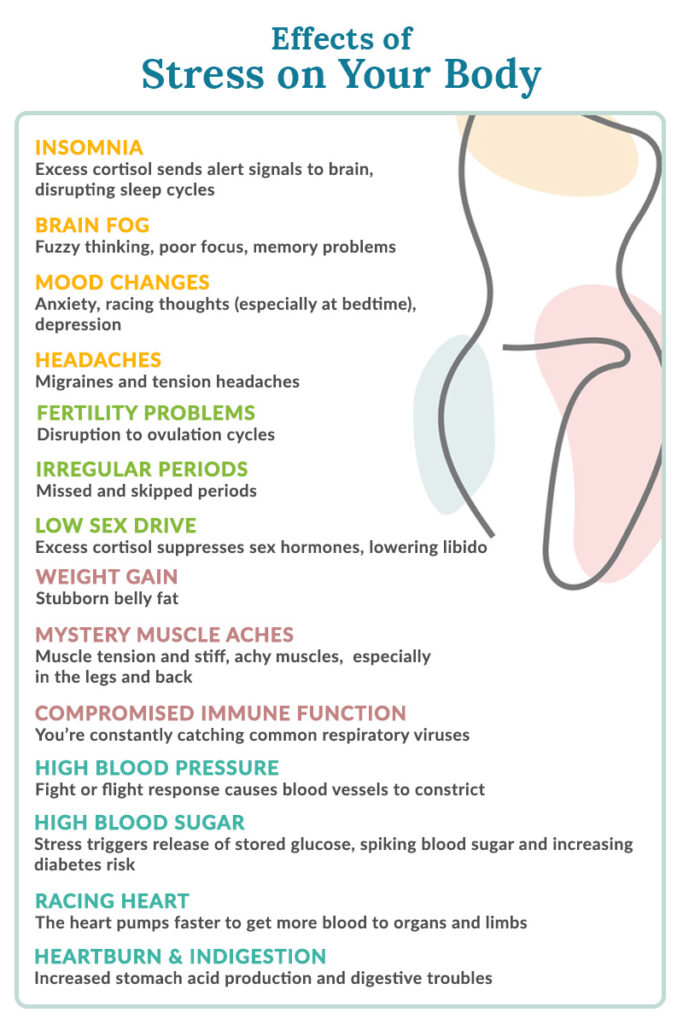
The symptoms and effects of stress on your body
When we think we’re under threat, our body’s normal response is to produce a flood of adrenal hormones that are supposed to get us ready for action to defend ourselves (or run away). Then after the threat is passed, the body is supposed to return to a more level state. Under normal conditions, this adrenal stress response helps you survive and thrive. It’s when stress becomes more intense or doesn’t recede that your adrenal function is pushed into overdrive and stress symptoms arise. Chronic, unrelenting stress results in a continuous state of “flight or fight” that is damaging both to your hormonal health and your overall wellness.
Dysregulation of cortisol, the body’s main stress hormone, is often at the root of stress symptoms. You may be experiencing spikes in cortisol as a result of chronic stress. Over time, however, your adrenal glands may become fatigued and no longer be able to keep up with cortisol production.
Common chronic stress symptoms that can point to a problem with cortisol levels include:
- Stress-related sleep problems, such as insomnia, grinding teeth or waking up feeling unrested
- Forgetfulness and absentmindedness, inability to focus
- Anxiety, irritability, mood swings and agitation
- Decreased desire for sex and intimacy
- Weight changes (gaining or losing)
- Physical symptoms such as fatigue, headaches, neck pain, muscle tension or pain, skin problems (acne, hives), menstrual irregularities and stomach or GI tract issues (heartburn, diarrhea, cramping)
The three stages of overstressed adrenals
Stage one: You’re “wired”
Women in the initial stages of adrenal imbalance are best described as being “wired.” They feel over-energized all day, fueled by the high level of cortisol and other stress hormones the body produces to keep them alert and focused. Based on their accomplishments every day, these women may continue to take on even more obligations.
While it’s natural for your body to generate more energy in response to stress, the process isn’t meant to be permanent. Unremitting stress requires your body to work too hard to constantly produce the cortisol and adrenaline. If you’re “wired,” you may also suffer from imbalances to your sex hormones, which also create troubling symptoms, like PMS, irregular periods and those that occur during perimenopause and menopause.
Stage two: You’re “tired and wired”
Women who are both “tired and wired” can have frustrating and confusing symptoms. You feel exhausted in the day, but you still spend hours trying to fall asleep at night. And when you do drop off, you wake up in the middle of the night with your mind racing and your heart pounding with anxiety.
This maddening “can’t get up/can’t fall asleep” sequence happens when your natural 24-hour cycle of cortisol production is off balance. If your cortisol levels are too low in the morning, you may have a hard time getting up and, like many women, will rely on coffee or caffeinated beverages to stay alert throughout the day. Caffeine actually forces the secretion of cortisol. These patterns may work in the short term, but will always catch up to you at night, when your stress hormones peak and you can’t sleep.


Serinisol
Balances cortisol for relief from symptoms of anxiety, insomnia & racing thoughts.
Stage three: You’re “tired”
Women with either of the other stress profiles can end up just plain “tired” — so exhausted and sapped of energy that it is a daily struggle to get out of bed, go to work or complete basic tasks around the house. If you fit into the “tired” category, you may have slipped into desperation because you rarely enjoy a good night’s sleep. You may never get more than a few hours of sleep at once. That cup of coffee that used to get you going doesn’t work anymore.
If this is happening to you, your adrenal reserves may simply be too exhausted to produce enough cortisol (and other important hormones including estrogen, progesterone and testosterone). You may struggle with other issues including weight gain, decreased sex drive and depression. Worse, you may begin to wonder if you’ll ever feel like yourself again.
The best tips to relieve stress and anxiety
Whether you’re dealing with unexpected everyday stress, or with chronic stress that just won’t go away, here are some tips to relieve stress:
1. Write it out
If you have a dozen problems coming at you from all sides, take a minute to jot them all down, then prioritize them — because often we increase our own stress by thinking that everything has to be done right now when some of it can wait. (Doing this can also ensure you don’t overlook any of the lower priority problems, which tends to make them transform into higher priority concerns overnight!)
2. Eat stress-free foods
A healthy diet gives your body key nutrients to help it manage stress. It’s important to have a set eating routine as well, so that you don’t give yourself even more stress by becoming too hungry.
3. Sleep like a baby
Stress disrupts sleep, and disrupted sleep and insomnia cause more stress. To reset your brain toward sleep, go to bed at the same time each night, eliminate screen time at least an hour before bedtime, avoid caffeine and make your bedroom a quiet, restful, welcoming place to be.
4. Silence your phone
We’re so used to being on-call all the time that we often forget to use the off button. Some smartphones have the ability to pre-schedule times that you’re unavailable — a great tool for taking yourself offline.
5. Get up, get out and exercise.
Scheduling tools are also a great way to make yourself do what you know you should but “can’t find time for” — like exercise.
6. Find your best form of meditation.
You don’t have to study ancient Taoist philosophy to meditate — just do something that enables you to clear your mind of outside concerns and makes you happy. That can be yoga, running, painting, knitting or gardening. It may just be “quiet time” where you sit in a comfortable chair and focus on your breathing.
7. Say yes to starting a positive affirmations journal
Journaling can help you stay focused on the positive aspects of your life to reduce stress and support happiness.
8. Adaptogens for stress relief
Herbs that help support your body’s stress response are a great way to limit the negative effects of stress.
3 easy ways to regain your calm
Anxiety may start small, but it can quickly gain traction if its underlying adrenal connection is not addressed. Your adrenal glands naturally make cortisol in response to stress, but when cortisol levels become elevated and stay that way, it can lead directly to anxiety, depressed feelings, and other mood-related symptoms.
1. Normalize cortisol levels
You can support normal cortisol levels with an adrenal fatigue diet that is predictable and well-timed.
Use calming passionflower and plant-derived phosphatidylserine to tamp down overproduction of cortisol and soothe your nervous system. This helps your body restore its natural “cortisol curve,” with cortisol increasing in the morning when it’s time to get up and falling gradually during the day and evening so you can sleep at night. Our Serinisol calming supplement is formulated specifically to help with cortisol imbalances.
2. Set calmness as your goal and believe it can happen
Take time to figure out what makes you feel calm and centered. It can be as simple as taking a long hot bath or shower, getting your house in order, or listening to music through headphones in a cozy spot.
Focus on your breathing and note that in this moment, all is well. Once you know which calming activities work for you, plan your life around them and protect them carefully. Something else will always pop up to steal your time and attention, but if you treat your calming activities as sacred and don’t give them up, you will feel more peaceful and less anxious, even during stressful times — helping your body curb excess cortisol production.
3. Let your body release anxiety
Physical movement and exercise are known antidotes to anxiety because they activate the release of tension-relieving chemicals called endorphins. Just a few minutes of gentle aerobic exercise generates anti-anxiety effects, so you don’t have to carve out lots of time for working out. A brisk walk, dancing, yoga — all can help, but it’s important to exercise regularly because the positive effects wear off. Important note: When you are working out to restore healthy stress hormone levels, avoid intense exercise — like high-intensity interval training — which can stress the body and actually spike cortisol production!
Complete the Stress & Fatigue Quiz below to get started
At Women’s Health Network, we can show you how to take good care of your body and emotional health through supplementation, targeted adrenal support, and diet and lifestyle changes for stress relief. The silver lining to stressors is that when you become more aware of what triggers stress in your life, it can help you establish fresh patterns that support your health emotionally and physically. That support can help you feel better now and enjoy life more going forward.