



By Sherri Young, RN, Nurse-Educator
You can avoid the potential hazards of toxic cleaners by making your own “green” cleaners at home. These non-toxic cleaning chemicals are less expensive than supermarket brands and they work just as well — or better.
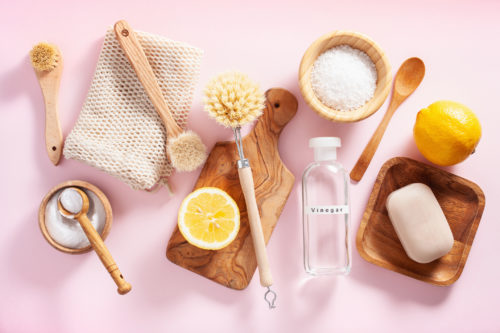
Natural cleaning ingredients make your home healthier
With a few basic supplies you can easily mix up your own natural cleaning solutions. Here’s what you’ll need, along with our favorite “recipes” to get your house squeaky clean without leaving harmful chemical residues.
- Baking soda. Baking soda (sodium bicarbonate, or NaHCO3) is a slightly alkaline compound that neutralizes acids, and along with them, certain odors. It’s strong but nontoxic enough to be used for just about anything, even deodorizing your dog — just sprinkle on fur and brush. Mix it with water to make a paste and use it to scrub sinks, counters, refrigerators and other surfaces. It also removes odors from garbage cans and plastic containers. Added to other cleaning ingredients, it can remove laundry stains, polish furniture, kill mold and mildew, and clean silver.
- Washing soda. This old-school laundry room staple is sodium carbonate (Na2CO3) — it’s highly alkaline and can be somewhat caustic. It’s an inexpensive way to pre-treat greasy stains and soften hard water. Adding ½–1 cup to your wash allows you to use less laundry detergent per load. Unlike baking soda, washing soda is harmful if swallowed, so keep it out of reach of children, and wear gloves while handling it.
- Distilled white vinegar. Vinegar is acidic and gives real disinfectant power to many home cleaning recipes, or on its own. A simple 5% solution of distilled white vinegar — the kind in large jugs at the supermarket — can kill 99% of bacteria, 82% of mold, and 80% of viruses. It’s ridiculously cheap, cuts grease easily, and can even remove scale on coffee makers. It has a strong odor that dissipates rapidly and isn’t toxic.
- Lemon juice. Like vinegar, lemon juice is acidic, which helps it cut through dirt, but it has a more pleasant scent. Lemon juice doesn’t have the same antibacterial properties as vinegar, but, if you’re polishing furniture or cleaning brass or copper, use lemon juice instead of vinegar.
- Oils. Most edible oils — olive, vegetable, coconut — are useful for cleaning wood furniture and polishing surfaces. Mineral oil is very useful though it is toxic and should be kept out of reach of kids and pets.
- Natural liquid soap (not detergent). Most supermarket liquid soaps are actually detergents. True soaps are made with natural minerals and fats, and can usually be found in natural foods stores. Together with other ingredients, natural soaps can be as effective as grease-cutting detergents, without the toxins.
- Borax. Also known as sodium borate, this mineral occurs naturally and is environmentally safe, but it can irritate eyes and skin. Use gloves when cleaning with borax and keep it away from children. It’s a strong disinfectant and deodorant, and often works when gentler substances aren’t enough. Find borax in the laundry detergent section.
- Essential oils. Lavender and tea tree essential oils are wonderful for cleaning and disinfecting and add a pleasant aroma to the entire process. Just know that tea tree oil isn’t safe for pets so don’t use it on floors if you have cats and dogs.
If you mix your own cleaners, you’ll need a few new, empty spray bottles. Label each with the name of the cleaning fluid you put in them so there’s no confusion. Unfortunately, it’s not a good idea to recycle empty bottles from store-bought cleaners because of potential chemical reactions between the residue and some natural cleaning ingredients listed here (ex. vinegar + bleach = hazardous fumes).

Women’s Health Network recipes and tips for non-toxic green cleaners
Deodorize and clean rugs, garbage cans and refrigerators
- Rug odors: sprinkle with baking soda and rub it in with a broom, then vacuum up the residue.
- Trash can and fridge odors: dissolve 1 cup of baking soda in 2 cups of hot water and use a sponge to wash surfaces, then wipe down with a cloth. Put open boxes of baking soda in the fridge and freezer to absorb food odors. Replace every two months.
- Stains on garbage cans, refrigerators and rugs: use white vinegar straight or cut with an equal amount of warm water to clean and disinfect. For stained carpets, mix 1 teaspoon liquid soap with 1 teaspoon white vinegar in a pint of lukewarm water, apply to carpet with a soft brush or towel, rub gently, and blot dry with a clean cloth. Repeat until the stain is gone. Don’t use straight vinegar on carpets or upholstery without testing for color fastness first.
Garbage disposal cleaner
Mix 1 cup white vinegar with enough water to fill an ice tray, then freeze the mixture. Run vinegar cubes through several cycles in garbage disposal, and then flush with cold water. Or run disposal with a sliced lemon or rind for a fragrant alternative.
Coffee-maker cleaner
Fill the water reservoir with white vinegar and run the brewing cycle to remove mineral deposits and scale in the coffee maker. Rinse thoroughly.
Kitchen surfaces and cutting boards
Spray full-strength white vinegar on food prep surfaces and wipe with a clean cloth. Spray cutting boards with vinegar at night and let it evaporate overnight. Spray vinegar on cabinets and floors to deter ants.
Fruit and vegetable wash
Add ¼-cup vinegar and 2 tablespoons of salt to a container with about ¾ cup room-temperature water, and soak vegetables and fruits for 15 minutes to dissolve dirt, pesticide residue, and waxes without altering flavor. Rinse thoroughly. Use baking soda to scrub fruits and veggies if necessary and then rinse.
Oven cleaner
Spray warm water over grime on the bottom of the oven, then cover generously with baking soda until surface is completely white, and sprinkle more water on top. Let mixture set overnight to loosen grease and then wipe away residue with a cloth. Use liquid soap on a sponge for stubborn stains.
Bathroom soft-scrubber
- Sinks and tubs: Combine ½-cup baking soda with enough liquid soap to make a paste. Use a sponge to apply mixture to sink or tub surface and scrub. This solution rinses off easily and doesn’t scratch.
- Toilets: Use straight vinegar for everyday cleaning and deodorizing. For stubborn toilet rings, pour 1 cup of vinegar onto stain let it soak for 5 minutes, then sprinkle baking soda on stain before scrubbing. For the worst stains, flush to wet all surfaces, then make a paste of borax and lemon juice, apply to stain, and let sit for two hours. Scrub and flush.
Silver polish
Line a sink or glass baking dish with aluminum foil, fill with hot water and add 2 tablespoons each salt and baking soda. Add silver pieces to the container, making sure they touch the foil and each other. Tarnish (oxidation) will disappear as the baking soda initiates a chemical reaction with the aluminum that draws it off the silver. Soak heavily tarnished items as long as 5 minutes. Remove silver, rinse and dry to remove residue, then buff with a soft towel. Add a container of activated charcoal or a piece of chalk to the silver drawer to minimize future tarnish.
Brass, pewter, or copper polish
Dissolve 1 teaspoon salt in 1 cup white vinegar and add white flour to form a paste. Rub onto metal, let stand about 15 minutes, then rinse with warm water and polish until dry.

Window cleaner
Mix equal amounts of white vinegar and water in a spray bottle for very dirty windows, or add less vinegar for small touch-ups. Remove streaky wax build-up left by chemical cleaners with rubbing alcohol before cleaning with the vinegar and water.
Wood cleaner and polish
Clean wood with the same vinegar/ water mixture made for windows, but don’t over-saturate the wood or leave pools of standing water. Then, polish with a mixture of oil (any type) plus an acid, like lemon juice or vinegar. Mineral oil is great, but if you want something non-toxic, choose an edible oil, like olive, corn or coconut oil. Edible oils should be refrigerated. Mix 1 part lemon juice with 2 parts oil for lemon-scented polish, or use vinegar in place of the lemon juice (white vinegar for light woods, cider vinegar for dark). For stubborn rings from wet cups or glasses, use equal parts vinegar and olive oil and rub with the grain of the wood to remove the stain. For wood floors, use the vinegar/water solution and then polish with equal parts white vinegar and vegetable oil for added shine.
There are already enough toxins in the environment so it’s a great idea to eliminate as many as possible from your house. You can always add sweet-smelling aromatic essential oils to recipes and adapt any of our suggested ratios for your own home needs.
It’s such a great feeling to live every day in a space that’s clean and green. It sure helps make the chore of housecleaning worthwhile.