


By Dr. Susan E. Brown, PhD
A bone fracture can be a defining moment in a woman’s life — the break itself is an isolated incident, while the healing process can take weeks, months or even years depending on the injury. After you’ve fractured a bone, all your systems are called upon to repair the injury. Cells and tissues proliferate, hormones are released, antioxidants and amino acids are brought into play, and all this happens while the body carries out its usual everyday duties. Needless to say, it takes a lot of energy and sometimes a lot of time to heal a fracture.
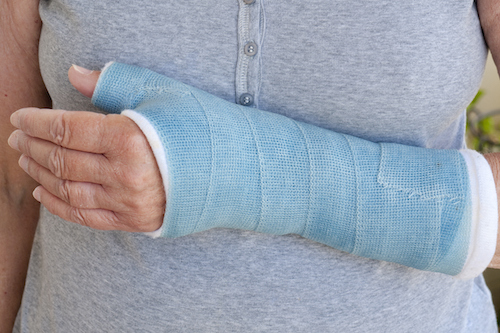
Very few of us who have broken bones have been told we can make our bones heal faster — at most, the advice we’re given is to limit the use of the injured bone or limb (not easy to do if the fracture is in your spine!). Women are always surprised when I tell them that there are a number of natural methods they can use to reduce their healing time and get back on the move sooner rather than later.
The human body is amazing in its ability to heal itself. Taking a closer look at how our bodies heal bone reveals excellent opportunities to support that process naturally. You can make a significant difference in your recovery time — and at the same time, in your overall health — by working with nature. Let’s take a look at five simple steps you can take to speed bone fracture healing.
#1 Add a quality multivitamin and mineral supplement
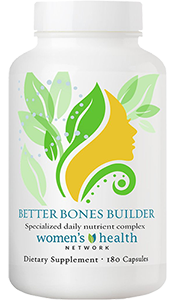
Help speed fracture healing naturally
The Better Bones Builder supplement includes the bone-building nutrients needed for fracture healing, all in a highly alkalizing, bioavailable form. Learn more.
By weight, bone is roughly 70% mineral content — calcium, phosphorus, magnesium, silicon, zinc and others. Fracture healing requires a robust, readily bioavailable supply of all these minerals to be drawn to the site. Many of us under-consume minerals on an everyday basis, and when an unfortunate fracture occurs, the body must “rob Peter to pay Paul.” (Read our article: 20 key bone nutrients to evaluate your personal mineral intake.) Specific key minerals that enhance fracture healing include the following:
- Zinc
- Copper
- Calcium
- Silicon
While protein and minerals serve as the building blocks for bone healing, vitamins are the catalysts for myriad biochemical reactions that are equally important. In fracture healing, we can clearly identify vitamins like C, D and K as integral to laying down minerals in new bone.
Find a high-quality supplement like the one we offer in our Better Bones Program, that can add to this much-needed vitamin and mineral support. A 2006 Swedish study found that hip fracture patients given complex multinutrient supplementation had only a 15% rate of complications, as compared to a 70% complications rate among the non-supplemented group.
#2 Check your protein intake
Nearly half of your bone is comprised of protein. When a fracture occurs, the body is called upon to gather together all the protein building-blocks needed to synthesize new structural bone protein matrix. Following fracture, adding even modest extra protein to the diet can help reduce complications, shorten the healing phase and minimize further bone loss in the area as the fracture heals — by as much as half.
An Alkaline for Life® eating program stimulates bone repair
The Alkaline for Life eating program is designed to provide a diet rich in minerals, vitamins and phytonutrients obtained from plentiful vegetables, fruits, nuts and seeds.
This life-supporting eating pattern has been shown to conserve bone-building minerals and proteins, and has also been shown to increase growth hormones and factors such as IGF-1 (insulin-like growth factor 1). These growth hormones are among the most important biochemical forces encouraging fracture repair and new bone formation.
To keep up with the demands of your healing bone, add more plant-based protein to your diet. Including more foods like soy, lentils, other legumes, almonds and quinoa will increase your protein intake without creating a more acidic environment in your body the way excess animal-based protein can.
Protein supplementation aids healing and bone conservation by increasing insulin-like growth factor I (IGF-I), a polypeptide hormone that exerts a positive effect on skeletal integrity, muscle strength, immune response and bone renewal. Protein malnutrition or under-nutrition leads to a “rubbery” callus, compared to the more structurally sound calluses of those with adequate or high protein intake.
Protein is made of amino acids. Specific amino acids of importance include lysine, arginine, proline, glycine, cystine and glutamine. Lysine, for example, is known to enhance calcium absorption, increase the amount of calcium absorbed into the bone matrix and aid in the regeneration of tissue.
#3 Increase anti-inflammatory nutrients
Whenever a fracture occurs, the rupturing of the tissues generates a tremendous amount of free-radicals, and these can overwhelm the body’s natural antioxidant defense mechanisms. In such cases, antioxidants — including vitamins E and C, lycopene and alpha-lipoic acid — may be of benefit. Studies suggest antioxidants accelerate fracture healing by suppressing the inflammatory and destructive effects of free radicals on whole-body systems.
Resolve to eat a cup of berries a day, investigate new recipes that include leafy greens like kale and chard, or add an omega-3 supplement to your diet like the one we offer in our Better Bones Program. All of these steps will help to offset the increased free-radical production that occurs when a bone is fractured.
#4 Avoid aspirin and ibuprofen
One of the first things we reach for with an injury — after the ice, of course — is frequently aspirin or ibuprofen. Cells damaged from the trauma of fracture release large amounts of inflammatory prostaglandins at the site of fracture. The ensuing inflammation causes pain, and the natural tendency is to want to block this painful reaction. But certain ways of blocking pain can interfere with your healing.
Plant-based medicine — phytotherapy
Throughout history traditional herbal medicine has been the mainstay of medical practice. This long and venerable tradition employs a number of plant species to speed fracture healing. Here are just a few of the plants used to address swelling, bruising and other aspects of fracture healing:
- Cultivated Russian comfrey (Symphytum x uplandicum)
- Hot, fresh burdock leaf (Arctium ssp.) poultice
- Arnica montana
- Horsetails (Equisetum ssp.)
- Cissus quadrangularis (veld grape)
As we look around the world, we see many traditional, plant-based approaches to fracture healing. The above are just a sampling among many. (For optimal results, work with a qualified herbalist or integrative practitioner well-versed in phytotherapy.)
Nonsteroidal anti-inflammatory drugs (COX-1 and COX-2 inhibitors) like aspirin and ibuprofen can delay fracture healing. As it turns out, prostaglandin-induced inflammation is an essential component of the fracture healing process, and cyclooxygenase enzymes (COX-1 and COX-2) play important roles in fracture repair. These inflammatory prostaglandins are a natural and essential part of initial tissue repair, and the initial inflammatory immune response is crucial to fracture healing. Aspirin, ibuprofen, indomethacin, etodolac (Lodine), meloxicam (Mobic), nabumetone (Relafen) and naproxen (Anaprox, Naprosyn) are all among the NSAIDs to avoid when healing damaged bone and cartilage. One alternative to help reduce the pain of fracture is acetaminophen (which is found in Tylenol). In severe cases, narcotics such as codeine can be given along with the acetaminophen.
Natural pain-relief alternatives. In clinical use at the Center for Better Bones, we have found that the well-studied bioflavonoid, quercetin, used in doses of 2–3 grams per day, has a synergistic effect with Vitamin C, amplifying the pain-relief benefits. These nutrients, as well as omega-3 fatty acids, reduce inflammation without inhibiting the COX-1 and COX-2 enzymes. Enzymes such as bromelain and trypsin (available in the combination formula called Wobenzym) have also been found helpful in reducing inflammation, edema and pain in fracture patients.
#5 Exercise
While it makes perfect sense that increasing your nutrient intake would help healing bone, exercise would be unlikely to pop into your mind as a means to accelerate fracture healing. Yet it is. In general, bone tissue responds to patterns of loading by increasing matrix synthesis and by altering matrix composition, organization and mechanical properties. And there is scientific evidence that the same holds true for bone under repair. Biomechanical stimulation enhances bone fracture repair and regeneration, and is also required to restore the fractured bone’s structural strength.
Fracture healing also requires good circulation and an adequate flow of nutrient-replenishing blood to the fracture site — both of which are enhanced by exercise. To avoid stress on the broken bone, exercises that focus on joint loading and range of motion can be employed to accelerate healing and assure return of function post fracture. For example, in the case of a broken forearm, recommended exercises would involve movements of the fingers and hand, as well as the elbow and shoulder joints. Consult a physical therapist about exercise that’s best for you.
Healing bone — your body knows the way
An unfortunate fall or accident resulting in broken or fractured bone can certainly slow you down, but it can also be a wake-up call in many ways. Support your body with a natural approach that will have you moving again in no time. This approach will work with your body’s built-in mechanisms for healing while also improving your overall bone health. Because your bones serve as a vitamin and mineral reservoir for your body, healthy bones mean better overall health. There’s never been a better time to fall into optimal bone health!
1 Bonjour, J., et al. 1996. Nutritional aspects of hip fractures. Bone, 18 (3 Suppl.), 139S–144S. URL (abstract): https://www.ncbi.nlm.nih.gov/pubmed/8777079 (accessed 05.20.2010).
2 Schürch, M., et al. 1998. Protein supplements increase serum insulin-like growth factor-I levels and attenuate proximal femur bone loss in patients with recent hip fracture. Ann. Intern. Med., 128 (10), 801–809. URL: https://www.annals.org/content/128/10/801.long (accessed 05.20.2010).
3 Schürch, M., et al. 1998.
Bonjour, J., et al. 1996.
4 Koval, K., et al. 1999. The effects of nutritional status on outcome after hip fracture. J. Ortho. Trauma, 13 (3), 164–169. URL (abstract): https://www.ncbi.nlm.nih.gov/pubmed/10206247 (accessed 07.02.2010).
5 Sinha, S., & Goel, S. 2009. Effect of amino acids lysine and arginine on fracture healing in rabbits: A radiological and histomorphological analysis. Indian J. Orthop., 43 (4), 328–334. URL: https://www.ijoonline.com/text.asp?2009/43/4/328/55972 (accessed 07.01.2010).
Chevalley, T., et al. 1998. Arginine increases insulin-like growth factor-I production and collagen synthesis in osteoblast-like cells. Bone, 23 (2), 103–109. URL (abstract): https://www.ncbi.nlm.nih.gov/pubmed/9701468 (accessed 07.01.2010).
Toricelli, P., et al. 2002. L-arginine and L-lysine stimulation on cultured human osteoblasts. Biomed. Pharmacother., 56 (10), 492–497. URL (abstract): https://www.ncbi.nlm.nih.gov/pubmed/12504270 (accessed 07.01.2010).
Fini, M., et al. 2001. Effect of L-lysine and L-arginine on primary osteoblast cultures from normal and osteopenic rats. Biomed. Pharmacother., 55 (4), 213–220. URL (abstract): https://www.ncbi.nlm.nih.gov/pubmed/11393808 (accessed 07.01.2010).
6 Sheweita, S., et al. 2007. Calcium metabolism and oxidative stress in bone fractures: Role of antioxidants. Curr. Drug Metab., 8 (5), 519–525. URL: https://www.ncbi.nlm.nih.gov/pubmed/17584023 (accessed 05.20.2010).
7 Igarashi, A., & Yamaguchi, M. 2003. Great increase in bone 66 kDa protein and osteocalcin at later stages with healing rat fractures: Effect of zinc treatment. Int. J. Mol. Med., 11 (2), 223–228. URL (abstract): https://www.ncbi.nlm.nih.gov/pubmed/12525882 (accessed 07.01.2010).
Igarashi, A., & Yamguchi, M. 2001. Increase in bone growth factors with healing rat fractures: The enhancing effect of zinc. Int. J. Mol. Med., 8 (4), 433–438. URL (abstract): https://www.ncbi.nlm.nih.gov/pubmed/11562784 (accessed 07.01.2010).
8 Simşek, A, et al. 2006. [Is there a correlation between severity of trauma and serum trace element levels?] Acta Orthop. Traumatol. Turc., 40 (2), 140–143. URL: https://www.aott.org.tr/index.php/aott/article/viewFile/599/16 (accessed 07.01.2010).
Klug, W., et al. 1985. [Quantity and trace elements in callus in secondary fracture healing; animal experiment study.] Z. Exp. Chir. Transplant Kunstliche Organe., 18 (1), 25-32. https://www.ncbi.nlm.nih.gov/pubmed/3993134 (accessed 07.01.2010).
9 Shuid, A., et al. 2010. Effects of calcium supplements on fracture healing in a rat osteoporotic model. J. Orthop. Res. [Epub ahead of print.] URL (abstract): https://www.ncbi.nlm.nih.gov/pubmed/20572125 (accessed 07.01.2010).
Powell, E., et al. 1989. Is callus calcium content an indicator of the mechanical strength of healing fractures? An experimental study in rat metatarsals. J. Biomed. Eng., 11 (4), 277–281. URL (abstract): https://www.ncbi.nlm.nih.gov/pubmed/2666747 (accessed 07.01.2010).
10 Kakar, S. & Einhorn, T. 2004. Importance of nutrition in fracture healing. In Nutrition and Bone Health, eds. Holick, M., & Dawson-Hughes, B. Totowa, NJ: Humana Press, Inc.
11 Spector, T., et al. 2005. Effect on bone turnover and BMD in low dose oral silicon as an adjunct to calcium/vitamin D3 in a randomized placebo-controlled trial. Abstract from the ASBMR 27th Annual Meeting, Nashville, TN.
12 Nwadinigwe, C., et al. 2007. Effects of cyclooxygenase inhibitors on bone and cartilage metabolism — A review. Niger J. Med., 16 (4), 290-294. URL (abstract): https://www.ncbi.nlm.nih.gov/pubmed/18080582 (accessed 05.20.2010).
Murnaghan, M., et al. 2006. Nonsteroidal anti-inflammatory drug-induced fracture nonunion: An inhibition of angiogenesis? J. Bone Joint Surg. Am., 88 (Suppl. 3), 140-147. URL (abstract): https://www.ncbi.nlm.nih.gov/pubmed/17079380 (accessed 05.20.2010).
14 Kamenicek, V., et al. 2001. Systemic enzyme therapy in the treatment and prevention of post-traumatic and postoperative swelling. Acta Chir. Orthop. Traumatol. Czech., 68 (1), 45–49. URL (abstract): https://www.ncbi.nlm.nih.gov/pubmed/11706714 (accessed 05.20.2010).
15 Buckwalter, J., & Grodzinsky, A. 1999. Loading of healing bone, fibrous tissue, and muscle: Implications for orthopaedic practice. J. Am. Acad. Orthop. Surg., 7 (5), 291–299. URL (abstract): https://www.ncbi.nlm.nih.gov/sites/pubmed/10504356 (accessed 07.02.2010).
16 Ulstrup, A. 2008. Biomechanical concepts of fracture healing in weight-bearing long bones. Acta Orthop. Bel., 74 (3), 291–302. URL (abstract): https://www.ncbi.nlm.nih.gov/pubmed/18686452 (accessed 07.02.2010).
Buckwalter, J., & Grodzinsky, A. 1999.
Grundnes, O., & Reikerås, O. 1991. Mechanical effects of function on bone healing. Nonweight bearing and exercise in osteotomized rats. Acta Orthop. Scand., 62 (2), 163–165. URL (abstract): https://www.ncbi.nlm.nih.gov/pubmed/2014728 (accessed 07.02.2010).
17 Chao, E., & Inoue, N. 2003. Biophysical stimulation of bone fracture repair, regeneration and remodeling. Eur. Cell. Mater., 6, 72–84; discussion 84–85. URL: https://www.ecmjournal.org/journal/papers/vol006/vol006a07.php (accessed 07.02.2010).
18 Zhang, P., et al. 2008. Joint loading modality: Its application to bone formation and fracture healing. Br. J. Sports Med., 42 (7), 556-560. URL: https://www.ncbi.nlm.nih.gov/pubmed/18048437 (accessed 07.02.2010).
Hardy, M. 2004. Principles of metacarpal and phalangeal fracture management: A review of rehabilitation concepts. J. Orthop. Sports Phys. Ther., 34 (12), 781–799. URL: https://www.ncbi.nlm.nih.gov/pubmed/15643733 (accessed 07.02.2010).
References regarding multinutrient therapy for bone healing
Eneroth, M, et al. 2006. Nutritional supplementation decreases hip fracture-related complications. Clin. Ortho. Rel. Res., 451, 212–217. URL (abstract): https://www.ncbi.nlm.nih.gov/pubmed/16770284 (accessed 07.02.2010).
References regarding bone-healing herbs
Hutchens, A., 1991. Indian Herbalogy of North America, 16, 93, 94, 254. Boston: Shambhala.
Weed, S. 1989. Wise Women Herbal: Healing Wise, 102. Woodstock, NY: Ash Tree Publishing.
Tierra, M. 1998. The Way of Herbs. NY: Pocket Books.