


By Dr. Susan E. Brown, PhD
You’ve probably heard that women experience bone loss during menopause. It’s true, and for most women, nature provides ample bone mass to accommodate this normal perimenopausal and menopausal bone loss. However, other women do end up with dramatically less bone mass than when they began the transition.

I have personally worked with women who have lost up to 20% of their total bone mass during menopause.
Our bones naturally break down and rebuild themselves on a daily basis, and until women reach the age of 30, the building of bone outweighs breakdown. Shortly after peak bone mass is reached — somewhere around our 29th birthday — we begin to lose bone density. This loss accelerates in many women during the menopause transition. And for many years, the medical and research community blamed estrogen. This outlook is changing. As it turns out, estrogen is not the only factor responsible for bone loss during the menopause transition. Neither is calcium for that matter. The truth is, finding one definitive cause for thinning bone during menopause is unrealistic. Bone mineral density loss during menopause depends on a combination of factors.
The good news is that in most cases, accelerated bone loss during menopause slows down within five to seven years after your last period. So the window of time we are most concerned about is the few years before and the few years after your last period. There is also a lot you can do to preserve your bone density — or even increase it — during this time.
Let’s take a look at how you can keep your bones strong and healthy through menopause so you can give yourself the best possible foundation for the second half of your life!
Table Of Contents:
- Make nutrition your first priority
- Preserve and build muscle mass
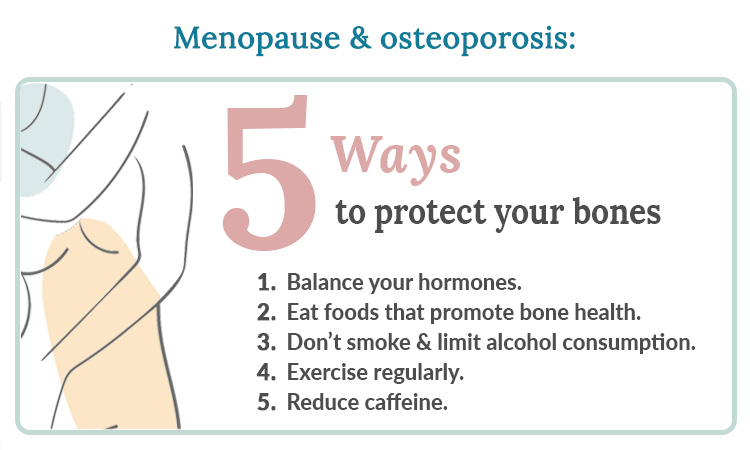
- Balance your hormones
- Take care with weight loss
- Decrease inflammation and improve digestion
- Reduce physical and emotional stress
#1: Make nutrition your first priority

There are at least 20 key nutrients that are required for optimal bone health. A balanced diet containing a range of vegetables and fruit, whole grains, seeds and nuts, and lean protein will help supply these nutrients, while supporting the body’s acid-alkaline balance and preventing excessive bone loss during menopause.
Many of us in the US are suffering from chronic low-grade metabolic acidosis because of our diets. Foods like excess animal protein, refined grains, excess sugar, sodas and preservatives can cause the pH in our blood and tissues to become slightly more acidic than is optimal. And when this happens the bones release their alkalizing mineral compounds into the blood to “rescue” our all-critical pH balance. This happens at the expense of bone mineral density and maintaining the living bone protein matrix. Eating more alkalizing fruits and vegetables and less acidifying animal proteins, grains and processed foods can prevent your body from drawing on mineral reserves stored in your bones to offset a highly acidifying diet. There is new and ample research describing the dangers of acidosis.
Since no diet is perfect, I also recommend women take a high-quality supplement specifically formulated for bone health to fill any nutritional gaps. It’s important to understand that micronutrients interact with each other and that simply taking one, such as calcium, is never as helpful as getting a well-rounded nutrient base. That being said, menopausal women should pay special attention to increasing Vitamin D and Vitamin K2 intake.
Vitamin D
Adequate Vitamin D levels are critical for us to absorb calcium in our intestines and to metabolize calcium throughout life and as part of preventing bone loss in menopause. Without enough Vitamin D, less than 10% of ingested calcium may be absorbed. The role Vitamin D plays in menopause is very clear. As estrogen levels drop, the bone breakdown hormone known as parathyroid hormone tends to increase. Vitamin D has been shown to limit the rise in parathyroid hormone and, in turn, limit bone breakdown and bone loss during menopause.
Unfortunately the majority of Americans are deficient in Vitamin D. Aside from compromising bone, low Vitamin D levels are linked to life-threatening diseases like cancer, diabetes and heart disease, as well as other conditions like depression and circulatory disorders. Simply exposing the skin to full sun triggers Vitamin D production in the skin.
But there is no guarantee you will achieve adequate Vitamin D levels without appropriate supplementation. In my office I have seen remarkable variation in my patients’ levels of Vitamin D, so I always suggest that every woman has her Vitamin D level tested. Optimal levels are between 50–60 ng/mL. Testing is the only way to really know if you have enough of this life-saving nutrient. Recent research suggests an ideal intake of 2000 IU Vitamin D3 daily for the average person.
Tips on getting Vitamin D from the sun
- Limit sun exposure to before 10:00 a.m. and after 2:00 p.m. during summer months to prevent skin damage.
- Expose the skin to full sun for 30 minutes per day — longer if you’re dark-skinned. But don’t allow yourself to burn.
- If you’re light-skinned and concerned about sunburn, get sun exposure in increments — three 10-minute exposures at different times in the day, rather than one 30-minute stretch.
- If you live above 40° latitude (a horizontal line running below New York City west to northern California), the sun is only strong enough to trigger Vitamin D synthesis between May and September. From October through April, you will need to supplement your diet with other Vitamin D sources.
Vitamin K
Along with D, Vitamin K has very recently been recognized as essential to bone health, and many, if not most, menopausal women in America are deficient in it. Vitamin K is a key player in the formation of the bone protein osteocalcin and the binding of calcium to the bone matrix. It also limits how much calcium we excrete in our urine. Vitamin K has been associated with higher bone mineral density, reduced bone breakdown, and lower risk of fracture and excessive bone loss during menopause. During the early stages of menopause, Vitamin K metabolism is altered in many women, and intake may need to be increased during this transition.
Ovary removal may be associated with an even greater reduction in Vitamin K status than natural menopause. A 2006 study on Vitamin K found that after ovary removal, the concentration of undercarboxylated osteocalcin (an inactive form of osteocalcin) increased quickly, suggesting that there wasn’t enough Vitamin K on board to carboxylate and activate the protein. Thus scientists now suggest that the need for Vitamin K is higher in both natural and surgical menopause. Foods rich in Vitamin K include:
- Sauerkraut
- Aged cheese
- Natto
- Kimchee
I encourage you to increase your intake of both Vitamins K1 and K2 (also known as MK-7) during the menopausal transition because I’ve seen what a difference it makes. If you are wisely thinking of supplementing with Vitamin K, your bones will benefit most from the form of Vitamin K2 known as MK-7 (menaquinone), so look for this to be included in your bone health supplement. At the Center for Better Bones, we are conducting a clinical trial using MK-7 to halt bone loss during menopause. Our preliminary results look promising, and I’ll keep you informed about our Vitamin K / MK-7 research as we complete this exciting study.
#2: Preserve and build muscle mass

Like our bone mass, our muscle mass generally reaches its peak in youth, then progressively decreases as we age. By the time women are transitioning through menopause, they have been steadily losing muscle since around the age of 30 — unless they’ve made an ongoing effort to maintain muscle strength. This makes it more important than ever to exercise during the years leading up to and right after menopause.
Save muscle with an alkaline diet
According to a 2008 study, scientists have now documented that an alkaline diet helps to preserve muscle mass as we age.
We’ve known for a long time that exercise helps to build bone. After all, our bones adapt to the stress we put on them, so the more we use them the stronger they become. This is somewhat more difficult for women in perimenopause and menopause because of the other stressors their bodies are dealing with and the tendency to lose bone rather than build it. But intensive strength training allows many women to regain bone as they build muscle. Exercise studies show that women in early post-menopause can not only maintain, but gain an average of 1.5% in bone mineral density in as little as nine months with rigorous strength-training regimes — a far cry from the 2% of lost bone that might otherwise occur.
Even simply doing aerobic exercise three times per week for half an hour, or a regular practice as gentle yet powerful as Pilates, can do wonders for preventing bone loss during menopause. If you’re interested in learning more about strength training for your bones, you can take a look at Miriam Nelson’s book, Strong Women, Strong Bones, or Wayne Westcott’s Strength Training Past Fifty.
#3: Balance your hormones to stem bone loss during menopause

Researchers always assumed the main reason for bone loss after menopause was a lack of estrogen — and estrogen does play a large role in bone health. For starters it can preserve calcium in the body by increasing our ability to absorb it in the intestine. It also prevents bone breakdown (resorption) by limiting parathyroid hormone, the hormone primarily responsible for releasing calcium from bone into the bloodstream, and by stimulating osteoprotegerin (OPG), a potent inhibitor of bone resorption. These are some of the reasons why millions of women were put on hormone replacement therapy after menopause.
But when scientists took the trouble to study the stage immediately before menopause — known as perimenopause — they found that a great deal of bone loss occurs in women before their last period. This complicates things, because women are known to have a rollercoaster ride of spikes and dips in estrogen levels combined with low progesterone levels during perimenopause. So the cause and effect relationship between estrogen and bone loss becomes less definitive.
Over the years, noted Canadian endocrinologist Dr. Jerilynn Prior and others have conducted research on the effects of progesterone on bone loss during menopause. Progesterone, in many cases, is the hormone to decrease first in the perimenopause transition. Dr. Prior’s work shows that progesterone and our bone-building cells, called osteoblasts, have a complex relationship and progesterone may help build bone, although others have had different results. There is also recent evidence showing that a natural increase in follicular stimulating hormone (FSH) during perimenopause may be linked to perimenopausal bone loss.
It’s clear that our sex hormones have an impact on the way our bones remodel themselves. During menopause these hormone levels are likely to change, with a consequent effect on bone building. But this does not mean you should turn to hormone replacement therapy, especially given the health risks of HRT. Mother Nature didn’t plan for our bodies to maintain reproductive levels of estrogen and progesterone throughout life, and your bones don’t require them to stay healthy. All things in life are cyclical, including our hormones, and the body can adapt. We just have to take care to support it in the transition.
You can do this in many ways, one of which is by eating a well-balanced diet full of fresh whole fruits and vegetables, high-quality protein, and fats. Herbal therapies (phytotherapy) can also gently help your body restore its hormonal balance and help prevent excessive bone loss during menopause.
#4: Take care with weight loss
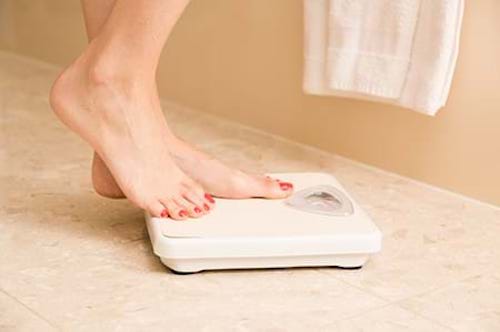
Many women are surprised to hear that losing weight can be a significant risk factor for bone loss in perimenopausal and recently menopausal women. It’s not that weight loss is itself necessarily unhealthy — if you’re overweight or obese, it’s still a good idea to address the health issues that have led to your excess weight. But the methods you use to lose weight are very important, and I would caution all women who plan to lose weight during the years leading up to and right after the menopausal transition to take rigorous steps to protect their bones.
Researchers all around the world have noticed that the combination of low weight and advancing age are the most important risk factors for determining low bone density. In fact, if a practitioner does no other tests or screening at all, she can predict who is likely to have low bone density simply by looking at age and weight. And when postmenopausal women lose weight, they tend to lose bone. The numbers indicate that a 10% loss in body weight will give you about 1% loss in bone mass.
We’re not entirely sure why women lose bone when they lose weight. More research is needed in this area, but here are some possibilities. First, simple physics tells us that women who are thin have less weight to carry around, and therefore the everyday force of impact placed on their bones is lower than what an average or overweight woman sustains — so their bones receive fewer signals to regenerate in the course of daily life. Second, weight loss causes the release of bone-detrimental toxins that have accumulated in fat cells over the years. Third, fat cells are secondary producers of estrogen, which helps protect against bone loss.
Personally, my favorite theory is that our prevalent chronic low-grade metabolic acidosis is worsened by calorie restriction, high animal protein and/or high fat diets leading to a loss in the urine of calcium and other bone nutrients. Ultimately, how you lose weight is a key factor in whether your weight loss improves your health (see our articles on healthy weight for more information).
Data from a large, six-year study done in Scotland showed that Caucasian women (already at higher risk for low bone density than other ethnicities) who lost weight in the stage leading up to menopause and shortly thereafter lost greater bone density than participants who did not lose weight during this time. Although it was the change in weight rather than low weight per se that was associated with loss of hip bone mineral density, lower weight at follow-up was associated with greater loss of spinal bone, suggesting that both low weight and losing weight result in lower bone density overall.
What all this means in sum is that women approaching menopause who want or need to lose weight should do so in a thoughtful, planned way that is targeted toward improving their whole health so they don’t lose bone along with the weight. Nutritional support during your weight loss is key: a healthy diet and appropriate nutritional supplements are important. If you plan to lose weight during the menopause transition, be sure to do the following to protect your bones:
- Engage in healthy exercise that builds muscle. Some examples include weight-training, yoga, qi gong, t’ai chi and Pilates.
- Decrease your body’s acidity by following an alkaline diet.
- Supplement with the 20 key bone-building nutrients.
- Get your Vitamin D levels tested and supplement with Vitamin D and K as needed.
#5: Decrease inflammation and improve digestion

Chronic inflammation has very recently been discovered as another factor in bone loss. Our bodies become “inflamed” when they are reacting to a situation that calls for the activation of the immune system, such as an injury or disease. Persistent exposure to food allergies or a generalized deficiency in healthy gut bacteria can also lead to chronic inflammation in the body. And when inflammation starts in (or is centered around) the gut, it can affect our ability to absorb bone-building nutrients. Inflammatory disorders that impact your bones include:
- Diabetes
- Heart disease
- High blood pressure
- High cholesterol
- Irritable bowel syndrome
Interestingly, our bone breakdown osteoclast cells share a common precursor with immune cells. Consequently, when the immune system is recurrently activated, the body overproduces bone breakdown cells, and bone is broken down more readily than it would be otherwise.
Inflammation can accelerate bone loss during menopause for two reasons. First, estrogen has a natural anti-inflammatory effect, and during menopause estrogen levels decline. Second, as we age inflammatory free radicals and oxidative stress accumulate, which increases bone breakdown and lowers bone mineral density.
There are useful ways to lower your inflammation that can definitely serve your bones. Solving gastrointestinal problems is a good place to start, since soothing an irritated GI tract could help reverse inflammation throughout the body. Pay close attention to how you feel after each of your meals and see if any particular foods evoke a negative response. Sugar, caffeine and refined carbohydrates tend to increase inflammation (and blood acidity), and foods like wheat, dairy, soy, nuts and eggs also are common irritants. Daily omega-3 fatty acids have been shown to decrease inflammation, as has an alkaline diet. Turmeric and ginger have also historically been used to calm the immune system.
#6: Reduce physical and emotional stress

There is an old saying that osteoporosis is common in thin, worried women. I’ve seen how worry and stress can compound women’s bone loss during menopause. Our bodies are under enormous physical stress during any hormonal transition — whether it’s puberty, pregnancy or menopause. And the emotional stress that comes along with these transitions can add to the burden. Stress causes us to release higher levels of the fight-or-flight hormone cortisol, which in turn may lead to increased programmed cell death, or apoptosis, in our bone-building osteoblast cells.
Cortisol can weaken the bones and cause all kinds of other problems in our bodies when sustained at high levels over the years. Because our bodies are particularly stressed during the menopausal transition, it’s really important to incorporate stress reduction into our lives. At the clinic, we commonly find a connection between poor bone health and level of emotional support — when a patient has osteoporosis or osteopenia, it’s often the case that her low bone density mirrors a similar lack of solid support in her home life. So techniques to improve your emotional well-being are crucial in countering bone loss. My patients find meditation, yoga, t’ai chi, qi gong and other mind-body practices helpful in countering stress. T’ai chi, yoga and qi gong are especially helpful because they facilitate stress reduction, build bone, strengthen muscles and improve balance to prevent falls.
Stress can also stem from unresolved emotional issues that require more than the common forms of stress relief. You might also explore the possibility that stress may stem from a poor diet, food allergies or prescription medication. The point is, stress reduction is an important factor that women often forego in the midst of their busy lives, and for the sake of their bones (as well as overall health) it shouldn’t be ignored.
Preventing bone loss during menopause — staying healthy for years to come
Menopause is a time for many women to rethink their roles and their lives in general. If bone health is a concern for you during this time you can transform this concern into a “window of opportunity” to improve your bone health and your health overall. Poor bone health is a marker of systemic problems that affect the whole body, so the natural, life-supporting changes you make to strengthen your bones will help provide a sound foundation for a long and active life.
You don’t have to fear bone loss during menopause or suffer from dangerous fractures in old age. Once you understand how to support your bones during this period of life, you have the power to work with nature to build and maintain strong bones. Hormone replacement and prescription drugs like Fosamax and Actonel should be thought of as a last resort, because our bodies have the innate wisdom and the power to maintain lifelong healthy bones when we give them the right support.
References
Reginster, J., et al. 2005. Fractures in osteoporosis: The challenge for the new millennium. Osteo. Int., 16 (Suppl. 1), S1–S3. URL (preview): https://www.springerlink.com/content/glrvdbu9cch2yuj1/
Tenenhouse, A., et al. 2000. Estimation of the prevalence of low bone density in Canadian women and men using a population-specific DXA reference standard: The Canadian Multicentre Osteoporosis Study (CaMos). Osteoporos. Int., 11 (10), 897–904. URL (abstract): https://www.ncbi.nlm.nih.gov/pubmed/11199195 (accessed 08.21.2008).
Tenenhouse, A., et al. 2000. Estimation of the prevalence of low bone density in Canadian women and men using a population-specific DXA reference standard: The Canadian Multicentre Osteoporosis Study (CaMos). Osteoporos. Int., 11 (10), 897–904. URL (abstract): https://www.ncbi.nlm.nih.gov/pubmed/11199195 (accessed 08.21.2008).
Prior, J. 1998. Perimenopause: The complex endocrinology of the menopausal transition. Endocr. Rev., 19 (4), 397–428. URL: https://edrv.endojournals.org/cgi/content/full/19/4/397 (accessed 08.21.2008).
National Institutes of Health. 1994. Consensus Development Conference Statement. National Institute on Aging, Washington, DC. URL: https://consensus.nih.gov/1994/1994OptimalCalcium097html.htm (accessed 07.22.2008).
Lips, P., et al. 2001. A global study of vitamin D status and parathyroid function in postmenopausal women with osteoporosis: Baseline data from the multiple outcomes of raloxifene evaluation clinical trial. J. Clin. Endocrinol. Metab., 86 (3), 1212–1221. URL: https://jcem.endojournals.org/cgi/content/full/86/3/1212 (accessed 07.22.2008).
Lukert, B., et al. 1992. Menopausal bone loss is partially regulated by dietary intake of vitamin D. Calcif. Tissue Int., 51 (3), 173–179. URL (abstract): https://www.ncbi.nlm.nih.gov/pubmed/1422960 (accessed 07.22.2008).
Brown, Susan. 2000. Better Bones, Better Body, 101. Los Angeles: Keats Publishing.
Cannell, J., et al. Vitamin D Scientists’ Call to Action Statement. Documentation from the Diagnosis and Treatment of Vitamin D Deficiency Seminar. April 9, 2008, San Diego, CA. URL: www.grassrootshealth.org/documentation/scientistscall.php (accessed 07.22.2008).
Macdonald, H., et al. 2008. Vitamin K1 intake is associated with higher bone mineral density and reduced bone resorption in early postmenopausal Scottish women: No evidence of gene–nutrient interaction with apolipoprotein E polymorphisms. Am. J. Clin. Nutr., 87 (5), 1513–1520. URL: https://www.ncbi.nlm.nih.gov/pubmed/18469278 (accessed 07.22.2008).
Booth, S., et al. 2003. Vitamin K intake and bone mineral density in women and men: bone loss during menopause. Am. J. Clin. Nutr., 77 (2), 512–516. URL: https://www.ajcn.org/cgi/content/full/77/2/512 (accessed 07.22.2008).
Lukacs, J., et al. 2006. Differential associations for menopause and age in measures of vitamin K, osteocalcin, and bone density: A cross-sectional exploratory study in healthy volunteers. Menopause, 13 (5), 799–808. URL (abstract): https://www.ncbi.nlm.nih.gov/pubmed/16912661 (accessed 08.21.2008).
Yasui, T., et al. 2006. Change in serum undercarboxylated osteocalcin concentration in bilaterally oophorectomized women. Maturitas, 56 (3), 288–296. URL (abstract): https://www.ncbi.nlm.nih.gov/pubmed/17030103 (accessed 07.22.2008).
Engelke, K., et al. 2006. Exercise maintains bone density at spine and hip EFOPS: A 3-year longitudinal study in early postmenopausal women. Osteoporos. Int., 17 (1), 133–142. URL: https://www.ncbi.nlm.nih.gov/pubmed/16096715 (accessed 07.22.2008).
Pruitt, L. et al. 1992. Weight-training effects on bone mineral density in early postmenopausal women. J. Bone Miner. Res, 7 (2), 179–185. URL (abstract): https://www.ncbi.nlm.nih.gov/pubmed/1570762 (accessed 07.22.2008).
Civitelli, R., et al. 1988. Effects of one-year treatment with estrogens on bone mass, intestinal calcium absorption, and 25–hydroxyvitamin D-1 alpha-hydroxylase reserve in postmenopausal osteoporosis. Calcif. Tissue Int., 42 (2), 77–86. URL: https://www.ncbi.nlm.nih.gov/pubmed/3127028 (accessed 07.22.2008).
Gallagher, J., et al. 1980. Effect of estrogen on calcium absorption and serum vitamin D metabolites in postmenopausal osteoporosis. J. Endocrinol. Metab. 51 (6), 1359–1364. URL (abstract): https://www.ncbi.nlm.nih.gov/pubmed/6255005 (accessed 07.22.2008).
Brown, S. 2000. Better Bones, Better Body, 188. Los Angeles: Keats Publishing.
Gallagher, J. 2008. Advances in bone biology and new treatments for bone loss. Maturitas, 60 (1), 65–69. URL (abstract): https://www.ncbi.nlm.nih.gov/pubmed/18555623 (accessed 07.22.2008).
Macdonald, H., et al. 2004. Nutritional associations with bone loss during menopause: Evidence of a beneficial effect of calcium, alcohol, and fruit and vegetable nutrients and of a detrimental effect of fatty acids. Am. J. Clin. Nutr., 79 (1), 155–165. URL: https://www.ajcn.org/cgi/content/full/79/1/155 (accessed 07.22.2008).
Quinkler, M., et al. 2008. Progesterone is extensively metabolized in osteoblasts: Implications for progesterone action on bone. Horm. Metab. Res., 40 (10), 679–684. URL (abstract): https://www.ncbi.nlm.nih.gov/pubmed/18537080 (accessed 08.18.2008).
Macdonald, H., et al. 2004. Nutritional associations with bone loss during the menopausal transition: Evidence of a beneficial effect of calcium, alcohol, and fruit and vegetable nutrients and of a detrimental effect of fatty acids. Am. J. Clin. Nutr., 79 (1), 155–165. URL: https://www.ajcn.org/cgi/content/full/79/1/155 (accessed 07.22.2008).
Lydeking–Olsen, E., et al. 2004. Soymilk or progesterone for prevention of bone loss during menopause — a 2-year randomized, placebo–controlled trial. Eur. J. Nutr., 43 (4), 246–257. URL (abstract): https://www.ncbi.nlm.nih.gov/pubmed/15309425 (accessed 08.21.2008).
Liang, M., et al. 2003. Effects of progesterone and 18-methyl levonorgestrel on osteoblastic cells. Endocr. Res., 29 (4), 483–501. URL (abstract): https://www.ncbi.nlm.nih.gov/pubmed/14682477 (accessed 08.21.2008).
Prior, J. 1990. Progesterone as a bone-trophic hormone. Endocr. Rev., 11 (2), 386–398. URL (abstract): https://www.ncbi.nlm.nih.gov/pubmed/2194787 (accessed 07.22.2008).
Azizi, G., et al. 2003. Effect of micronized progesterone on bone turnover in postmenopausal women on estrogen replacement therapy. Endocr. Res., 29 (2), 133–140. URL (abstract): https://www.ncbi.nlm.nih.gov/pubmed/12856800 (accessed 08.21.2008).
Leonetti, H., et al. 1999. Transdermal progesterone cream for vasomotor symptoms and postmenopausal bone loss. Obstet. Gynecol., 94 (2), 225–228. URL (abstract): https://www.ncbi.nlm.nih.gov/pubmed/10432132 (accessed 08.21.2008).
Sun, L., et al. 2006. FSH directly regulates bone mass. Cell, 125 (2), 247–260. URL (abstract): https://www.ncbi.nlm.nih.gov/pubmed/16630814 (accessed 08.21.2008).
Ravn, P., et al. 1999. Low body mass index is an important risk factor for low bone mass and increased bone loss during menopause. Early Postmenopausal Intervention Cohort (EPIC) study group. J. Bone Miner. Res., 14 (9), 1622–1627. URL: https://www.ncbi.nlm.nih.gov/pubmed/10469292 (accessed 07.22.2008).
Shapess, S. 2001. Chapter 30. Weight loss and the skeleton. In Nutritional Aspects of Osteoporosis, eds. P. Burckhardt, B. Dawson–Hughes, & R. Heaney. San Diego, CA: Academic Press.
Macdonald, H., et al. 2005. Influence of weight and weight change on bone loss in perimenopausal and early postmenopausal Scottish women. Osteoporosis Int., 16 (2), 163–171. URL: https://www.ncbi.nlm.nih.gov/pubmed/15185065 (accessed 07.22.2008).
McCormick, K. 2007. Osteoporosis: Integrating biomarkers and other diagnostic correlates into the management of bone fragility and bone loss during menopause. Review article. Alt. Med. Rev., 12 (2), 113–145. URL (PDF): www.thorne.com/media/Osteoporosis_2.pdf (accessed 08.21.2008).
Pereira, R., et al. 2002. Effects of cortisol and bone morphogenetic protein-2 on stromal cell differentation: Correlation with CCAAT–enhancer binding protein expression. Bone, 30 (5), 685–691. URL: https://www.ncbi.nlm.nih.gov/pubmed/11996905 (accessed 07.22.2008).
Azizi, G., et al. 2003. Effect of micronized progesterone on bone turnover in postmenopausal women on estrogen replacement therapy. Endocr. Res., 29 (2), 133–140. URL (abstract): https://www.ncbi.nlm.nih.gov/pubmed/12856800 (accessed 08.21.2008).