
One of my patients was in my office recently, saying “I’m so tired of being tired!” and “I’m so tired of talking about being tired!” and “I’m tired of saying I wish I had the energy to…” Then, she looked at me through teary eyes and asked,“What’s wrong with me?” I was so glad that I had an avenue to explore, one that too often gets overlooked: how to restore adrenal health naturally.
This patient is like so many others I’ve seen recently. Women have more responsibilities than ever before, and are trying to cram way too much into every day. Most are busy from the time they get up until the time they go to bed with little, if any, time built in for self-care. No wonder women feel tired! By the time many seek help they might not even be interested in getting to the root cause–to restore adrenal health. They simply want to feel better.
Why It’s Important to Restore Adrenal Health
My patients have come to me with so many different types of fatigue. There are women who are wake up feeling tired and have no increase in energy throughout the day; there are women who wake up with very high energy levels (sometimes even before the sun rises) but who can’t stay awake after 3pm; and then there are those who can’t seem to wake up in the morning, but are wide awake at 2am. This wide spectrum of adrenal function, or more accurately adrenal dysfunction, is a pattern I’ve seen for many years with women.
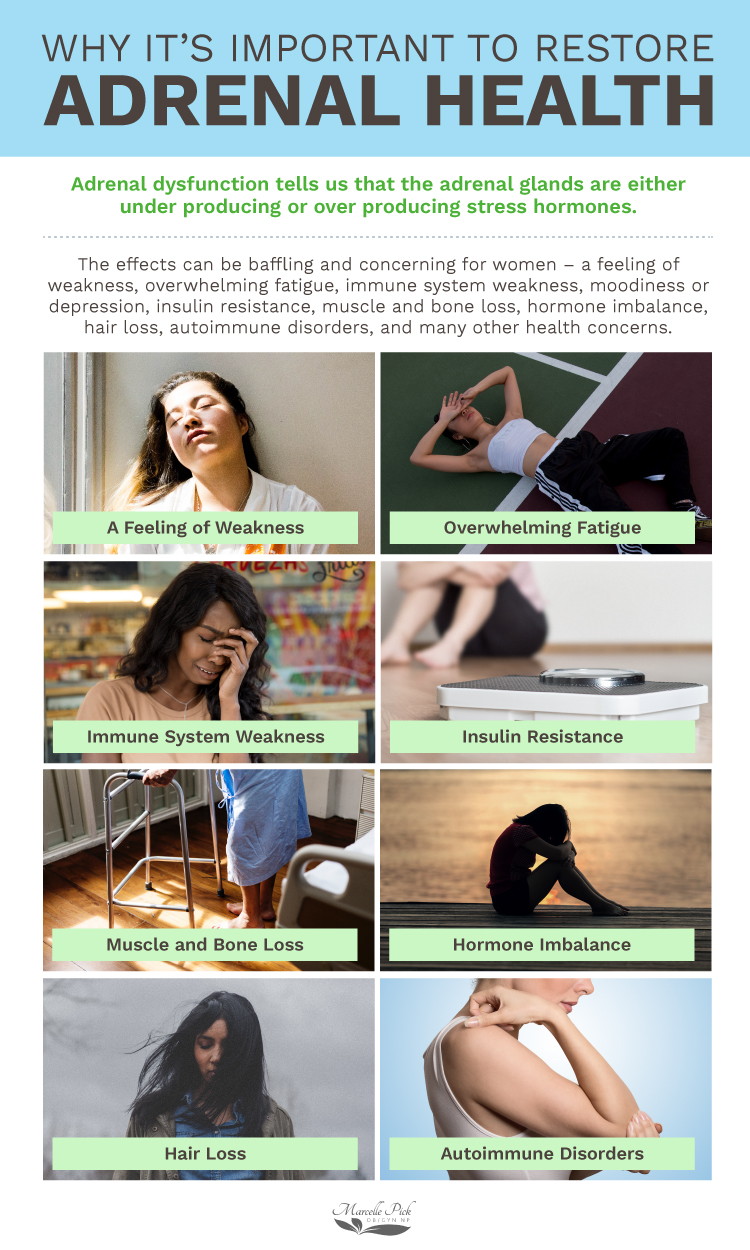
Adrenal dysfunction tells us that the adrenal glands are either under producing or over producing stress hormones. The effects can be baffling and concerning for women – a feeling of weakness, overwhelming fatigue, immune system weakness, moodiness or depression, insulin resistance, muscle and bone loss, hormone imbalance, hair loss, autoimmune disorders, and many other health concerns.

All of my patients breathe a sigh of relief when I assure them that as long as other major health issues are ruled out, we can absolutely get them feeling vibrant and full of energy.
I usually recommend a series of simple tests for patients who come to me with these symptoms. These tests evaluate cortisol and DHEA levels as well as stress markers. In my practice, we find that the results are astonishingly consistent – less than 25% have cortisol levels which indicate healthy adrenal function, while more than 75% show impaired adrenal function.
How Adrenal Imbalance Develops
To understand how adrenal imbalance develops, it is helpful to consider the original, evolutionary function of the adrenal glands. The adrenals are walnut-sized glands located on top of each kidney that serve as important manufacturing centers for many of the body’s hormones. The innermost section of each gland produces adrenaline (which you may know as epinephrine), and noradrenaline (also called norepinephrine). The layers outside the center, known as the adrenal cortex, produce several other hormones, including cortisol, as well as DHEA, and the sex hormones estrogen, progesterone, and testosterone.
Along with several other key responsibilities, your adrenal glands’ primary purpose is to help you survive in the face of a threat, rallying all your body’s resources into “fight or flight” mode by increasing production of adrenaline and cortisol. Healthy adrenals instantaneously increase your heart rate and blood pressure, release your energy stores for immediate use, shut down digestion and other secondary functions, and sharpen your senses.
We need all of these systems supported during times of intense, immediate stress – and these amazing glands respond to every kind of stress – emotional, psychological, physical, environmental, even infectious! When we have chronic, unrelenting stress, our adrenals don’t give up on us! They keep producing what we need – and the domino effect in our body begins. Fatigue, weight gain, moodiness, hormone imbalance, thyroid imbalance and irritability may follow.

Effects of High Levels of Cortisol
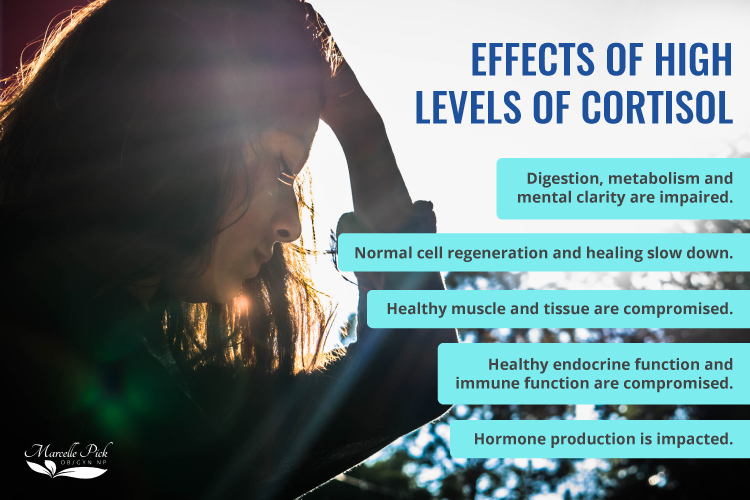
Let’s emphasize two points about this healthy stress response. First, it takes priority over all other metabolic functions. Second, it wasn’t designed to last very long. It is important to remember that the hormone cortisol converts fats and proteins into energy – just what we need during those stressful times! But prolonged high levels of cortisol are actually damaging to your body. Let’s look at the ways prolonged high levels of cortisol impact your body’s functions:
- Digestion, metabolism and mental clarity are impaired.
- Normal cell regeneration and healing slow down.
- Healthy muscle and tissue are compromised.
- Healthy endocrine function and immune function are compromised.
- Hormone production is impacted.
The cumulative effect of high cortisol levels can take a toll on even the healthiest of bodies. We’ve talked about fatigue, weight gain and sleep issues – but there are other symptoms, too. Adrenal imbalance may also be a factor in depression, fibromyalgia, arthritis, hypothyroidism, hair loss and acne.
4 Steps to Restore Adrenal Health Naturally
I’ve helped thousands of patients restore adrenal health naturally. There are 4 easy steps to start with – things you can do every day – addressing the root causes of your adrenal imbalance.
Before begin, it is important to rule out the possibility of any serious underlying medical condition. Make sure you have a full medical exam to rule out this concern.
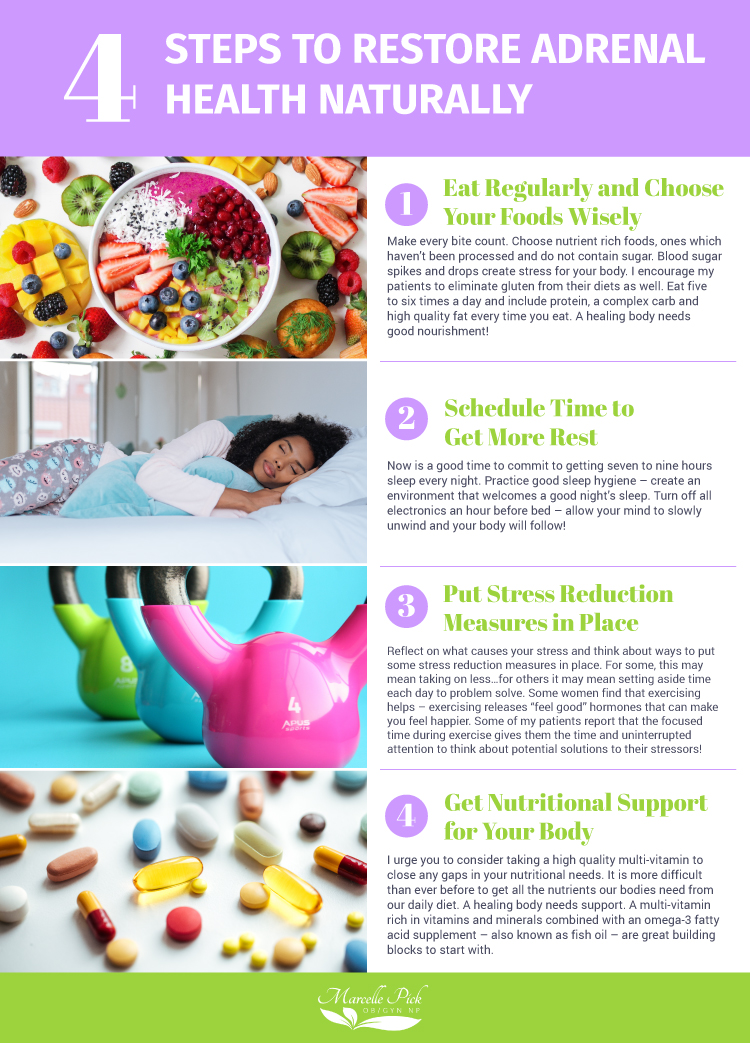
1. Eat Regularly and Choose Your Foods Wisely
Make every bite count. Choose nutrient rich foods, ones which haven’t been processed and do not contain sugar. Blood sugar spikes and drops create stress for your body. I encourage my patients to eliminate gluten from their diets as well. Eat five to six times a day and include protein, a complex carb and high quality fat every time you eat. A healing body needs good nourishment!
2. Schedule Time to Get More Rest
Now is a good time to commit to getting seven to nine hours sleep every night. Practice good sleep hygiene – create an environment that welcomes a good night’s sleep. Turn off all electronics an hour before bed – allow your mind to slowly unwind and your body will follow!
3. Put Stress Reduction Measures in Place
Reflect on what causes your stress and think about ways to put some stress reduction measures in place. For some, this may mean taking on less…for others it may mean setting aside time each day to problem solve. Some women find that exercising helps – exercising releases “feel good” hormones that can make you feel happier. Some of my patients report that the focused time during exercise gives them the time and uninterrupted attention to think about potential solutions to their stressors!
4. Get Nutritional Support for Your Body
I urge you to consider taking a high quality multi-vitamin to close any gaps in your nutritional needs. It is more difficult than ever before to get all the nutrients our bodies need from our daily diet. A healing body needs support. A multi-vitamin rich in vitamins and minerals combined with an omega-3 fatty acid supplement – also known as fish oil – are great building blocks to start with.
Final Thoughts on Restoring Adrenal Health Naturally
In most cases women report feeling better in a few weeks and return to feeling ‘like themselves’ in just a few months. In some instances, women may require more support such as low dose compounded DHEA or other herbs. I urge you to work with a practitioner if you feel you may need more support to restore adrenal health. Some of the more advanced treatments can have adverse interactions if not used properly.
Our bodies have an amazing ability to heal when given the right support! Regaining your energy, your clarity and your vitality is a must!